
Why ZK (Zero-Knowledge) Cryptocurrencies Are Surging in 2025


 Aime Summary
Scalability Breakthroughs: The ZKZK-- Layer 2 Revolution
ZK rollups have redefined blockchain scalability by leveraging cryptographic proofs to validate transactions off-chain while maintaining security and transparency. The ZKsync Atlas Upgrade, launched in October 2025, exemplifies this progress. By integrating a modular Layer 2/3 infrastructure, ZKsyncZK-- achieved 15,000 transactions per second (TPS) and sub-second finality, enabling seamless interoperability with EthereumETH-- and tokenization of real-world assets (RWAs) according to data. Similarly, StarkNet-with its Cairo programming language-has attracted developers building high-performance applications, including gaming and real-time finance, by designing for ZK-native environments rather than porting from Ethereum.
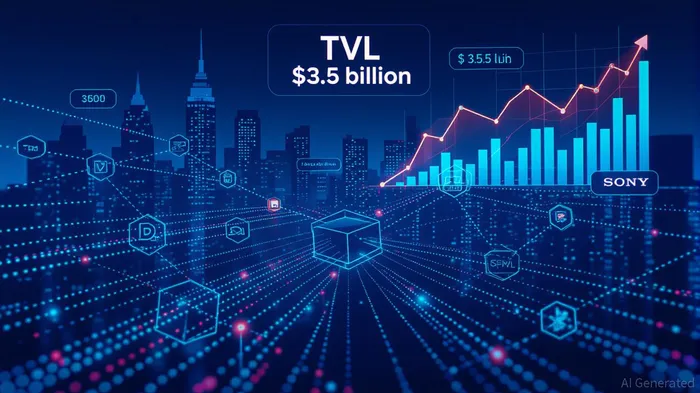
These advancements are notNOT-- theoretical. By early 2025, combined total value locked (TVL) across ZK rollups like zkSync, StarkNetSTRK--, and ScrollSCR-- reached $3.5 billion, with daily transactions exceeding 1 million. Such metrics highlight ZK's ability to handle institutional-grade workloads, where speed and cost efficiency are critical. For instance, institutional trades on ZK platforms now incur 70% lower gas fees compared to 2023, making them viable for high-frequency trading and confidential settlements.
Institutional Adoption: From Compliance to Confidentiality
Enterprises are increasingly adopting ZK solutions to address regulatory and operational challenges. Deutsche Bank and Sony have integrated ZK-based systems for confidential settlements and digital rights management, respectively. These use cases align with ZK's core strengths: privacy-preserving transactions and compliance-friendly architectures. For example, ZK proofs allow institutions to verify transaction validity without exposing sensitive data, a critical feature for cross-border payments and asset tokenization.
The Ethereum Foundation's roadmap further reinforces this trend. By prioritizing zkEVM integration into Layer 1, the foundation signals a long-term commitment to ZK rollups as the scaling solution of choice. This strategic alignment has spurred venture capital investment into ZK-focused startups like Succinct Labs and Aztec, while institutional allocations to crypto assets are projected to grow by 61%.
Analyst Commentary: Diversification and Regulatory Clarity
Institutional interest in ZK cryptocurrencies is no longer speculative. According to the Sygnum 2025 Future Finance Report, 57% of institutional investors now view digital assets as a core diversification tool, surpassing short-term return motives. This shift is supported by regulatory developments such as the U.S. GENIUS Act and CLARITY Act, which provide clarity on stablecoins and market structure, reducing institutional hesitancy.
Moreover, ZK's expansion into mainstream applications-such as Google's ZK identity system-demonstrates its versatility beyond finance. Analysts at Yellow.com argue that ZK rollups will dominate blockchain scaling due to their inherent security and efficiency advantages over optimistic rollups according to research. With the Layer 2 market projected to reach $90 billion by 2031 at a 60.7% CAGR, the case for ZK is both technical and economic.
Challenges and the Road Ahead
Despite these gains, challenges persist. Legacy system integration remains a hurdle in sectors like healthcare and manufacturing, where ZK's benefits are yet to be fully realized. Regulatory uncertainty also lingers, particularly in jurisdictions without clear digital asset frameworks. However, the rise of Blockchain-as-a-Service (BaaS) platforms offers a pragmatic solution, allowing enterprises to adopt ZK-based applications without overhauling existing infrastructure.
Conclusion
ZK cryptocurrencies are surging in 2025 not merely due to speculative fervor but because they address foundational issues in blockchain scalability and privacy. With institutional adoption accelerating and protocol upgrades like ZKsync's Atlas redefining performance benchmarks, ZK is poised to become the backbone of the next financial infrastructure wave. For investors, this represents a pivotal moment: a technology that bridges the gap between decentralized innovation and institutional pragmatism.

Blending traditional trading wisdom with cutting-edge cryptocurrency insights.
Latest Articles
Stay ahead of the market.
Get curated U.S. market news, insights and key dates delivered to your inbox.






Comments
No comments yet