
ZK Atlas Upgrade: Revolutionizing Blockchain Scalability and Unlocking Institutional Adoption


 Aime Summary
Technical Breakthroughs and Competitive Positioning
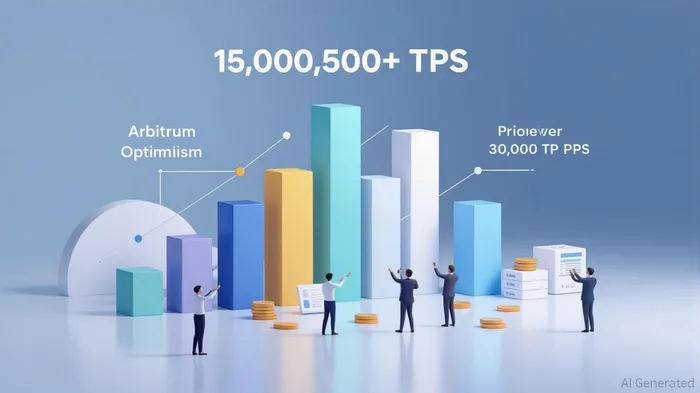
ZKsync's modular architecture, part of its broader ZKZK-- Stack, enables near-instant finality and reduced proving costs, outpacing competitors like ArbitrumARB-- and OptimismOP--. While Arbitrum processes 1.5 million daily transactions and Optimism handles 800,000, ZKsync's 15,000+ TPS (with plans to scale to 30,000 TPS via the upcoming Fusaka upgrade) underscores its competitive edge. EthereumETH-- co-founder Vitalik Buterin has publicly endorsed ZK-based solutions for their privacy and scalability, further validating the technology's institutional potential according to public statements.
 The upgrade's EVM compatibility is another critical differentiator. By allowing seamless migration of Ethereum-based projects without code rewrites, ZKsync reduces friction for developers and enterprises. This has already attracted DeFi platforms like SyncSwap and Mute.io, which reported a 90% reduction in transaction costs and a 276% increase in daily transaction volume post-migration.
Institutional Adoption and Real-World Applications
Institutional adoption of ZKsync has accelerated, driven by its ability to meet compliance and privacy demands. Deutsche Bank and UBS have integrated ZKsync for tokenized asset settlements, leveraging its cryptographic guarantees to streamline operations. Similarly, Sony and Citi have adopted ZK-based frameworks for digital rights management and confidential transactions, using zero-knowledge proofs to verify authenticity without exposing sensitive data according to recent case studies. These use cases align with regulatory clarity in the U.S., including the GENIUS and CLARITY Acts, which have reduced legal uncertainties around ZK technology as documented in industry reports.
The platform's Total Value Locked (TVL) has surged to $28 billion, with $15 billion in inflows from BitcoinBTC-- ETFs, reflecting growing confidence in its infrastructure. The ZK token, ZKsync's native asset, has appreciated 50% post-upgrade due to deflationary mechanisms like token burns and staking rewards, further incentivizing institutional participation.
Market Projections and Investment Implications
Analysts project a 60.7% compound annual growth rate (CAGR) for ZK Layer-2 solutions through 2031, driven by institutional and DeFi demand for scalable infrastructure. ZK-Rollups, including ZKsync, now handle over 1 million daily transactions with a combined TVL of $3.5 billion, signaling their growing role in global finance according to market data. With cross-border blockchain payments projected to reach $2 trillion by 2025, ZKsync's high-throughput, interoperable architecture is well-positioned to facilitate tokenized assets and cross-chain settlements as projected by industry forecasts.
The Fusaka upgrade, slated to boost throughput to 30,000 TPS, will further solidify ZKsync's position in the Layer-2 race. This trajectory, combined with its enterprise-grade privacy features and regulatory alignment, makes ZKsync a strategic investment for institutions seeking to capitalize on the next phase of blockchain adoption.
Conclusion
The ZK Atlas Upgrade represents more than a technical milestone-it is a catalyst for mainstream blockchain adoption. By addressing scalability, privacy, and compliance, ZKsync has created a robust foundation for institutional and enterprise use cases. As the ecosystem matures, investors should closely monitor ZKsync's TVL growth, institutional partnerships, and the impact of upcoming upgrades like Fusaka. In a market where Layer-2 solutions are projected to dominate, ZKsync's unique value proposition offers a compelling long-term opportunity.

Blending traditional trading wisdom with cutting-edge cryptocurrency insights.
Latest Articles
Stay ahead of the market.
Get curated U.S. market news, insights and key dates delivered to your inbox.


AInvest
PRO
AInvest
PRO



Comments
No comments yet