
ZK Atlas Upgrade: A Catalyst for Blockchain Scalability and Institutional Adoption in DeFi


 Aime Summary
Technical Breakthroughs: The ZKZK-- Atlas Upgrade's Core Innovations
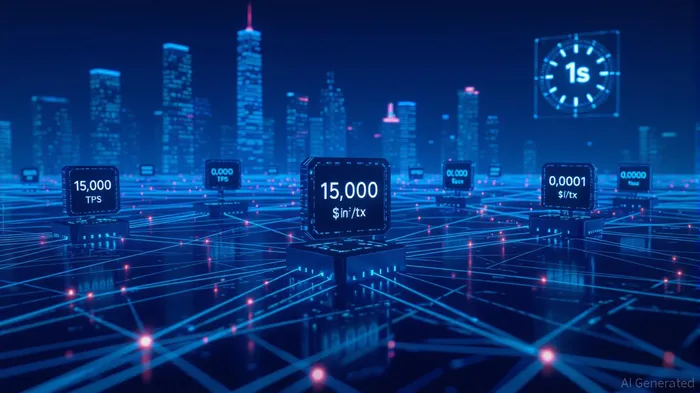
The ZK Atlas Upgrade introduces a high-performance sequencer capable of processing 15,000+ transactions per second (TPS) with one-second ZK finality, a leap forward for zero-knowledge (ZK) protocols. This is complemented by the Airbender prover, which slashes proving costs to $0.0001 per transaction, enabling a single GPU to handle over 1 million daily transactions. These metrics are not just theoretical-they directly address institutional pain points, such as latency in high-frequency trading and the need for cost-efficient settlements.
The upgrade also introduces the ZKsync OS, a modular architecture that supports multiple execution environments, while minimizing implementation drift. This flexibility allows developers to deploy complex DeFi applications without compromising security or interoperability, a critical factor for enterprises seeking scalable solutions.
Scalability as a DeFi Growth Engine
The ZK Atlas Upgrade's performance gains have directly fueled DeFi's evolution. Platforms like Polygon zkEVM and zkSync have reduced Ethereum gas fees by up to 90%, enabling thousands of TPS while maintaining privacy through zero-knowledge proofs (ZKPs). This has made DeFi platforms more competitive with traditional finance, particularly in markets where low-cost, high-speed transactions are critical.
Data from the 2025 Crypto Adoption and Stablecoin Usage Report reveals that stablecoins now account for 30% of all on-chain crypto transaction volume, driven by their utility in volatile economies and regulatory frameworks like the U.S. GENIUS Act and EU's MiCA regulation. ZK-based scalability solutions have amplified this trend, allowing stablecoin networks to handle surging demand without compromising security.
Institutional Adoption: From Experimentation to Enterprise
Institutional adoption of ZK-based systems has surged, with entities like Deutsche Bank and Sony leveraging ZK-rollups for confidential settlements and digital rights management according to market analysis. By the start of 2025, the combined total value locked (TVL) in ZK rollups-including zkSyncZK--, StarkNetSTRK--, and Scroll-reached $3.5 billion, with daily transactions exceeding 1 million.
The ZK Atlas Upgrade has further solidified this momentum. For instance, StarkNet saw its TVL triple in the last quarter of 2025, partly due to $72 million in BTC being bridged to its ecosystem. Meanwhile, Zcash (ZEC)-a privacy-focused ZK coin-rose 23% in November 2025, reflecting growing institutional confidence in ZK-based privacy solutions.
Regulatory developments have also played a pivotal role. The U.S. GENIUS Act and CLARITY Act have eased institutional concerns around compliance, while the EthereumETH-- Foundation's prioritization of zkEVM integration at the Layer 1 level signals a long-term commitment to ZK rollups as the preferred scaling solution.
Market Reactions and Investor Implications
The ZK Atlas Upgrade has triggered a 20% increase in ZK token holder engagement since its tokenomics overhaul, driven by a deflationary model that channels network revenue into buybacks, burning, and staking incentives. This has translated into tangible market outcomes: daily trading volumes on ZKsync now exceed $300 million, and ZK-based projects have attracted $15 billion in net inflows from spot BitcoinBTC-- ETFs in 2025.
For investors, the upgrade's success underscores the strategic value of Layer 2 and DeFi infrastructure. As ZK-based ecosystems mature, they are likely to dominate the next phase of blockchain adoption, particularly in sectors requiring high throughput, privacy, and regulatory compliance. Analysts project a 61% growth in institutional crypto allocations by 2026, with ZK rollups forming the backbone of this expansion.
Conclusion: A Turning Point for ZK Ecosystems
The ZK Atlas Upgrade represents more than a technical milestone-it is a turning point for blockchain scalability and institutional adoption. By bridging the gap between DeFi's innovation and traditional finance's demands, ZK-based solutions are redefining what's possible in decentralized systems. For investors, the message is clear: the future of finance is scalable, private, and built on ZK.

Blending traditional trading wisdom with cutting-edge cryptocurrency insights.
Latest Articles
Stay ahead of the market.
Get curated U.S. market news, insights and key dates delivered to your inbox.


AInvest
PRO
AInvest
PRO



Comments
No comments yet