
The ZK Atlas Upgrade: A Catalyst for Blockchain Scalability and Institutional Adoption


 Aime Summary
Technical Breakthroughs: Speed, Finality, and Modularity
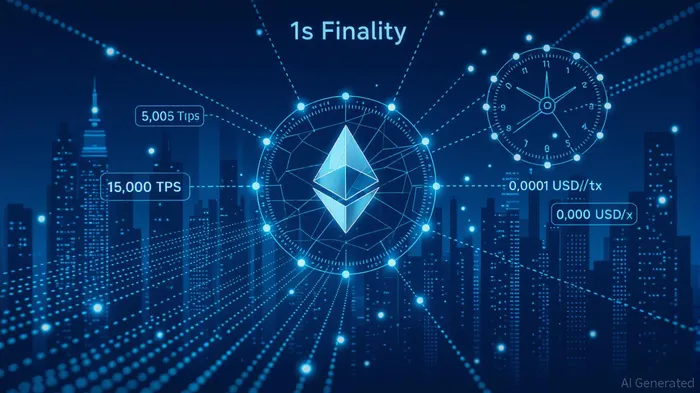
The ZKsyncZK-- Atlas Upgrade introduces a next-generation sequencer capable of processing up to 30,000 TPS, a 200% leap from previous ZKZK-- rollup benchmarks according to technical analysis. This throughput is complemented by the Airbender proof system, which reduces transaction finality to under one second-a critical requirement for high-frequency trading and cross-border settlements. Additionally, the upgrade's modular architecture allows institutions to customize blockchain deployments while maintaining Ethereum's security guarantees. For instance, the integration of multi-VM compatibility ensures seamless interoperability between Ethereum-based applications and enterprise-specific protocols.
Gas fees, a persistent barrier to institutional adoption, have plummeted by 70% compared to 2023, making ZK networks viable for applications like confidential settlements and tokenized securities according to market analysis. As stated by EthereumETH-- co-founder Vitalik Buterin, the Atlas Upgrade represents a "meaningful step toward fluid, ZK-secured scaling" according to Buterin's commentary.
Institutional Adoption: From TVL to Partnerships
The ZK Atlas Upgrade has catalyzed a surge in institutional interest. By 2025, total value locked (TVL) in ZK ecosystems reached $3.5 billion, driven by platforms like StarkNetSTRK-- (TVL tripled) and ZKsync according to financial reports. Deutsche Bank's strategic partnership with ZKsync underscores this trend, leveraging the upgrade's low-latency infrastructure for cross-chain settlements according to partnership announcements. Meanwhile, stablecoins now account for 30% of on-chain transaction volume, reflecting growing trust in ZK-based privacy and efficiency according to transaction data.
Institutional confidence is further evidenced by $15 billion in net investments from Bitcoin ETFs in 2025, with ZK token holder participation rising by 20% according to institutional reports. The ZK token itself saw a 50% price surge post-upgrade, as exchanges like Binance adapted to the transition by temporarily halting deposits and withdrawals according to exchange reports.
Implications for the Future
The ZK Atlas Upgrade's impact extends beyond technical metrics. By enabling real-world asset tokenization and enterprise-grade modularity, it positions ZK networks as the backbone for institutional-grade DeFi. For example, the upgrade's support for RWA tokenization could unlock trillions in illiquid assets, from real estate to carbon credits, by providing transparent, programmable ownership according to industry analysis.
However, challenges remain. While ZKsync's TVL growth is impressive, broader adoption hinges on regulatory clarity and ecosystem maturity. Institutions will need to navigate compliance frameworks for tokenized assets and ensure interoperability with legacy systems.
Conclusion
The ZK Atlas Upgrade is more than a technical achievement-it is a bridge between blockchain's theoretical potential and institutional reality. By solving scalability, cost, and modularity, ZKsync has laid the groundwork for a future where decentralized infrastructure powers global finance. For investors, the upgrade signals a maturing market, where ZK-based solutions are no longer speculative but foundational. As the TVL and institutional partnerships continue to grow, the ZK ecosystem is poised to become a cornerstone of the next financial era.

Blending traditional trading wisdom with cutting-edge cryptocurrency insights.
Latest Articles
Stay ahead of the market.
Get curated U.S. market news, insights and key dates delivered to your inbox.


AInvest
PRO
AInvest
PRO



Comments
No comments yet