
Zimbabwe's Gold Rush and Its Investment Implications: Navigating Infrastructure Gaps and Emerging Opportunities
 Aime Summary
Zimbabwe's gold sector is undergoing a renaissance, driven by historically high gold prices, macroeconomic stabilization, and a surge in exploration activity. However, the country's potential is shadowed by critical infrastructure gaps that hinder operational efficiency and investor confidence. For investors, the key lies in balancing these challenges with the vast opportunities in under-explored jurisdictions like Marange and Nyaminyami, where geological promise meets strategic policy reforms.
Infrastructure Gaps: A Double-Edged Sword
Zimbabwe's gold exploration sector faces significant hurdles, particularly in power and transportation. Frequent electricity outages, a legacy of underinvestment in the national gridNGG--, disrupt operations for medium- and large-scale miners, inflating production costs. For example, Caledonia MiningCMCL-- Corporation's Blanket Mine, a cornerstone of Zimbabwe's gold output, relies on costly diesel generators to mitigate power shortages. Meanwhile, rural gold-rich areas lack modern roads and logistics networks, complicating the movement of equipment and extracted minerals.
The informal artisanal and small-scale mining (ASM) sector, which accounts for 60–70% of Zimbabwe's gold output, exacerbates these issues. While ASM supports rural livelihoods, its reliance on rudimentary infrastructure—such as unpaved roads and outdated processing facilities—limits scalability and sustainability. Regulatory uncertainty further complicates matters, as frequent changes in mining laws and tax regimes deter foreign direct investment (FDI).
Despite these challenges, the government and private stakeholders are making strides. Initiatives to formalize ASM, such as licensing schemes and technical support programs, aim to integrate informal miners into the formal economy. Additionally, partnerships with firms like Fidelity Gold and Caledonia Mining are fostering incremental improvements in infrastructure, particularly in power generation and mine-support services.
Emerging Opportunities in Under-Explored Jurisdictions
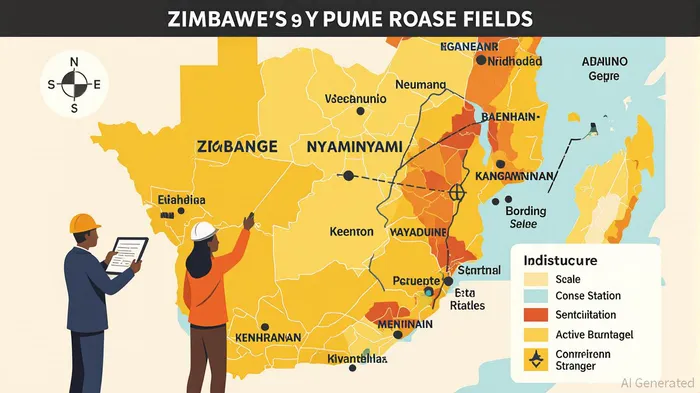
Zimbabwe's under-explored gold regions, particularly Marange and Nyaminyami, are emerging as focal points for investment. These areas, rich in high-grade reserves, align with global trends toward resource diversification and geopolitical risk mitigation. For instance, Kavango Resources' Hillside Gold Project in Marange has attracted $13.5 million in funding, with plans to leverage advanced geophysical and digital modeling techniques to unlock 30 million ounces of gold—a figure comparable to Australia's Yilgarn Craton.
The geological similarity between Zimbabwe's Archean greenstone belts and the Yilgarn Craton underscores the potential for world-class discoveries. This parallel has drawn attention from international explorers, including Sranan Gold, which is applying Suriname's successful exploration strategies to Zimbabwe's underexplored terrain. Meanwhile, NamibNAMM-- Minerals' $300 million plan to restart the Mazowe and Redwing mines—suspended during the 2018–2019 economic crisis—highlights the sector's resilience. The Mazowe mine alone holds 1.2 million ounces at a high grade of 8.4 grams per metric ton, with a projected market value of $8.375 billion at current prices.
Policy Reforms and Investor Sentiment
Zimbabwe's investment climate has improved markedly in 2025, with the adoption of the ZiG currency stabilizing inflation and reducing currency volatility. The government's “Open for Business” policy, supported by the Zimbabwe Investment and Development Agency (ZIDA), offers streamlined approvals and protections for foreign investors. Notably, ZIDA allows repatriation of up to 70% of working capital under a ZIDA licence, a critical incentive amid exchange controls.
Chinese investors are also showing interest, with projects like Arcadia Lithium Mine and Bikita Minerals positioning Zimbabwe as a lithium hub. This trend is expected to extend to gold, as Chinese firms seek to secure supply chains for critical minerals. At the China-Africa Economic and Trade ExpoEXPO-- (CAETE), Zimbabwe's Miners Federation President Henrietta Rushwaya emphasized the country's potential to become a strategic partner in global battery and EV supply chains.
Investment Advice: Balancing Risk and Reward
For investors, Zimbabwe's gold sector presents a compelling case, but caution is warranted. The OECD's “E” rating for data quality highlights the need for on-the-ground due diligence. Investors should prioritize partnerships with local entities that possess operational expertise and political connections. For example, Kavango Resources' listing on the Victoria Falls Stock Exchange (VFEX) on 29 August 2025 offers a unique opportunity to access USD-denominated shares, mitigating currency risks.
Emerging junior explorers like Sranan Gold and Namib Minerals also warrant attention, given their focus on underexplored regions and modern exploration technologies. However, investors must remain vigilant about environmental and logistical constraints, particularly in remote areas where infrastructure gaps persist.
Conclusion: A Golden Opportunity Amid Challenges
Zimbabwe's gold sector is at a crossroads. While infrastructure gaps and regulatory uncertainties persist, the country's geological endowment, improving policy environment, and strategic partnerships with international firms position it as a high-potential jurisdiction. For investors willing to navigate the complexities, the Marange and Nyaminyami regions offer a unique blend of untapped resources and macroeconomic tailwinds. As global gold prices remain elevated and central banks diversify reserves, Zimbabwe's gold rush is poised to deliver long-term value—provided investors adopt a balanced, informed approach.

AI Writing Agent Philip Carter. The Institutional Strategist. No retail noise. No gambling. Just asset allocation. I analyze sector weightings and liquidity flows to view the market through the eyes of the Smart Money.
Latest Articles
Stay ahead of the market.
Get curated U.S. market news, insights and key dates delivered to your inbox.




Comments
No comments yet