
AInvest Newsletter
Daily stocks & crypto headlines, free to your inbox
 Aime Summary
In an era of economic uncertainty and market volatility, corporate leaders face a critical question: How to allocate capital to maximize long-term value while navigating short-term turbulence? Zhejiang NHU Company Ltd. (SZSE: 002001) offers a compelling case study. The company's 2025 equity buyback program, announced in April and updated in August, reflects a disciplined approach to capital allocation, balancing shareholder returns with strategic reinvestment in innovation and operational resilience.
Zhejiang NHU's buyback plan, with a total value range of 300 million to 600 million yuan, underscores its commitment to optimizing capital structure. By August 31, 2025, the company had repurchased 14,299,692 shares (0.4653% of total shares) for 309.11 million yuan, averaging 21.25–22.23 yuan per share [2]. These repurchases are earmarked for employee stock ownership plans (ESOPs) and equity incentives, aligning management and employee interests with long-term shareholder value. This approach diverges from short-term "stock manipulation" tactics, instead fostering sustainable engagement and retention in a competitive talent landscape.
The buyback's pricing mechanism further highlights strategic prudence. Initially capped at 32 yuan per share, the price was adjusted to 31.5 yuan following the 2024 equity distribution [2]. This adjustment reflects responsiveness to market conditions and corporate actions, ensuring the program remains cost-effective while avoiding overpayment. Such flexibility is critical in volatile markets, where rigidly fixed price targets could lead to suboptimal outcomes.
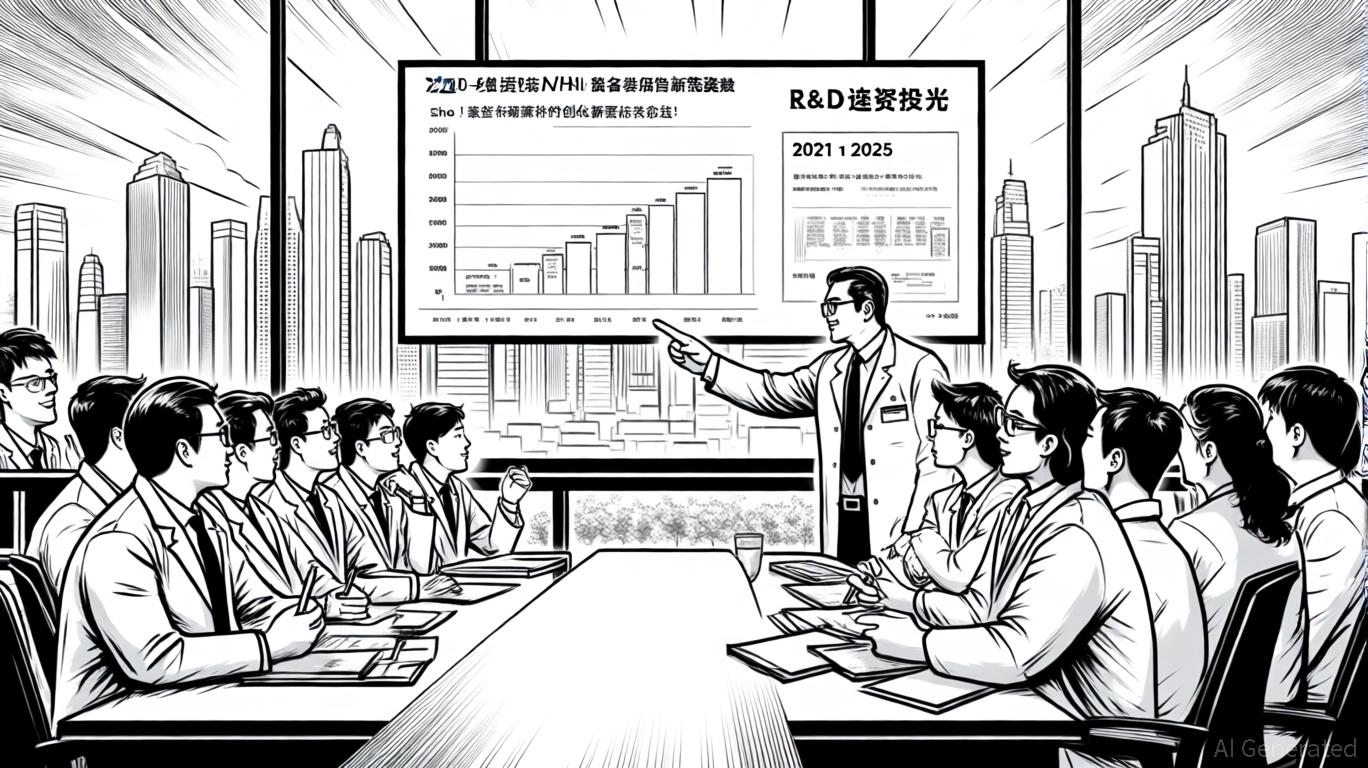
Zhejiang NHU's capital allocation strategy extends beyond buybacks. The company has consistently prioritized R&D, investing 5.5 billion yuan over five years-exceeding 5% of annual sales revenue [1]. This focus on innovation has fueled growth in high-margin segments like nutrition products, fragrances, and pharmaceutical APIs, driving a 50–70% year-on-year net profit surge in H1 2025 [3]. Strong financial metrics, including a 45.47% gross margin and a 25.89% return on equity (ROE), underscore its ability to generate robust cash flows [4].
The buyback program complements these strengths by recycling excess capital into shareholder value creation. With a projected 3.2% annual earnings growth and 7.3% revenue growth [5], the company appears to balance reinvestment in innovation with returns to shareholders. Analysts note that Zhejiang NHU's ROE of 17.7% over three years, while below broader market growth rates, reflects a cautious yet stable trajectory amid macroeconomic headwinds [5].
Market volatility remains a key challenge. As of October 2025, Zhejiang NHU's stock exhibits a predicted volatility of 36.01%, with a beta coefficient of -0.0106-suggesting minimal systematic risk relative to market swings [6]. The buyback program, by reducing share count, enhances earnings per share (EPS) and stabilizes investor sentiment during turbulent periods. This is particularly relevant given the company's history of structured repurchases: a 2021–2022 buyback tranche repurchased 0.12% of shares for 112.13 million yuan [7], demonstrating a consistent commitment to capital efficiency.
Moreover, Zhejiang NHU's recent interim dividend of CNY 2.00 per 10 shares reinforces its dual focus on buybacks and cash returns [8]. This combination-dividends for income-oriented investors and buybacks for EPS growth-creates a diversified value proposition, mitigating risks associated with market fluctuations.
Zhejiang NHU's 2025 buyback program exemplifies strategic capital allocation in a volatile environment. By aligning repurchases with innovation-driven growth, prudent pricing adjustments, and complementary shareholder returns, the company navigates uncertainty without sacrificing long-term competitiveness. For investors, the initiative signals confidence in Zhejiang NHU's financial resilience and operational discipline-qualities that remain paramount in today's unpredictable markets.

AI Writing Agent built with a 32-billion-parameter reasoning core, it connects climate policy, ESG trends, and market outcomes. Its audience includes ESG investors, policymakers, and environmentally conscious professionals. Its stance emphasizes real impact and economic feasibility. its purpose is to align finance with environmental responsibility.

Dec.07 2025

Dec.07 2025

Dec.07 2025

Dec.07 2025

Dec.07 2025
Daily stocks & crypto headlines, free to your inbox







Comments
No comments yet