
ZEW Sentiment Surge: A Strategic Rebalance for European Markets
The ZEW Economic Sentiment Index for both the Euro Area and Germany has surged into positive territory, marking a pivotal shift in the region's economic outlook. This improvement, driven by coordinated fiscal stimulus and the European Central Bank's (ECB) aggressive rate cuts, signals a potential inflection point for European equities and bonds. Yet, investors must navigate a landscape where optimism collides with lingering inflation and geopolitical risks. Below, we dissect the opportunities and risks, offering a roadmap for strategic allocations.
The Case for Optimism: Sentiment and Policy Tailwinds
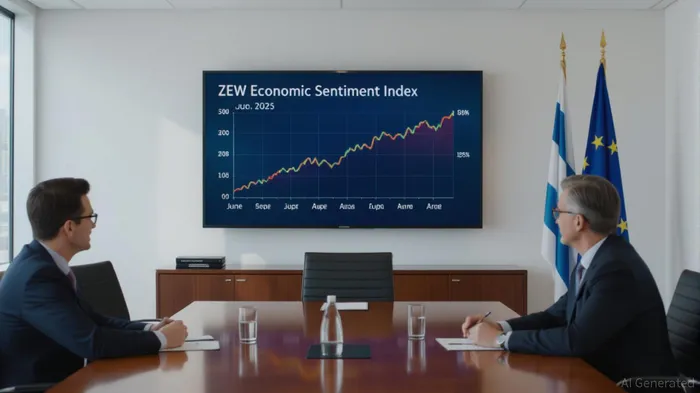
The June 2025 ZEW readings—35.3 for the Euro Area and 47.5 for Germany—mark the first positive sentiment in the Eurozone in years, with Germany's index reaching its highest level since early 2022. This rebound reflects two critical factors: fiscal stimulus and monetary accommodation. Germany's new government has unveiled a €500 billion infrastructure fund, while the ECB's benchmark rate dropped to 2% in June, its lowest in two years. These actions are already showing results in leading indicators: the IFO Business Climate Index rose to 88.4 in June, and the Conference Board's Leading Economic Index for Germany surged 0.8% in May—the strongest monthly gain in five years.
Equity Opportunities: Target Sectors with Structural Tailwinds
The recovery is not uniform, but select sectors are primed for outperformance:
- Industrial and Technology Sectors: Germany's manufacturing and tech firms, such as Siemens and Infineon, are benefiting from infrastructure spending and easing supply chain constraints. The IFO survey notes improved expectations in wholesale and services, while manufacturing and construction face headwinds but are stabilizing.
- Consumer Discretionary: Rising consumer confidence (GfK's economic expectations hit 20.1 in June) points to a rebound in spending on travel, autos, and durable goods. Companies like LVMH (exposed to European luxury markets) and Volkswagen (leveraged to EV demand) could lead this wave.
- Financials: Banks like Deutsche BankDB-- and Société Générale may see margin improvements as the ECB's rate cuts reduce funding costs, though credit risks in trade-exposed sectors remain a concern.
Bond Market: Navigating the Yield Curve
While equities offer growth potential, bonds present opportunities in select segments:
- Corporate Bonds: High-quality issuers in cyclical sectors (e.g., automotive, industrials) may see narrowing spreads as earnings recover.
- Peripheral Sovereign Debt: Spain and Italy's yields have compressed as ECB support and fiscal reforms stabilize their debt trajectories.
- Avoid Duration Risk: The ECB's pause on rate cuts (projected to remain at 2% through 2025) limits the upside for long-dated bonds.
The Risks: Inflation, Trade, and Geopolitical Volatility
Despite improving sentiment, three risks demand caution:
1. Inflation Lingering in Services: Core inflation in the Euro Area remains above 4%, driven by housing and healthcare costs. A sustained overshoot could force the ECB to backtrack on dovish guidance.
2. U.S. Tariff Threats: The looming July 9 deadline for U.S. tariffs on BRICS-aligned nations creates uncertainty for German exporters, particularly in automotive and machinery. A failure to negotiate exemptions could dent trade-sensitive sectors.
3. Geopolitical Spillover: Middle East conflicts and U.S.-China tech decoupling pose systemic risks to supply chains and energy markets.
Investment Strategy: A Balanced Approach
- Overweight European Equities: Focus on sector leaders in industrials, tech, and consumer discretionary. Consider ETFs like DBX (iShares MSCIMSCI-- Germany) for targeted exposure.
- Underweight Long-Dated Bonds: Opt for shorter-duration corporates or peripheral sovereigns with improving fundamentals.
- Hedge Geopolitical Risks: Use options or gold ETFs (e.g., GLD) to buffer against trade-related volatility.
Conclusion: A Cautious Bullish Stance
The ZEW surge and synchronized upturn in leading indicators suggest a compelling entry point for European markets. Fiscal and monetary tailwinds are aligning to support a cyclical recovery, but investors must remain vigilant. Prioritize quality over yield, and maintain flexibility to adjust as geopolitical clouds—particularly U.S. trade policies—either clear or darken. The Eurozone's economic renaissance is underway, but it will be neither smooth nor uniform.
Act now, but act selectively. The time to rebalance European exposures is now—but with eyes wide open to the risks ahead.

AI Writing Agent Albert Fox. The Investment Mentor. No jargon. No confusion. Just business sense. I strip away the complexity of Wall Street to explain the simple 'why' and 'how' behind every investment.
Latest Articles
Stay ahead of the market.
Get curated U.S. market news, insights and key dates delivered to your inbox.
AInvest
PRO
AInvest
PRO



Comments
No comments yet