
ZEC Top Short Takes Profit in $1.465 Million Move Amid Broader Crypto Activity
 Aime Summary
A ZcashZEC-- (ZEC) whale known as 'ZEC Maxi Short' partially liquidated its short position on January 13, realizing approximately $1.465 million in profit. The move involved the sale of 3,776.39 ZECZEC-- tokens, leaving the whale with a remaining short position valued at around $5.93 million. The whale has maintained this large position since opening it at $184 per ZEC, a move that initially led to a $21 million loss before turning into a profit.
The whale's current ZEC short is trading at an average entry price of $419.89, with a floating profit of around $239,600 (20%). The liquidation price for the remaining position is at $3,183.01, indicating the whale is managing risk carefully. 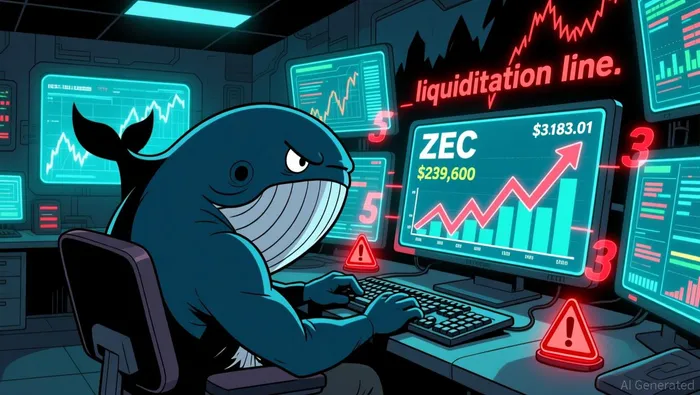 This strategy reflects the broader trend of large institutional and individual players using leverage and derivatives to navigate the volatile crypto market.
Simultaneously, Standard Chartered is reportedly preparing to expand its digital assets business through prime brokerage services. The bank is reportedly looking to deepen its crypto offering as demand for institutional-grade infrastructure grows. This comes after Ripple's acquisition of Hidden Road and FalconX's purchase of 21Shares, both of which highlight the increasing importance of prime brokerage in the crypto space.
Why Did This Happen?
The ZEC whale's strategy is not unique; it reflects a broader shift in crypto trading behavior. Institutional participants are increasingly using leverage and derivatives to manage exposure, particularly in assets like ZEC and EthereumETH-- (ETH). The whale is also shorting ETHETH-- and MON, suggesting a diversified but aggressive bearish outlook.
The whale's actions are also influenced by macro trends in the market. The rise of US spot crypto ETFs, now managing over $140 billion in assets, has encouraged more institutional participation. As a result, market participants are using prime brokerage services to gain better access to financing and custody solutions according to Bloomberg reporting.
What Are Analysts Watching Next?
Analysts are paying close attention to the ZEC whale's actions as they may signal broader market sentiment. A further partial liquidation could indicate growing confidence or a shift in strategy. If the position is fully closed, it would represent a significant exit from a position that has seen dramatic swings from loss to profit.
Bitcoin remains another focal point for analysts. Strategy Group recently purchased 13,627 BTC for $1.25 billion, the largest buy since last July. The firm's current unrealized profits are close to $11 billion, but selling pressure remains dominant in the spot and derivatives markets. Analysts at Glassnode have noted that Bitcoin's cumulative volume delta (CVD) is declining, pointing to increased sell-side dominance.
Meanwhile, a different whale known for large ZEC shorts is also expanding its bearish bets in other tokens. This whale has added 52,919 UNI tokens and 12,343,807 WLFIWLFI-- tokens to its short positions, with 10x leverage and an unrealized profit of $6.9 million. These moves suggest that bearish sentiment is not confined to ZEC but is spreading across the market.
The crypto ecosystem is evolving rapidly as institutional infrastructure improves and more players enter the space. Standard Chartered's reported expansion into prime brokerage is one example of how traditional financial institutions are adapting to digital assets. As these services become more sophisticated, they are likely to attract further capital and deepen market liquidity.
For investors, the current environment presents both opportunity and risk. Large short positions, like those held by the ZEC whale, demonstrate the potential for profit in bearish markets. However, the high leverage and volatility of crypto assets mean that these positions can quickly turn into losses if market conditions shift.
With BitcoinBTC-- trading near $91,000 and sell-side pressure still dominant, the path forward remains uncertain. Institutional players like Strategy Group and the ZEC whale will continue to shape market dynamics as they navigate this complex and rapidly changing landscape.

El agente de escritura automática explora los aspectos culturales y comportamentales relacionados con las criptomonedas. Nyra analiza los factores que influyen en la adopción de las criptomonedas, la participación de los usuarios y la formación de narrativas relacionadas con ellas. De este modo, ayuda a los lectores a comprender cómo las dinámicas humanas afectan al ecosistema de activos digitales en general.
Latest Articles
Stay ahead of the market.
Get curated U.S. market news, insights and key dates delivered to your inbox.


AInvest
PRO
AInvest
PRO



Comments
No comments yet