
ZEC's Recent Surge and the Infrastructure-Driven Tailwinds of Webster, NY


 Aime Summary
Webster, NY: A Catalyst for Industrial and Tech Growth
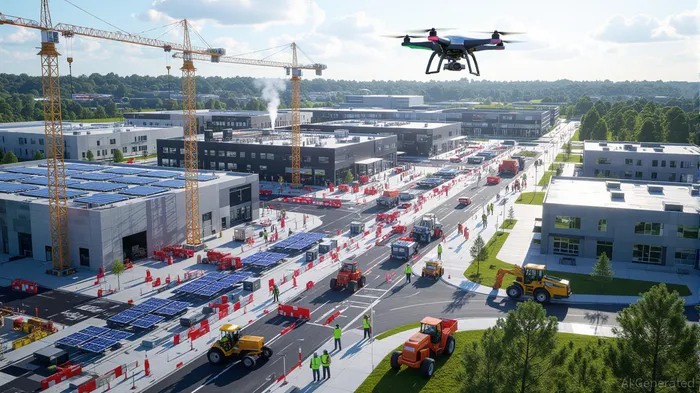
Webster, NY, has become a focal point for economic revitalization, driven by a $9.8 million FAST NY grant allocated to the Webster Economic Development Alliance (WEDA) to upgrade infrastructure around the XeroxXRX-- Wilson Campus. These improvements-targeting roads, sewer systems, and electrical capacity-are transforming a 300-acre brownfield into a "shovel-ready" site for advanced manufacturing, food processing, and technology sectors. The project is part of a $283 million state-wide initiative to attract industries like semiconductors and renewable energy, aligning with Governor Kathy Hochul's vision of a "sustainable economic ecosystem".
The strategic significance of Webster is underscored by its proximity to major transportation routes and a skilled workforce, making it an attractive hub for high-value industries. For instance, fairlife®, a subsidiary of The Coca-Cola Company, has committed $650 million to build a new production facility in the area, set to create 250 jobs by year-end. Such developments signal a shift toward industrial real estate as a cornerstone of regional growth, with Webster's "bluefield" model integrating advanced manufacturing with residential and commercial elements.
ZEC's Institutional Adoption and the ZK Sector's Rise
Parallel to these terrestrial developments, ZEC has captured institutional attention. Reliance Global Group, a Nasdaq-listed insurance technology firm, recently liquidated all prior crypto holdings to reallocate entirely into ZEC, citing its zero-knowledge cryptography, compliance-ready features, and privacy-centric architecture. This move, part of a $120 million crypto investment strategy, reflects growing confidence in ZEC as an institution-ready asset. Similarly, Cypherpunk Technologies acquired 1.25% of ZEC's total supply for $50 million, while Winklevoss Capital added $58.88 million through a private placement.
The ZK (zero-knowledge) sector as a whole has surged, with a combined market cap exceeding $11.7 billion in 2025. ZEC's shielded pool, holding 4.5 million ZEC, and its 400% monthly price gain highlight its role as a leader in this space. Institutional adoption is further bolstered by real-world applications, such as Deutsche Bank and Sony's use of ZK-powered platforms for confidential settlements and digital rights management.
Bridging Geography and Technology: A Synergistic Narrative
While Webster's infrastructure projects and ZEC's institutional adoption appear unrelated at first glance, their interplay lies in the broader narrative of economic resilience and innovation. The $9.8 million FAST NY grant and Governor Hochul's emphasis on public-private partnerships signal a commitment to creating environments where industries-both traditional and tech-driven-can thrive. This stability and growth potential may indirectly enhance market confidence in assets like ZEC, which are increasingly viewed as strategic hedges in volatile markets.
Moreover, the success of Webster's "bluefield" model-blending advanced manufacturing with commercial and residential development-mirrors the ethos of blockchain's decentralized, privacy-focused ecosystems. As regions like Webster attract high-value industries, they create ecosystems where blockchain technologies, including ZEC's Zashi Wallet and selective disclosure tools, could find practical applications in supply chain management, secure transactions, or data privacy.
Conclusion: A Convergence of Tailwinds
ZEC's recent price surge is not merely a function of speculative fervor but a reflection of structural shifts in both the crypto and real-world economies. In Webster, NY, infrastructure investments are laying the groundwork for a diversified industrial base, while ZEC's institutional adoption underscores its growing role in institutional portfolios. These developments, though geographically and technologically distinct, are part of a larger trend: the alignment of physical and digital innovation to drive sustainable growth. For investors, the message is clear: the tailwinds shaping Webster's economy and ZEC's trajectory are not isolated phenomena but interconnected forces redefining the future of value creation.

Blending traditional trading wisdom with cutting-edge cryptocurrency insights.
Latest Articles
Stay ahead of the market.
Get curated U.S. market news, insights and key dates delivered to your inbox.




Comments
No comments yet