
ZEC Slides Amid Concerns Over Large Unshielding Event
 Aime Summary
- Over 200,000 ZECZEC-- were unshielded in early 2026, representing 1.2% of circulating supply and sparking sell-off concerns. According to on-chain data.
- Zcash's hybrid privacy model enables compliance with regulations, positioning it for institutional adoption. As research shows.
- ZEC was one of 2025's top-performing cryptocurrencies, driven by supply dynamics and privacy resurgence. According to market analysis.
- The privacy coin sector has emerged as the weakest performer in early 2026. Data indicates.
Zcash (ZEC) is facing headwinds in early 2026 after a significant unshielding event raised fears of potential selling pressure. The privacy-focused cryptocurrency, which outperformed major tokens in 2025, now lags behind the broader altcoin market recovery. This divergence highlights ongoing challenges for privacy coins amid evolving regulatory scrutiny and shifting investor sentiment. Market participants are closely monitoring whether ZEC can regain its momentum.
Why Did ZEC Face Selling Pressure in Early 2026?
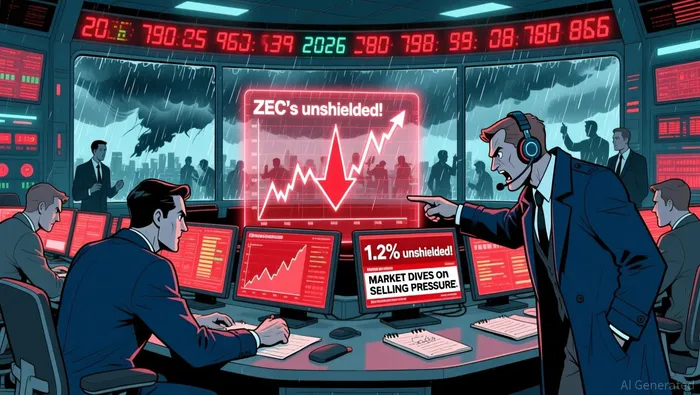
ZEC slid in early 2026 as on-chain data revealed substantial unshielding activity. More than 200,000 ZEC moved from shielded pools to transparent addresses, representing 1.2% of circulating supply. This activity often precedes exchange deposits or sales. A whale transferred 74,020 ZEC worth $35.75 million to Binance shortly afterward, signaling potential preparation for selling. The timing suggests a rapid reversal from recent bullish behavior.
Derivative markets showed capital outflows and rising short positions in ZEC. The token declined despite broader altcoin gains, making privacy coins the weakest crypto sector. This underperformance reflects investor caution about regulatory viability. The unshielding event amplified existing concerns about near-term headwinds.
How Does Zcash's Regulatory Compliance Position It for Institutional Adoption?
Zcash's hybrid privacy model allows selective transparency, enabling compliance with regulations like the EU's 2025 AMLR. This flexibility permits continued listings on major EU and US exchanges. By contrast, MoneroXMR-- faces delisting risks due to its rigid anonymity features. According to analysis. ZEC's compliance approach creates institutional adoption pathways that competitors lack.
Technical upgrades like Halo 2 enhance Zcash's scalability. Products including the Grayscale ZcashZEC-- Trust and potential ETF conversion could legitimize ZEC as a regulated asset class. Market reports indicate. These developments position Zcash favorably for institutional infrastructure integration. The protocol's balance between privacy and auditability remains its key advantage.
What Does the Future Hold for Privacy Coins?
Privacy coins face a complex future despite ZEC's strong 2025 performance. Last year, Zcash surged due to a post-halving supply squeeze and increased shielded transaction usage. According to analysis. It briefly outpaced BitcoinBTC-- and XRPXRP-- in trading volume on Coinbase during its rally. Data shows. The resurgence reflected renewed interest in privacy-focused assets after years of obscurity. That momentum has since stalled amid regulatory uncertainty.
The broader crypto market's institutionalization may benefit compliant privacy coins like ZEC. As traditional finance explores blockchain, demand grows for selective privacy features. Projects like SuiSUI-- Network are implementing protocol-level privacy for institutional use cases. Industry reports suggest. Still, regulatory clarity remains the critical hurdle for sector-wide adoption. Privacy coins must navigate compliance demands without compromising core functionality.

Blending traditional trading wisdom with cutting-edge cryptocurrency insights.
Latest Articles
Stay ahead of the market.
Get curated U.S. market news, insights and key dates delivered to your inbox.






Comments
No comments yet