
ZEC Resigns Core Team Amid Governance Crisis, Triggers Price Drop and Uncertainty
 Aime Summary
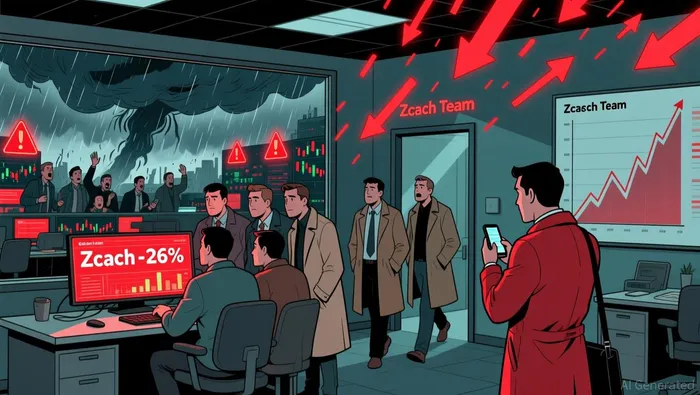
The resignation of Zcash's core development team and the Electric Coin Company (ECC) has triggered a governance crisis and a significant price drop in ZECZEC-- according to reports.
The team cited constructive discharge and governance conflicts as reasons for leaving, highlighting misaligned priorities with Bootstrap as reported.
Zcash's price dropped by as much as 26% in response to the exodus, raising concerns about the project's long-term stability and leadership continuity according to analysis.
The entire ECC team resigned after alleging that governance decisions by Bootstrap restricted their ability to innovate and pursue Zcash's original mission as detailed. The team plans to form a new company to continue ZcashZEC-- development independently, signaling a potential fragmentation of the community and project goals according to reports. The Zcash protocol remains operational, and Zooko Wilcox, the project's founder, has emphasized its continued open-source and decentralized nature as stated.
Market reactions have been severe, with ZEC's price dropping over 18% year-to-date, reflecting investor uncertainty according to data. Whale accumulation and shielded transaction volumes have increased, suggesting long-term interest and growing institutional confidence in Zcash as reported. However, the governance crisis has exposed vulnerabilities in nonprofit-driven crypto projects that rely on centralized development teams.
How will the ECC team's resignation affect Zcash's governance and development roadmap?
The ECC team's resignation has raised questions about who will manage future upgrades, grants, and regulatory engagement for Zcash. The team's formation of a new company, cashZ, indicates a desire for greater independence in development and governance decisions. However, this move also risks diluting Zcash's identity and causing a governance vacuum. The Bootstrap board remains responsible for the protocol's stewardship, but the dispute has highlighted flaws in centralized governance models.
The departure of the ECC team may also impact Zcash's ability to compete with other privacy-focused cryptocurrencies, particularly if development slows or governance becomes further fragmented. Market analysts have warned that such governance issues could undermine Zcash's position in the privacy coin sector.
What are the short-term and long-term implications for ZEC price and investor sentiment?
In the short term, ZEC has experienced significant price volatility, with a 20% drop following the governance shock. Whale accumulation of approximately $3.2 million has helped stabilize the price, but technical indicators suggest a bearish structure. If the current support levels fail, ZEC could face further downside risk.
In the long term, the crisis has prompted a broader evaluation of Zcash's governance structure and its ability to adapt to evolving market conditions. Shielded transaction volumes and institutional interest suggest growing privacy demand, which could support ZEC's price over time. However, the governance breakdown underscores the need for clearer alignment between decentralization and stakeholder interests.
What are the broader implications for privacy-focused cryptocurrencies and nonprofit-driven projects?
The Zcash governance crisis highlights the challenges faced by privacy-focused cryptocurrencies and nonprofit-driven projects that rely on centralized development teams. The resignation of the ECC team has exposed vulnerabilities in governance models that lack transparency and stakeholder alignment. This event has raised concerns about the sustainability of similar projects and the potential for leadership instability to impact market confidence.
Regulatory uncertainty and technological limitations further complicate the outlook for privacy coins like Zcash. The need for governance structures that balance decentralization with innovation remains a key challenge for the sector. The Zcash crisis serves as a cautionary tale for other projects seeking to maintain both privacy and institutional credibility in an evolving regulatory landscape.

Blending traditional trading wisdom with cutting-edge cryptocurrency insights.
Latest Articles
Stay ahead of the market.
Get curated U.S. market news, insights and key dates delivered to your inbox.


AInvest
PRO
AInvest
PRO



Comments
No comments yet