
ZEC Plunges Over Governance Dispute as Electric Coin Company Team Resigns
 Aime Summary
- Zcash’s core development team at Electric Coin Company (ECC) resigned en masse, citing constructive discharge by Bootstrap, the nonprofit governing the project.
- The dispute centers on governance alignment, not technical operations, as the ZcashZEC-- protocol remains open source and functional according to analysis.
- Zcash’s price has fallen sharply in the wake of the resignation, with ZECZEC-- down more than 18% year-to-date and over 11% in a 24-hour period as reported.
The Electric Coin Company (ECC) team, core developers behind Zcash (ZEC), announced their resignation on January 7, 2026, following a governance dispute with the Bootstrap board. Josh Swihart, former CEO of ECC, described the situation as constructive discharge, where employment conditions were altered in a way that forced the team to leave. The team cited misalignment with Zcash’s original mission and the need to continue building a privacy-focused cryptocurrency independently according to reports.
While the Zcash protocol itself is unaffected, the resignation has raised concerns about the project's governance model and the future of its development roadmap. Zcash founder Zooko Wilcox emphasized that the network remains secure and operational, but noted the dispute highlights long-standing governance challenges within the ecosystem as stated. The ECC team plans to form a new company to continue their work, but the transition may create uncertainty about funding and strategic direction.
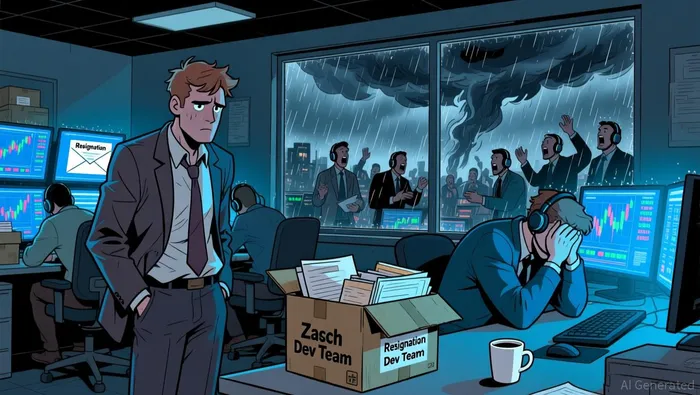
The market reaction to the news has been severe. Zcash’s price dropped by over 11% in the 24 hours following the resignation. Analysts point to the broader context of market volatility and regulatory scrutiny as compounding factors. Zcash’s 2025 rally, which saw the token surge by 816.7%, has reversed sharply in 2026.
What is the Impact on Zcash’s Governance Model?
The resignation of the core development team underscores structural weaknesses in Zcash’s governance model. The project’s unique governance structure, which balances nonprofit oversight with for-profit development, has long been a source of friction. The departure of the ECC team has sparked debate about the sustainability of centralized governance in a decentralized ecosystem.
Zcash’s governance model has been designed to reduce centralization risks by distributing power among multiple entities, including the Zcash Foundation and Bootstrap. However, the recent dispute highlights the challenges of aligning different stakeholders around a shared vision. The formation of a new company by the former ECC team may lead to further fragmentation unless the community can establish clearer governance principles.
The market has already factored in governance risk into Zcash’s valuation. The price drop in early 2026 reflects investor concerns about the project’s ability to maintain development momentum. Zcash’s future performance will depend on how quickly the community can stabilize the project and reestablish confidence.
Monero (XMR), another privacy-focused cryptocurrency, has gained traction as an alternative to Zcash in the wake of the governance crisis. XMRXMR-- has reclaimed the top spot in the privacy coin space, trading near all-time highs. This shift in market sentiment highlights the importance of governance clarity in attracting institutional and retail investors.
Despite the immediate market concerns, some analysts believe the shake-up could ultimately strengthen Zcash if the new company structure proves more aligned with the project’s mission. The long-term outcome will depend on the ability of the new team to maintain technical excellence and rebuild trust with the community.
What Are the Broader Implications for Privacy Coins?
The Zcash governance crisis serves as a cautionary tale for the privacy coin space. Unlike more decentralized projects like MoneroXMR-- and DashDASH--, Zcash’s reliance on centralized development teams has made it vulnerable to instability. The incident highlights the importance of robust governance frameworks in assessing the long-term viability of privacy-focused cryptocurrencies.
Investors in privacy coins are increasingly scrutinizing governance models as part of their due diligence. The Zcash situation has reinforced the need for transparent, decentralized governance structures that can withstand internal conflicts and external pressures. While the Zcash network remains secure and operational, the governance crisis has introduced a policy risk discount into its valuation.
The broader cryptocurrency market has also experienced a correction in early 2026, with most major assets declining by nearly 3% during the same period. This broader context means that the Zcash price decline cannot be attributed solely to governance issues, though the leadership turmoil has undoubtedly compounded the pressure.
In conclusion, the Zcash governance crisis has highlighted the fragility of centralized governance models in a decentralized ecosystem. While the protocol remains secure and functional, the market is reacting to the uncertainty surrounding leadership and development continuity. The future of Zcash will depend on how quickly the new company can reestablish credibility and align with the broader community.

Blending traditional trading wisdom with cutting-edge cryptocurrency insights.
Latest Articles
Stay ahead of the market.
Get curated U.S. market news, insights and key dates delivered to your inbox.


AInvest
PRO
AInvest
PRO



Comments
No comments yet