
New Zealand-China Trade: Uncovering Hidden Gems in Agriculture, Green Tech, and Supply Chains
The recent meeting between New Zealand Prime Minister Christopher Luxon and Chinese President Xi Jinping has reignited optimism about bilateral trade growth, with both leaders emphasizing economic cooperation amid geopolitical headwinds. While dairy and beef exports dominate headlines, strategic opportunities in underfollowed sectors—agricultural diversification, green technology partnerships, and supply chain resilience—present compelling investment themes. Supported by robust trade data and geopolitical risk mitigation strategies, these areas could yield asymmetric returns for investors.
Agricultural Exports: Beyond Dairy and Beef
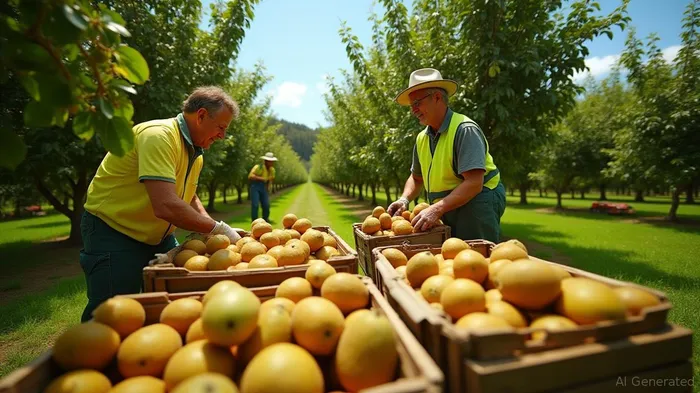
New Zealand's agricultural exports to China have surged from $8 billion in 2008 to over $40 billion in 2022, driven by the 2008 Free Trade Agreement (FTA) and its 2022 upgrade. Yet, the focus has long been on dairy and red meat, which together account for nearly 60% of agricultural exports. Underfollowed segments, such as horticulture (kiwifruit, apples, berries), specialty proteins (aquaculture, insects), and organic produce, now offer untapped potential.
Why now?
- China's shifting consumption: Urban middle-class households are prioritizing premium, healthy foods. Kiwifruit exports to China rose 15% YoY in 2024, while organic products command 20-30% price premiums.
- Trade data trends: Fresh fruit exports to China grew 12% in 2023, outpacing dairy's 4%. Aquaculture exports (e.g., salmon, mussels) to Asia-Pacific markets jumped 18% in H1 2024.
- Geopolitical tailwind: The Luxon-Xi meeting reaffirmed China's need for stable food imports amid U.S. agricultural tariffs, making New Zealand a preferred supplier.
Investment angle: Consider exposure to niche producers like T&G Global (kiwifruit) or Seafish NZ (aquaculture). For broader exposure, the MSCI New Zealand Consumer Staples Index includes agri-exporters with diversified portfolios.
Green Tech Partnerships: A Climate-Driven Catalyst
The leaders' emphasis on “climate-related initiatives” hints at a $100 billion+ opportunity in green tech collaboration. China's 14th Five-Year Plan prioritizes hydrogen, carbon capture, and renewable energy storage, while New Zealand aims to achieve net-zero emissions by 2050.
Key opportunities:
1. Hydrogen Production: New Zealand's abundant geothermal and wind resources could supply China's hydrogen economy. Mercury Energy is exploring partnerships with Chinese firms to build green hydrogen plants.
2. Carbon Capture: NZ firms like Carbon Zero are developing carbon sequestration tech, aligning with China's carbon trading market (worth $80 billion in 2024).
3. Smart Agriculture: IoT sensors and AI-driven crop management tools (e.g., FarmIQ) could meet China's demand for sustainable farming solutions.
Risk mitigation: Investors should favor firms with joint ventures in China's free trade zones (e.g., Shanghai, Tianjin), which offer tax breaks and streamlined regulatory processes.
Supply Chain Resilience: A Geopolitical Hedge
As U.S.-China trade tensions persist, New Zealand is positioning itself as a “reliable alternative” to volatile global supply chains. The Luxon-Xi meeting's focus on “rules-based trade” underscores this strategic advantage.
Underfollowed sectors:
- Logistics and Port Infrastructure: Port of Tauranga and Lyttelton Port are expanding capacity to handle Chinese cargo.
- Advanced Manufacturing: NZ's precision engineering firms (e.g., CCL Industries) supply components to Chinese auto and tech giants, benefiting from China's “dual circulation” strategy to localize supply chains.
Investment thesis: Supply chain resilience stocks often outperform during geopolitical volatility. The NZX Industrial Index includes logistics and manufacturing firms with China-facing exposure.
Mitigating Geopolitical Risks
While New Zealand-China ties remain strong, risks persist, including U.S. pressure on NZ to align with Indo-Pacific security frameworks. Risk mitigation strategies include:
1. Diversifying export markets (e.g.,东盟 ASEAN, EU).
2. Focusing on sectors with “strategic necessity” (e.g., food security, energy).
3. Leveraging the FTA's dispute-resolution mechanisms.
Conclusion: A Portfolio Play for the 2020s
New Zealand-China trade is evolving beyond commodities to reflect 21st-century demands. Investors ignoring underfollowed sectors risk missing out on asymmetric growth.
Recommendations:
- Allocate 5-10% to NZ agri-tech and green energy ETFs (e.g., NZX Green Energy Fund).
- Target firms with China-specific partnerships, such as hydrogen producers or carbon tech developers.
- Use options or futures to hedge against geopolitical volatility in traditional agri-exports.
The Luxon-Xi meeting wasn't just a diplomatic milestone—it was a roadmap for investors to profit from Asia's next growth frontier.

Stay ahead of the market.
Get curated U.S. market news, insights and key dates delivered to your inbox.


AInvest
PRO
AInvest
PRO



Comments
No comments yet