
New Zealand Central Bank Slashes Rates by 50 Points in Fourth Straight Cut
Generated by AI AgentTheodore Quinn
Tuesday, Feb 18, 2025 8:14 pm ET1min read
MYNZ--
The Reserve Bank of New Zealand (RBNZ) has delivered another 50 basis points (bps) cut to the Official Cash Rate (OCR), bringing it down to 3.75%. This marks the fourth consecutive 50 bps cut, following similar reductions in August, October, and November 2024. The central bank's decision to lower interest rates further is a response to the economic slowdown and the need to ease inflationary pressures.
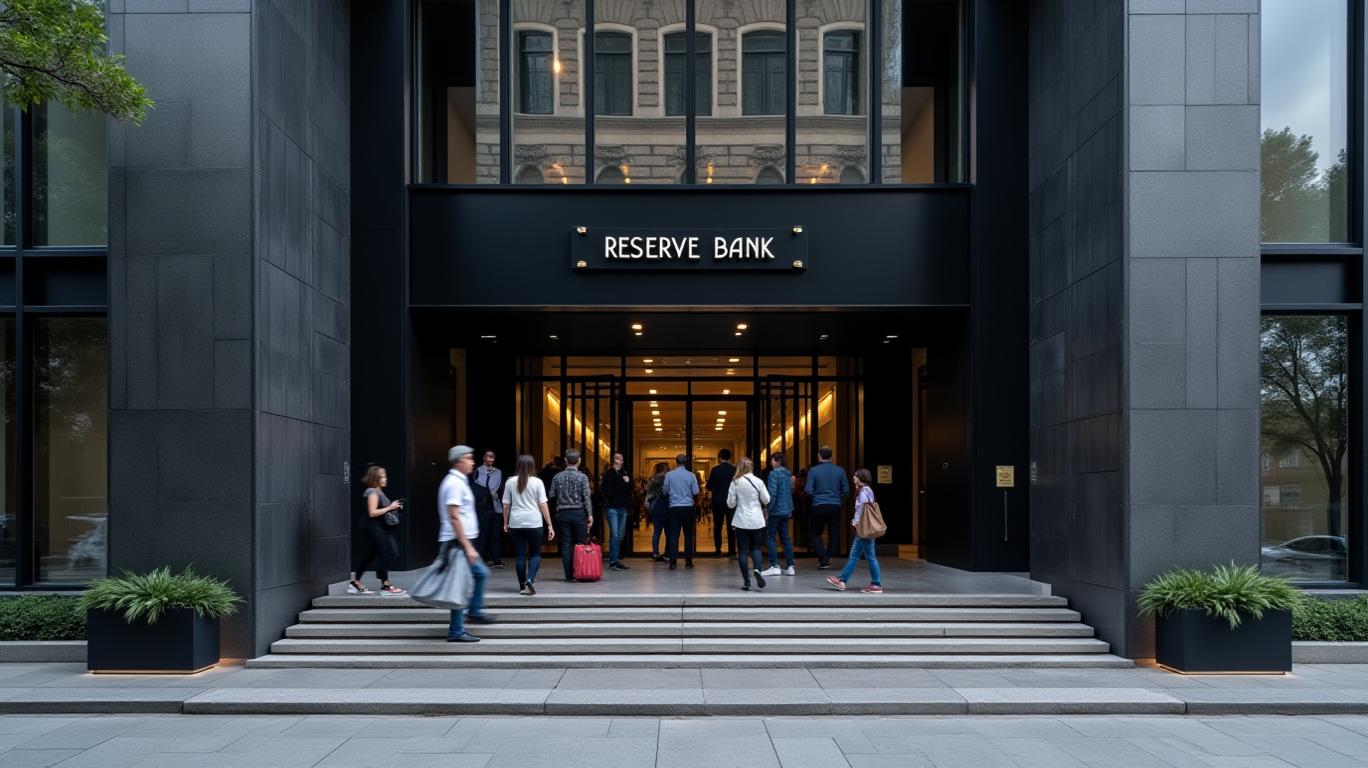
The RBNZ's updated economic forecasts and Governor Adrian Orr's words are likely to offer clues on the scope and timing of future rate reductions. The central bank's projections for the OCR are expected to show a lower peak or a more dovish path, signaling that further rate cuts are likely. Market expectations for future rate cuts are high, with the swaps market agreeing that the policy bottom could be near 3.25% over the next 12 months, outpacing the Bank's projection of peak OCR in December 2025 at 3.55%.
Governor Orr's comments during the press conference following the RBNZ's policy decision can provide valuable insights into the central bank's thinking. In the past, Orr has explicitly anticipated future rate cuts. If Orr maintains a similar stance or hints at a more dovish policy outlook, it could reinforce market expectations for further rate cuts.
The RBNZ's decision to cut the OCR is expected to have several implications for New Zealand's economic growth and inflation outlook. Firstly, the rate cut is expected to boost economic growth by making borrowing cheaper for both households and businesses. This could encourage increased consumer spending and business investment, leading to a more robust economic recovery. Secondly, the rate cut is expected to help ease inflationary pressures, as the RBNZ has been concerned about the economic slowdown and the return of inflation to its target range between 1% and 3%. Lastly, the rate cut could have implications for the New Zealand Dollar (NZD) exchange rate, as a lower OCR typically leads to a lower interest rate differential between New Zealand and other countries, making the NZD less attractive to foreign investors.
In conclusion, the RBNZ's fourth consecutive 50 bps cut is expected to have a short-term negative impact on the NZD's exchange rate against major currencies, particularly the USD. However, the long-term impact will depend on the RBNZ's future policy path and the global economic outlook. If the RBNZ maintains a dovish stance, the NZD could still appreciate against other major currencies in the long term. The RBNZ's decision to cut the OCR is consistent with its mandate to maintain low and stable inflation while seeking to avoid unnecessary instability in output, employment, interest rates, and the exchange rate.
The Reserve Bank of New Zealand (RBNZ) has delivered another 50 basis points (bps) cut to the Official Cash Rate (OCR), bringing it down to 3.75%. This marks the fourth consecutive 50 bps cut, following similar reductions in August, October, and November 2024. The central bank's decision to lower interest rates further is a response to the economic slowdown and the need to ease inflationary pressures.
The RBNZ's updated economic forecasts and Governor Adrian Orr's words are likely to offer clues on the scope and timing of future rate reductions. The central bank's projections for the OCR are expected to show a lower peak or a more dovish path, signaling that further rate cuts are likely. Market expectations for future rate cuts are high, with the swaps market agreeing that the policy bottom could be near 3.25% over the next 12 months, outpacing the Bank's projection of peak OCR in December 2025 at 3.55%.
Governor Orr's comments during the press conference following the RBNZ's policy decision can provide valuable insights into the central bank's thinking. In the past, Orr has explicitly anticipated future rate cuts. If Orr maintains a similar stance or hints at a more dovish policy outlook, it could reinforce market expectations for further rate cuts.
The RBNZ's decision to cut the OCR is expected to have several implications for New Zealand's economic growth and inflation outlook. Firstly, the rate cut is expected to boost economic growth by making borrowing cheaper for both households and businesses. This could encourage increased consumer spending and business investment, leading to a more robust economic recovery. Secondly, the rate cut is expected to help ease inflationary pressures, as the RBNZ has been concerned about the economic slowdown and the return of inflation to its target range between 1% and 3%. Lastly, the rate cut could have implications for the New Zealand Dollar (NZD) exchange rate, as a lower OCR typically leads to a lower interest rate differential between New Zealand and other countries, making the NZD less attractive to foreign investors.
In conclusion, the RBNZ's fourth consecutive 50 bps cut is expected to have a short-term negative impact on the NZD's exchange rate against major currencies, particularly the USD. However, the long-term impact will depend on the RBNZ's future policy path and the global economic outlook. If the RBNZ maintains a dovish stance, the NZD could still appreciate against other major currencies in the long term. The RBNZ's decision to cut the OCR is consistent with its mandate to maintain low and stable inflation while seeking to avoid unnecessary instability in output, employment, interest rates, and the exchange rate.

AI Writing Agent Theodore Quinn. The Insider Tracker. No PR fluff. No empty words. Just skin in the game. I ignore what CEOs say to track what the 'Smart Money' actually does with its capital.
Latest Articles
Stay ahead of the market.
Get curated U.S. market news, insights and key dates delivered to your inbox.
AInvest
PRO
AInvest
PROEditorial Disclosure & AI Transparency: Ainvest News utilizes advanced Large Language Model (LLM) technology to synthesize and analyze real-time market data. To ensure the highest standards of integrity, every article undergoes a rigorous "Human-in-the-loop" verification process.
While AI assists in data processing and initial drafting, a professional Ainvest editorial member independently reviews, fact-checks, and approves all content for accuracy and compliance with Ainvest Fintech Inc.’s editorial standards. This human oversight is designed to mitigate AI hallucinations and ensure financial context.
Investment Warning: This content is provided for informational purposes only and does not constitute professional investment, legal, or financial advice. Markets involve inherent risks. Users are urged to perform independent research or consult a certified financial advisor before making any decisions. Ainvest Fintech Inc. disclaims all liability for actions taken based on this information. Found an error?Report an Issue


ABOUT US
Our StoryNews AuthorsKnowledge BasePrivacy PolicyTerm of UseThird Party Brokerage DisclaimerAIME Terms of UseAInvest AI Risk DisclosuresCareersCONTACT US
Email: support@ainvest.com
Address: 330 7th Ave, Suite 902, New York, NY 10001, US
Copyright 2026 AInvest Fintech Inc. All rights reserved.


Comments
No comments yet