
Zcash (ZEC) and the Resurgence of Privacy Coins in a Regulated Crypto Era
 Aime Summary
Regulatory Pressures and Zcash's Strategic Edge
Global regulators have intensified their focus on privacy coins, driven by concerns over money laundering and illicit finance. The European Union's Anti-Money Laundering Regulation (AMLR) package, enacted in 2024, explicitly prohibits exchanges from listing crypto assets that enable transaction anonymization, effectively banning Zcash and MoneroXMR-- on regulated platforms according to reports. Similarly, the U.S. Financial Crimes Enforcement Network (FinCEN) proposed rules that would criminalize the use of mixers or privacy features, framing them as tools for money laundering according to analysis.
Zcash's survival in this hostile environment stems from its flexible privacy model. Unlike Monero, which enforces default anonymity for all transactions, Zcash allows users to choose between transparent and shielded addresses. 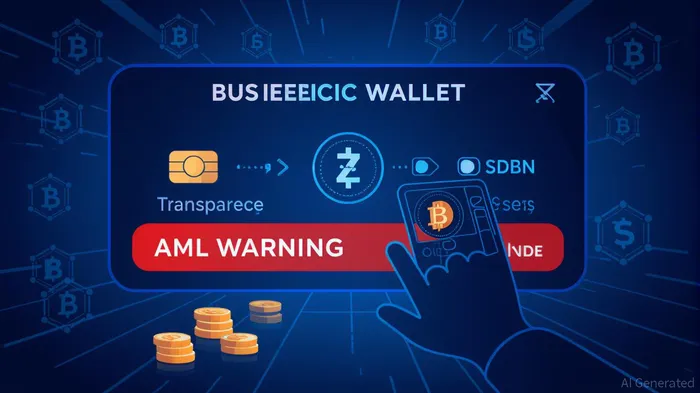 This distinction has granted ZECZEC-- a regulatory lifeline: institutions and exchanges can comply with Know Your Customer (KYC) requirements by interacting with transparent transactions while still offering privacy to users who opt for shielded pools according to a comparison. As a result, Zcash has retained a presence on major exchanges like Binance and Kraken-despite preemptive delistings in 2024-while Monero faces near-total exclusion according to analysis.
Institutional Adoption and Market Dynamics
The Grayscale Zcash Trust (ZCSH), launched in early 2025, has further cemented ZEC's institutional appeal. By packaging Zcash into a regulated investment vehicle, Grayscale has attracted investors seeking privacy as a hedge against financial surveillance, particularly in an era of rising inflation and geopolitical uncertainty according to reports. Assets under management for ZCSH surpassed $123 million by late 2025, signaling growing confidence in Zcash's utility according to data.
However, regulatory headwinds persist. Stricter KYC measures have reduced active ZEC addresses by 8% year-over-year, and liquidity constraints remain a challenge as exchanges navigate compliance risks according to statistics. Despite these obstacles, Zcash's shielded transaction share has climbed to over 4.9 million ZEC, reflecting sustained demand for privacy according to analysis. This trend is underscored by the upcoming Zcash halving event in November 2025, which will reduce block rewards by 50%, potentially tightening supply and amplifying speculative interest according to market analysis.
Privacy Coins in Comparative Perspective
Zcash's position in the privacy coin market is best understood in contrast to Monero. While Monero's default privacy model-using ring signatures and stealth addresses-offers robust anonymity, it also renders the asset incompatible with regulated exchanges, limiting its adoption according to analysis. In contrast, Zcash's optional privacy framework aligns with a hybrid approach, where users can balance compliance and confidentiality. This flexibility has allowed Zcash to maintain broader market access, even as Monero's price volatility intensifies due to futures-driven speculation according to market analysis.
Critics, however, caution against over-optimism. Economist Lyn Alden has warned that Zcash's rally could be a "liquidity-driven trap," particularly for privacy coins with thin order books and regulatory uncertainty according to analysis. The EU's AMLR, set to fully restrict privacy coins on licensed exchanges by July 2027, looms as a potential catalyst for market corrections according to analysis. Yet, proponents argue that privacy is becoming a core asset in an age of pervasive surveillance, with Zcash uniquely positioned to navigate this transition according to analysis.
The Path Forward: Balancing Innovation and Compliance
Zcash's future hinges on its ability to reconcile technological innovation with regulatory expectations. The Zcash Foundation's ongoing upgrades to zk-SNARKs-enhancing scalability and reducing transaction costs-could further differentiate the asset from competitors according to a comparison. Meanwhile, the development of privacy-preserving compliance tools, such as selective disclosure protocols, may enable Zcash to coexist with regulatory frameworks without compromising user privacy according to reports.
For investors, Zcash represents a high-conviction bet on the enduring demand for financial autonomy. While regulatory risks remain acute, the asset's institutional traction, technical adaptability, and cultural resonance in the crypto ecosystem suggest a compelling long-term thesis. As the 2025 halving event underscores, Zcash's supply dynamics and market psychology are poised to evolve in ways that could redefine its role in the privacy coin narrative.

Stay ahead of the market.
Get curated U.S. market news, insights and key dates delivered to your inbox.


AInvest
PRO
AInvest
PRO



Comments
No comments yet