
ZCASH (ZEC) Resigns Core Developers Over Governance Dispute
 Aime Summary
Zcash's Electric Coin Company (ECC) team resigned over governance disputes with Bootstrap, citing intolerable conditions and planning a new independent entity to continue development.
The SEC concluded a two-year investigation into the ZcashZEC-- Foundation without enforcement action, affirming its compliance and non-profit status.
Zcash's price dropped 25% following the leadership crisis, reflecting investor concerns over governance instability and development continuity.
The Electric Coin Company (ECC) team, responsible for Zcash (ZEC) development, resigned citing governance disagreements with Bootstrap, the nonprofit overseeing ECC. The team announced the formation of a new for-profit company, cashZ, to continue Zcash development independently, aiming to address governance and scaling challenges. The Zcash protocol remains operational and secure, with no disruption to core functionality 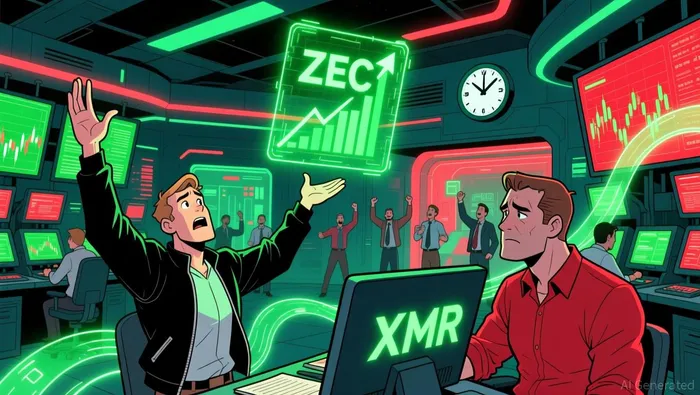 despite the governance crisis.
The SEC's conclusion of a two-year investigation into the Zcash Foundation ended without enforcement action. This regulatory outcome removes a long-standing overhang and signals that privacy-focused crypto projects can operate within legal frameworks. Governance tensions contributed to market volatility for ZECZEC--, with a price decline of more than 18% in 2026 and 16% in the past 24 hours. Large holders responded to the price decline by accumulating over $3.2 million worth of ZEC, stabilizing the price and suggesting long-term confidence.
What Caused the Governance Dispute?
The resignation of Zcash's core developers reveals structural governance flaws in foundation-backed and privacy-focused cryptocurrency projects. The issue stems from a conflict between protocol developers and governance entities responsible for financing and employment frameworks. This misalignment, particularly in how employment terms are managed by governance boards, has undermined developers' autonomy. Although the Zcash protocol itself remains unaffected in the short term, the departure of the core team poses long-term risks.
The Electric Coin Company (ECC) has departed from Bootstrap, a nonprofit supporting Zcash, due to governance disputes. The ECC team described the departure as a constructive discharge, citing a breakdown in alignment with the nonprofit's leadership and changes to employment conditions. While the Zcash protocol remains open-source and operational, the split has caused uncertainty and led to a drop in ZEC's price. The ECC team plans to form a new company to continue the mission of developing private, unstoppable money.
What Are the Implications for Zcash's Market Performance?
Zcash's core development team at the Electric Coin Company (ECC) has officially resigned due to a major governance dispute with Bootstrap, the nonprofit governing the project. This has led to a sharp price decline, with ZEC falling over 15% in a single day. Technical indicators show a breakdown below key support levels, with a downside target near $300.
The ECC team cited deteriorating working conditions and a deviation from the project's original mission of creating unstoppable private money. The team describes their departure as a 'constructive discharge,' a legal term for working conditions becoming intolerable. Despite the split, the former ECC team plans to form a new company to continue developing privacy-focused technology outside of Bootstrap. Market sentiment has worsened, with declining open interest and an increase in short positions.
The resignation and formation of cashZ reflect a shift in governance structure, aiming to reduce constraints and accelerate development. The new governance model faces a balancing act between organizational control and Zcash's decentralized mission amid evolving regulatory landscapes. The ECC team's departure has raised questions about future governance and development continuity, with institutional investors emphasizing the need for professionalized governance frameworks to ensure accountability and long-term stability.
What Is the Broader Market Impact of Privacy Coins?
Privacy coins, including Zcash and MoneroXMR--, outperformed the broader cryptocurrency market in 2025 with significant annual returns. Increasing regulatory pressure, such as the U.S. GENIUS Act and EU MiCA, and rising demand for on-chain anonymity are expected to drive further gains in 2026. Venture capital firm a16z predicts continued dominance of privacy coins, citing narratives like 'secrets-as-a-service' and a shift from 'code is law' to 'spec is law.'
Monero's price surged past $797, setting a new all-time high amid tightening regulatory scrutiny on privacy coins. Despite bans and restrictions in various regions, the demand for Monero has increased as regulators push for greater transparency. Analysts and traders highlight privacy as a critical factor, with Monero outperforming Zcash due to its anonymous founder and growing institutional interest in privacy-focused technologies.
Zcash underperformed but remains the strongest annual performer among privacy coins. The rally is attributed to growing retail and institutional interest in financial privacy amid regulatory changes, including the U.S. Senate Banking Committee's draft market structure bill, which is seen as a significant expansion of financial surveillance. The overall crypto market rose by over 3.2% in the last 24 hours, with Bitcoin up 3.2%.
Privacy is no longer a fringe topic but a core issue as governments push for greater digital control. Monero's rally is a response to these pressures, not in spite of them.
Zcash's development team formed cashZ after resigning, aiming to address governance and scaling challenges. Despite the leadership transition, Zcash's decentralized and open-source nature remains intact, allowing multiple development teams to contribute.
The situation raises questions about governance continuity and the balance between decentralization and organizational control. The formation of a new governance model is seen as both an opportunity and a challenge in aligning with Zcash's original mission of privacy and decentralization.
Zcash's core development team split from the nonprofit Bootstrap, causing a significant price drop. The split stems from a deep disagreement with the governance structure, and technical indicators suggest further downward pressure on ZEC's price.
Despite the split, the former ECC team plans to form a new company to continue developing privacy-focused technology outside of Bootstrap. Without continued development and upgrades, the Zcash protocol risks falling behind other privacy-focused projects, adding to the uncertainty around its future.
The ECC team's departure raises concerns about the stability of the project and highlights governance challenges in hybrid nonprofit-profit models. These governance issues have created uncertainty in the market, with Zcash losing its position as the leading privacy-focused cryptocurrency to Monero. The governance dispute underscores the risks associated with misalignment in decentralized projects and its impact on investor confidence.

Blending traditional trading wisdom with cutting-edge cryptocurrency insights.
Latest Articles
Stay ahead of the market.
Get curated U.S. market news, insights and key dates delivered to your inbox.


AInvest
PRO
AInvest
PRO



Comments
No comments yet