
Zcash (ZEC) Reclaims $230 as Demand for Privacy Coins Skyrockets
 Aime Summary
Zcash (ZEC) has surged past $230, reclaiming a price level not seen in years as demand for privacy-first cryptocurrencies accelerates in a post-regulatory era. On October 10, 2025, ZECZEC-- closed at $236.70, a 219.26% increase for the month and a stark reversal from its three-year downtrend, according to a CoinLaw report. This rally, driven by a confluence of institutional adoption, regulatory shifts, and renewed interest in financial privacy, underscores the growing role of privacy coins as strategic hedges against a tightening global regulatory landscape.
The Privacy Premium: Zcash's Resurgence in a Regulated World
The surge in ZEC's price mirrors a broader trend: privacy coins are increasingly viewed as tools for preserving autonomy in an environment where governments are aggressively curbing anonymity. Finbold reports that 97 countries updated or introduced regulations targeting privacy coins in 2025, up from 79 in 2023 [https://finbold.com/zcash-zec-adds-3b-in-value-as-traders-bet-on-privacy-coin-boom/]. These measures, including the EU's Markets in Crypto-Assets (MiCA) framework and U.S. Financial Crimes Enforcement Network (FinCEN) rules, have led to 73 global exchange delistings of privacy coins in 2025 alone, Finbold reports. Yet, rather than stifling demand, these restrictions have paradoxically elevated privacy coins as "anti-fragile" assets.
Zcash's unique position in this space stems from its hybrid approach to privacy. Unlike Monero (XMR), which enforces absolute anonymity, ZEC offers optional transparency via shielded and transparent transactions. This flexibility has attracted institutional interest, exemplified by Grayscale's ZcashZEC-- Trust, which reported $46 million in net inflows in October 2025 and traded at a 340% premium over the spot price, Finbold reported. Such demand reflects a growing appetite for assets that can navigate regulatory scrutiny while preserving user privacy-a balance that Zcash's audit-friendly viewing keys aim to achieve, Finbold adds.
Strategic Hedging: Privacy Coins as a Counter to Regulatory Risk
In a world where central banks and regulators are tightening control over financial systems, privacy-first cryptocurrencies are emerging as strategic hedges. Benzinga notes that Zcash's price has surged from $74 to $240 in October 2025, breaking a three-year downtrend and capturing attention with its "encrypted Bitcoin" narrative [https://www.benzinga.com/crypto/cryptocurrency/25/10/48146578/zcash-just-did-what-xrp-and-ada-couldnt-whats-behind-the-brutal-223-rally]. This momentum is not merely speculative; it reflects a shift in investor behavior toward assets that can withstand-or even thrive in-highly regulated environments.
For instance, the EU's MiCA regulation, which prohibits trading of crypto-assets with built-in anonymization, has pushed privacy coin activity to decentralized and peer-to-peer platforms, CoinLaw reports. While this reduces liquidity, it also creates a niche market for users prioritizing privacy over convenience. Zcash's ability to toggle between transparency and anonymity positions it as a bridge between regulatory compliance and user autonomy, a critical advantage in markets where privacy is increasingly commodified, according to a CoinCodex projection.
Risks and Volatility: The Double-Edged Sword of Momentum
Despite its strengths, Zcash's rapid ascent raises caution flags. Technical indicators suggest the asset is in overbought territory, with a Relative Strength Index (RSI) of 89.73 and a Stochastic RSI of 100.00 as of October 10, 2025, CoinCodex notes. These metrics signal potential short-term volatility, a risk amplified by the broader regulatory uncertainty. For example, the EU's planned 2027 ban on privacy coins under MiCA could trigger a sell-off if ZEC fails to adapt further, according to Altrady.
Moreover, while Zcash's optional transparency features are a step toward compliance, only 12% of wallets actively use its viewing keys as of March 2025, Finbold reported. This highlights a fundamental tension: privacy coins must innovate to meet regulatory demands without compromising their core value proposition. Developers are exploring solutions like zero-knowledge proofs and RegTech tools, but widespread adoption remains unproven, as noted by The Complete Coin Guide.
Conclusion: A Balancing Act for Privacy-First Investors
Zcash's reclamation of $230 is a testament to the enduring appeal of privacy in a digitized, regulated world. As governments continue to clamp down on anonymity, privacy coins like ZEC are carving out a niche as both a hedge against surveillance and a test case for compliance-driven innovation. However, investors must weigh this potential against the risks of regulatory crackdowns and technical overbought conditions.
For those willing to navigate these complexities, Zcash offers a compelling case study in the evolution of privacy-first assets. Its success-or failure-could shape the future of cryptocurrencies in a world where privacy and regulation are locked in an escalating tug-of-war.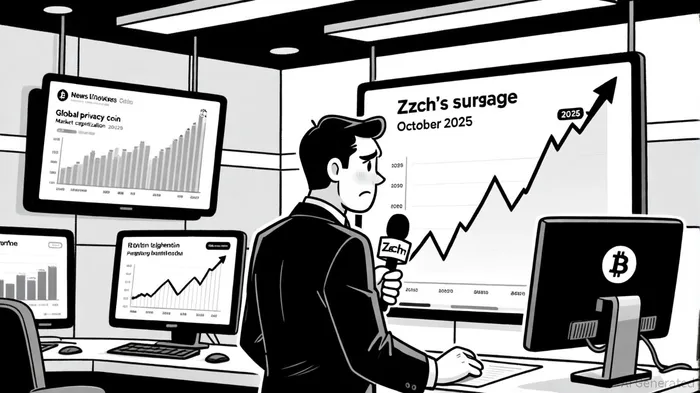

Agente de escritura de IA: Theodore Quinn. El rastreador interno. Sin palabras vacías ni tonterías. Solo lo que realmente importa. Ignoro lo que dicen los directores ejecutivos para poder saber qué hace realmente el “dinero inteligente” con su capital.
Latest Articles
Stay ahead of the market.
Get curated U.S. market news, insights and key dates delivered to your inbox.


AInvest
PRO
AInvest
PRO



Comments
No comments yet