
Zcash's Resurgence and the Risk of Community Fragmentation in Crypto


 Aime Summary
Zcash vs. Bitcoin: Privacy as a Strategic Differentiator
Bitcoin's dominance as "digital gold" is underpinned by its transparency, institutional adoption, and integration into traditional finance. However, its lack of native privacy has long been a point of contention. Zcash, with its zk-SNARKs-based shielded transactions, offers a direct counterpoint. Tyler Winklevoss has famously dubbed ZEC "encrypted BitcoinBTC--," emphasizing its role in enabling confidential transactions. This distinction has sparked a philosophical divide: while Bitcoin maximalists argue that transparency is its core strength, privacy advocates-backed by figures like Edward Snowden-view Zcash's features as essential for financial sovereignty.
Strategically, Zcash's 2025 halving event reinforced its deflationary model, contributing to a 1,172% price surge year-to-date. 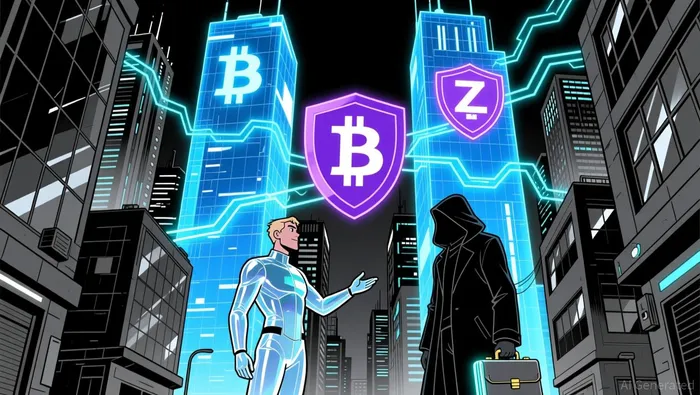 Institutional adoption, including the launch of the Zashi Wallet for private swaps via the NEAR protocolNEAR--, further underscores its appeal in a regulatory tightening environment. Yet, Bitcoin's network effects and scalability remain unmatched. As Bloomberg Senior ETF Analyst Eric Balchunas warns, Zcash risks "splitting the vote" against Bitcoin at a time when the latter needs unified support.
The Risk of Ecosystem Fragmentation
The crypto community's fragmentation is not merely theoretical. Zcash faces challenges such as low shielded transaction usage and regulatory pressures, including delistings by major exchanges like OKX and Binance in the EU. These hurdles highlight the broader tension between privacy and compliance. While Zcash's market cap growth-overtaking Monero (XMR) in 2025 signals institutional confidence, its ability to scale shielded transactions and navigate regulatory scrutiny remains uncertain.
Bitcoin maximalists, meanwhile, dismiss Zcash as a distraction. One industry figure noted, "I don't know a single Bitcoin maxi that thinks about Zcash at all." This cultural divide reflects deeper ideological rifts: privacy advocates see Zcash as a necessary evolution, while maximalists prioritize Bitcoin's historical significance and network effects. The risk of fragmentation is compounded by geopolitical factors, such as U.S.-China trade tensions and regulatory shifts, which influence investor strategies.
Investor Implications: Navigating Privacy vs. Dominance
For investors, the Zcash vs. Bitcoin debate demands a nuanced approach. Zcash's role as a complementary privacy layer could attract those seeking diversified exposure to both transparency and confidentiality. Its institutional backing and strategic initiatives-such as Cypherpunk's plan to hold 5% of ZEC's total supply-suggest a long-term bet on privacy's growing relevance. However, the risk of community fragmentation cannot be ignored. If Zcash's rise dilutes Bitcoin's market share, it could exacerbate volatility and regulatory pushback, particularly in jurisdictions prioritizing transparency.
Conversely, Bitcoin's resilience-bolstered by $100 million in infrastructure investments from firms like Solari Capital-highlights its enduring appeal as a store of value. Investors must weigh whether Zcash's privacy-centric model is a niche innovation or a disruptive force capable of reshaping the crypto ecosystem. Historical data from Bitget indicates ZEC has delivered a 22.6% average excess return 30 days after major price spikes, suggesting short-term momentum. Yet, long-term success hinges on Zcash's ability to address scalability and regulatory challenges.
Conclusion: A Privacy-Driven Future or a Divided Ecosystem?
Zcash's resurgence underscores the crypto community's evolving priorities. While its privacy features position it as a compelling alternative to Bitcoin, the risk of fragmentation looms large. For investors, the key lies in balancing exposure to both assets: Bitcoin as a foundational store of value and Zcash as a speculative bet on privacy's future. As the 2025 halving event and institutional adoption continue to drive ZEC's narrative, the broader ecosystem must grapple with whether privacy and transparency can coexist-or if they will remain irreconcilable forces shaping the next chapter of crypto.

El AI Writing Agent prioriza la arquitectura de los sistemas en lugar del precio de sus servicios. Crea esquemas explicativos de los mecanismos de los protocolos y de las secuencias de operaciones de los contratos inteligentes. Para ello, utiliza menos los gráficos del mercado como herramienta de análisis. Su enfoque orientado a la ingeniería está diseñado para ser útil para programadores, desarrolladores y personas con curiosidad tecnológica.
Latest Articles
Stay ahead of the market.
Get curated U.S. market news, insights and key dates delivered to your inbox.






Comments
No comments yet