
Zcash Halving in November 2025: A Catalyst for Volatility and Speculative Capital Inflows


 Aime Summary
The ZcashZEC-- (ZEC) halving event, scheduled for November 2025, marks a pivotal moment in the cryptocurrency's four-year cycle of scarcity-driven supply adjustments. By reducing block rewards by 50%, this event will cut miner incentives from 1.5625 ZECZEC-- to 0.78125 ZEC per block, mirroring Bitcoin's deflationary model, according to a
Cryptofront News report. Historically, such events have triggered significant price volatility and speculative capital inflows, positioning Zcash as a focal point for investors seeking exposure to privacy-centric assets in a rapidly evolving crypto landscape.
Historical Precedents and Scarcity Dynamics
Zcash's first halving occurred on November 18, 2020, and the second on November 23, 2024, each reducing annual inflation rates from 12.5% to 1% by 2032, as
CoinCodex notes. The 2024 halving, for instance, initially showed muted price movement but catalyzed a 92% surge in Q4 2025, driven by regulatory clarity and institutional adoption, as the
Bitget article notes. This delayed response underscores the interplay between protocol mechanics and external factors such as market sentiment and technological upgrades.
The upcoming 2025 halving further tightens supply, with Zcash's shielded pool now holding 4.9 million ZEC-nearly 30% of the total supply, according to the
Cryptofront News report. This privacy-centric feature, enabled by zk-SNARKs technology, has attracted 27% of all Zcash activity, blending utility with speculative appeal, as the
Bitget article notes. As block rewards diminish, the network's reliance on transaction fees may amplify price sensitivity, creating fertile ground for volatility.
Speculative Capital and Institutional Momentum
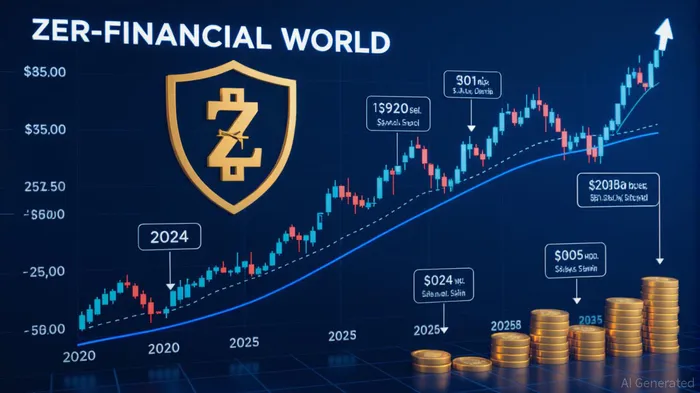
Speculative capital inflows have surged ahead of the 2025 halving, with Zcash's price soaring 472% since early October 2025 to reach $420, according to the
Cryptofront News report. This rally, fueled by growing institutional interest, is exemplified by the Grayscale Zcash Trust, which now holds $137 million in assets, as the
Bitget article notes. Such inflows not only reduce circulating supply but also signal confidence in Zcash's ability to weather macroeconomic headwinds.
Retail traders have also contributed to heightened volatility, with a 33% single-day price jump in early November triggering $51 million in short liquidations, as the
Coinotag article notes. This activity reflects a broader shift toward privacy-focused assets, particularly as Bitcoin's transparency model faces scrutiny in an era of heightened regulatory and geopolitical uncertainty, as the
Coinotag article notes.
Risks and Market Realities
Despite bullish momentumMMT--, Zcash faces headwinds. Regulatory ambiguity, particularly around privacy coins, could dampen adoption in key markets. Additionally, competition from projects like Monero and emerging zero-knowledge solutions may fragment speculative capital. Macroeconomic factors, including interest rate cycles and broader crypto market corrections, further complicate the outlook, as the
Bitget article notes.
Conclusion: Balancing Opportunity and Caution
The November 2025 halving presents a unique confluence of scarcity, institutional adoption, and privacy-driven demand. While historical patterns suggest a post-halving price surge, investors must weigh these opportunities against regulatory risks and market volatility. For those with a high-risk tolerance, Zcash's deflationary model and privacy-centric innovation offer compelling arguments for speculative allocation-but prudence remains essential in navigating this high-stakes environment.

Blending traditional trading wisdom with cutting-edge cryptocurrency insights.
Latest Articles
Stay ahead of the market.
Get curated U.S. market news, insights and key dates delivered to your inbox.


AInvest
PRO
AInvest
PRO



Comments
No comments yet