
The Zcash Halving Event and Its Implications for Crypto Investors in 2025


 Aime Summary
Historical Price Trends and Bull Cycle Correlations
Zcash's halving events have historically coincided with pivotal moments in its price cycles. The 2018 halving, for instance, marked a turning point in ZEC's supply model, reducing block rewards and tightening the rate of new ZECZEC-- issuance. This contraction in supply created a foundation for the 2021 bull market, during which ZEC's price surged from $50 to over $300, mirroring broader crypto market trends. Similarly, the 2024 halving catalyzed a dramatic 92% price rally in Q4 2025, driven by clearer regulatory frameworks and institutional adoption.
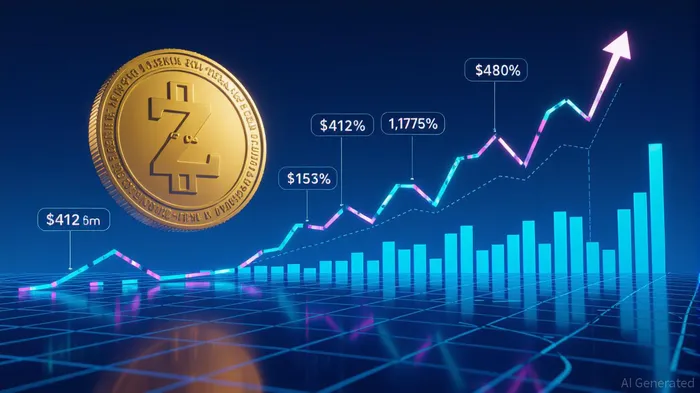 These patterns underscore a recurring theme: Zcash's halvings act as catalysts for price appreciation during bull cycles. By reducing annual inflation to 2% by 2028, the protocol's deflationary mechanics create a narrative of scarcity that resonates with investors. However, as seen in 2025, such surges are often accompanied by extreme volatility, with ZEC experiencing a 1,172% year-to-date gain followed by a sharp correction. This duality-scarcity-driven optimism and volatility-highlights the importance of aligning investment strategies with both fundamental and psychological factors.
Market Psychology and Scarcity-Driven Demand
The psychology of scarcity plays a critical role in Zcash's post-halving dynamics. After the 2024 halving, the reduced block reward signaled a structural shift in ZEC's supply schedule, reinforcing perceptions of long-term value retention. This narrative gained traction as institutional investors began prioritizing privacy-focused assets, with Zcash's zero-knowledge proofs (ZK-SNARKs) offering a competitive edge in regulated markets.
Data from the 2018 halving further illustrates this dynamic. The reduction in block rewards created expectations of future scarcity, which, combined with Bitcoin's 2020 halving, spurred a broader market reevaluation of privacy coins. By 2021, ZEC's price recovery aligned with the bull market, demonstrating how halving events can amplify investor sentiment during periods of macroeconomic optimism. For 2025, the key question is whether Zcash's deflationary model will continue to attract speculative and institutional capital amid evolving regulatory landscapes.
Strategic Entry Points and Hedging Measures
For investors considering ZEC in 2025, the post-2024 halving environment presents both opportunities and risks. Historical data suggests that strategic entry points often emerge during short-term corrections following halvings. For example, ZEC's price stabilized between $412 and $480 post-2024 halving before surging in late 2025. Investors who recognized this consolidation phase could have capitalized on the subsequent rally.
However, the volatility observed in 2025-marked by a 1,172% YTD gain followed by a sharp decline-underscores the need for hedging strategies. Diversification across privacy-focused assets, options-based risk management, and dollar-cost averaging can mitigate exposure to sudden market shifts. Additionally, monitoring macroeconomic indicators, such as regulatory developments in the U.S. and EU, will be critical, as institutional adoption often hinges on legal clarity.
Conclusion: Long-Term Valuation and the Road to 2028
While the 2025 market is still digesting the implications of the 2024 halving, the next major event in 2028 will further tighten ZEC's supply, reducing block rewards to 0.78125 ZEC. This trajectory reinforces Zcash's position as a deflationary asset with a predictable issuance schedule, a trait that historically aligns with bull market cycles. For long-term investors, the key lies in balancing the protocol's structural advantages with pragmatic risk management. As Zcash's scarcity narrative gains traction, those who align their strategies with both its technical design and evolving market psychology may find themselves well-positioned for the next phase of its journey.

Blending traditional trading wisdom with cutting-edge cryptocurrency insights.
Latest Articles
Stay ahead of the market.
Get curated U.S. market news, insights and key dates delivered to your inbox.


AInvest
PRO
AInvest
PRO



Comments
No comments yet