
Zcash Halving Event: A Deflationary Catalyst or a Speculative Mirage?
 Aime Summary
The Halving Date Conundrum: 2025 or 2028?
Zcash's halving schedule is governed by a fixed block count (1,680,000 blocks), but the Blossom upgrade in 2019 accelerated block time from 150 to 75 seconds. This adjustment compressed the halving cycle, leading to confusion. While some sources incorrectly cite 2028 as the next halving date, updated data confirms the 2025 event as accurate. The last halving occurred on November 23, 2024, reducing block rewards to 1.5625 ZEC. This timeline aligns with Zcash's deflationary roadmap, which aims to mirror Bitcoin's scarcity model by further lowering annual inflation to 2% by 2028.
Market Impact: A 950% Surge and Institutional Embrace
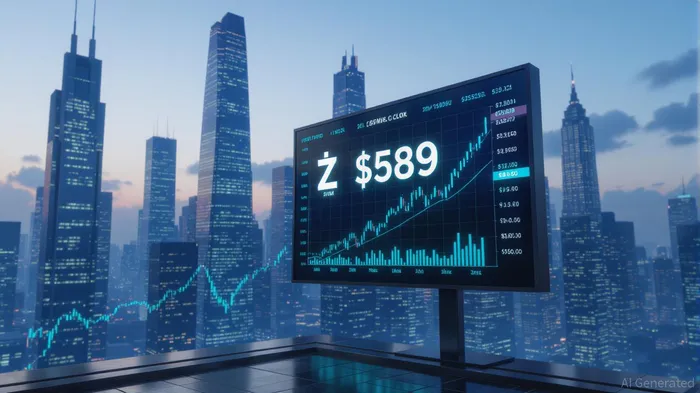
The 2025 halving has already triggered a dramatic price response. ZEC surged 950% from September 2025 lows, reaching $344.32 by October 30, 2025, and peaking at $589 by year-end. This rally was amplified by the ZIP 1015 lockbox mechanism, which withholds 12% of block rewards to reduce daily liquidity by ~$337,000. The mechanism's deflationary effect, combined with reduced miner issuance, has created a narrative of scarcity, attracting institutional demand.
The Grayscale Zcash Trust now owns 5% of ZEC's total supply, echoing Bitcoin's post-halving institutional adoption patterns. Meanwhile, firms like Cypherpunk Technologies have accumulated 18 million in ZEC, signaling confidence in Zcash's privacy-centric value proposition. Analysts suggest that sustained institutional participation could push ZEC toward $1,000 by November 2025, contingent on continued supply tightening.
Miner Economics: Profitability and Network Security
The halving's impact on miners is twofold. First, reduced block rewards (from 3.125 to 1.5625 ZEC) directly cut their income, potentially forcing smaller miners to exit the network. However, the post-halving price surge has offset some of this pressure. For instance, ZEC's price increase from $34 to $589 since early 2025 has improved mining profitability for those with efficient hardware.
Second, the ZIP 1015 lockbox mechanism indirectly supports miners by reducing short-term liquidity, which could stabilize ZEC's price over time. This dynamic contrasts with Bitcoin's halving model, where liquidity remains fully available. While Zcash's approach may enhance long-term network security, it also raises questions about miner adaptability. If ZEC's price fails to sustain its current trajectory, the reduced liquidity from the lockbox mechanism could exacerbate downward pressure.
Strategic Opportunity or Speculative Trap?
The halving presents a dual-edged scenario for investors. On one hand, Zcash's deflationary design and institutional adoption align with long-term value accrual. The 2024 halving, for example, drove a 92% price rally by late 2025, demonstrating the market's sensitivity to supply shocks. On the other hand, historical volatility-such as ZEC's 1,172% surge followed by a 96% collapse in 2025-underscores the risks of speculative overbidding.
For privacy-focused assets, Zcash's unique position as a privacy-first store of value could attract niche demand, particularly as regulatory scrutiny intensifies for less private cryptocurrencies. However, investors must weigh this against the possibility of a post-halving correction. If ZEC's price fails to sustain its current trajectory, the reduced liquidity from the lockbox mechanism could exacerbate downward pressure.
Conclusion: A Calculated Bet on Scarcity
The 2025 Zcash halving represents a strategic buying opportunity for investors who believe in the long-term value of privacy-centric assets and the deflationary model. Institutional adoption, coupled with Zcash's alignment with Bitcoin's monetary policy, strengthens its case as a hedge against inflation. However, the event also carries speculative risks, particularly for those relying on short-term gains.
As the market approaches the year-end peak (projected at $589–$693), investors should monitor institutional activity, network hash rate stability, and macroeconomic trends. For those with a multi-year horizon, Zcash's halving could be a catalyst for sustained appreciation. For others, it may serve as a cautionary tale of volatility in a nascent asset class.

Blending traditional trading wisdom with cutting-edge cryptocurrency insights.
Latest Articles
Stay ahead of the market.
Get curated U.S. market news, insights and key dates delivered to your inbox.






Comments
No comments yet