
Zcash Halving 2025: Implications for Crypto Market Dynamics


 Aime Summary
Historical Halving Patterns in Zcash
Zcash, a privacy-focused cryptocurrency launched in 2016, operates on a deflationary model similar to BitcoinBTC-- but with distinct structural differences. Its first halving occurred in 2020, cutting block rewards from 6.25 ZEC to 3.125 ZEC. While this event coincided with broader market turbulence in early 2020, ZEC's price did not exhibit a direct correlation to the halving, remaining relatively flat amid macroeconomic headwinds. The second halving, however, in November 2025, marked a turning point. Block rewards were slashed again to 1.5625 ZEC, triggering a 7% decline in mining hashrate-a sign of reduced miner profitability and potential short-term risks to network security.
Price Surge and Institutional Catalysts
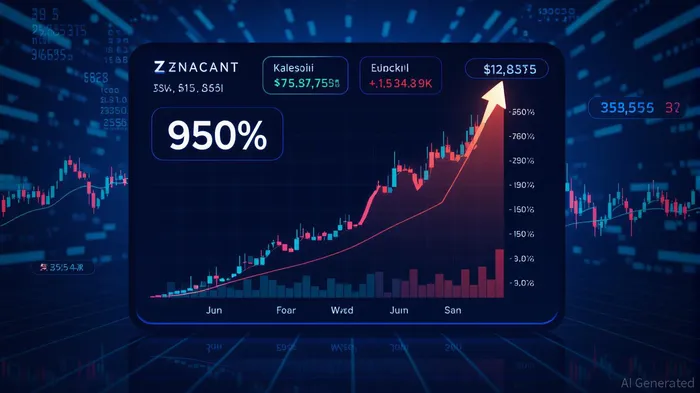 . The 2025 halving coincided with a dramatic price surge. By year-end, ZEC's price had risen 950% from its September lows, reaching $589. This exponential growth was driven by two key factors: the ZIP 1015 lockbox mechanism and institutional demand.
The ZIP 1015 protocol withholds 12% of block rewards, effectively reducing daily liquidity by approximately $337,000 and creating artificial scarcity. This deflationary pressure mirrors Bitcoin's supply constraints but operates on a smaller scale, amplifying ZEC's price sensitivity to market sentiment. Concurrently, institutional interest surged. Grayscale acquired 5% of the total supply, while Cypherpunk Technologies announced a $100 million ZEC treasury, signaling confidence in the asset's long-term value. These developments paralleled Bitcoin's post-halving institutional adoption patterns, suggesting a maturing ecosystem for privacy-centric assets.
Speculative Investor Behavior and Market Volatility
The 2025 halving also highlighted the role of speculative behavior in crypto markets. Open interest in Zcash futures reached $1.11 billion in late 2025, reflecting heightened leverage and short-term trading activity. Retail investors, anticipating scarcity-driven price gains, flocked to ZEC amid growing hype around the event. This speculative fervor, however, introduced volatility. For instance, ZEC's price jumped 24% in 24 hours in December 2025, driven by a mix of algorithmic trading bots and social media-driven FOMO.
Such volatility contrasts with Bitcoin's more gradual post-halving trends, underscoring Zcash's smaller market capitalization and higher sensitivity to liquidity shifts. Analysts note that while Zcash's hybrid proof-of-stake model and optional shielded transactions differentiate it from Bitcoin's proof-of-work framework, its price dynamics remain heavily influenced by speculative cycles.
Future Outlook and Strategic Considerations
As Zcash's block reward continues to diminish, investors must weigh several factors. The ZIP 1015 lockbox mechanism will further reduce liquidity, potentially driving long-term scarcity. However, the 2025 hashrate decline raises questions about miner sustainability, particularly if ZEC's price remains volatile. Institutional adoption appears poised to grow: Grayscale's proposed conversion of its Zcash Trust into an exchange-traded fund (ETF) could attract a new wave of capital.
For speculative investors, the 2025 halving underscores the importance of timing and risk management. While Zcash's privacy features and deflationary design position it as a compelling alternative to Bitcoin, its price trajectory will depend on broader market conditions, regulatory clarity, and the balance between scarcity and utility.
Conclusion
The 2025 Zcash halving exemplifies how protocol design, institutional adoption, and speculative behavior converge to shape crypto market dynamics. While historical patterns suggest that halving events can catalyze price surges, Zcash's unique attributes-such as its lockbox mechanism and hybrid consensus model-introduce variables not present in Bitcoin's narrative. As the crypto landscape matures, investors must remain vigilant to both the opportunities and risks inherent in privacy-focused assets.

Blending traditional trading wisdom with cutting-edge cryptocurrency insights.
Latest Articles
Stay ahead of the market.
Get curated U.S. market news, insights and key dates delivered to your inbox.






Comments
No comments yet