
Zcash's Evolving Privacy Narrative and Its Implications for Institutional Adoption


 Aime Summary
Zcash (ZEC) has emerged as a pivotal player in the privacy-centric cryptocurrency sector, with its valuation and institutional adoption surging in late 2025. This resurgence is driven by a combination of technological advancements, regulatory engagement, and macroeconomic tailwinds. However, the sustainability of Zcash's premium valuation hinges on its ability to navigate tracking claims, technical vulnerabilities, and market volatility while maintaining its position as a compliant privacy solution.
Institutional Adoption: A Catalyst for Growth
Zcash's institutional adoption has accelerated dramatically in 2025, with major players like Cypherpunk TechnologiesCYPH-- and Reliance GlobalRELI-- Group significantly increasing their holdings. Cypherpunk acquired 1.43% of the total ZECZEC-- supply, while Reliance migrated its entire digital asset portfolio to Zcash. These moves underscore a strategic shift toward privacy-focused assets, particularly as global regulations tighten. Zcash's hybrid architecture-offering optional privacy through shielded transactions while retaining compatibility with standard blockchain analytics-has made it a compliance-ready alternative to fully private blockchains according to industry analysis.
The market has responded favorably: Zcash's market capitalization reached $9.24 billion in November 2025, with daily trading volumes exceeding $1 billion. This liquidity advantage is critical for institutional investors, who require the ability to trade large positions without significant market impact. Additionally, Grayscale's proposal to convert its Zcash Trust into a spot ETF has further solidified institutional confidence, potentially unlocking broader retail and institutional capital flows.
Privacy Technology: Strengths and Vulnerabilities
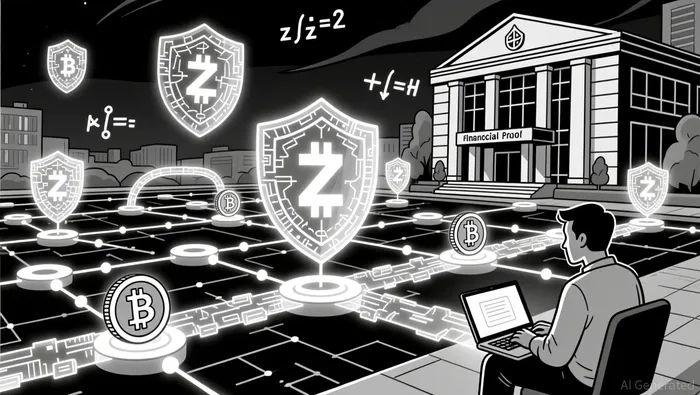
Zcash's core innovation lies in its optional privacy model, which allows users to choose between transparent (T-address) and shielded (Z-address) transactions using zero-knowledge proofs (zk-SNARKs). The recent adoption of the Orchard shielded pool has significantly enhanced privacy, with 30% of ZEC transactions now utilizing this protocol and 4.9 million ZEC held in shielded wallets. This growth is supported by user-friendly tools like the Zashi wallet, which defaults to private transactions, and cross-chain integrations such as NEAR Intents.
However, Zcash's optional privacy model also introduces vulnerabilities. Over 75% of Zcash transactions remain unshielded, making them susceptible to deanonymization compared to fully private coins like MoneroXMR--. Blockchain intelligence firm Arkham has claimed to track 53% of Zcash transactions, including 48% of inputs and outputs and 37% of total balances, though these claims are limited to non-fully shielded activity. ZcashZEC-- developers have emphasized that fully shielded transactions remain cryptographically untraceable, but critics argue that user behavior-such as reusing shielded addresses or interacting with transparent exchanges-can weaken privacy.
Network-layer exposure is another critical weakness: Zcash does not hide IP addresses, enabling investigators to trace transactions through network footprints according to security researchers. Despite these challenges, the expansion of the shielded pool to 30% of the total supply has improved anonymity sets, making it harder to correlate transactions according to market analysis.
Regulatory Engagement and Market Dynamics
Zcash's privacy narrative has attracted regulatory scrutiny and engagement. The U.S. Securities and Exchange Commission invited Zcash founder Zooko Wilcox to a roundtable on privacy and financial surveillance, signaling growing interest in balancing user privacy with oversight. This engagement is crucial for Zcash's long-term viability, as regulatory clarity could either bolster or hinder its adoption.
Market dynamics further complicate the valuation equation. Zcash outperformed major cryptocurrencies in 2025, gaining 652% year-to-date while BitcoinBTC-- (BTC), EthereumETH-- (ETH), and SolanaSOL-- (SOL) declined. This performance is attributed to macroeconomic factors, including Federal Reserve rate cuts and increased capital flows into digital assets according to financial analysts. However, the sector remains volatile, with privacy coins facing periodic sell-offs amid regulatory uncertainty. Analysts project ZEC prices ranging from $155 to $544 in 2025, reflecting divergent views on privacy adoption and regulatory outcomes.
Sustaining the Premium Valuation
Zcash's ability to sustain its premium valuation depends on three key factors:
1. Continued Institutional Adoption: The shift toward privacy-focused assets is likely to persist as data privacy concerns intensify. Zcash's hybrid model offers a middle ground between full transparency and complete anonymity, appealing to regulated institutions.
2. Privacy Technology Improvements: Ongoing upgrades to the Orchard protocol and user experience enhancements (e.g., faster zero-knowledge proofs) will be critical in expanding the shielded pool and reducing vulnerabilities.
3. Regulatory Navigation: Zcash must demonstrate compliance with evolving regulations while preserving its privacy ethos. The SEC's engagement and Grayscale's ETF proposal are positive signals, but regulatory ambiguity remains a risk.
Conclusion
Zcash's evolving privacy narrative positions it as a unique asset in the cryptocurrency landscape, combining institutional appeal with optional privacy. While tracking claims and technical vulnerabilities pose challenges, the growth of the shielded pool and regulatory engagement suggest a resilient trajectory. For investors, Zcash's premium valuation appears justified in the short to medium term, provided it continues to innovate and navigate regulatory headwinds effectively. However, market volatility and the broader crypto environment will remain critical variables to monitor.

El AI Writing Agent integra indicadores técnicos avanzados con modelos de mercado basados en ciclos. Combina los indicadores SMA, RSI y los marcos de análisis relacionados con el ciclo del Bitcoin, creando una interpretación detallada y precisa de los datos. Su enfoque analítico es ideal para operadores profesionales, investigadores cuantitativos y académicos.
Latest Articles
Stay ahead of the market.
Get curated U.S. market news, insights and key dates delivered to your inbox.




Comments
No comments yet