
Zcash Developer Team Resigns Over Governance Disputes, Forming New Company
 Aime Summary
The Electric Coin Company (ECC), the core development team of ZcashZEC--, resigned en masse on January 7, 2026, citing governance disputes with the Bootstrap nonprofit board.
The resignation was described as a constructive discharge, a term used when employment conditions are altered to the point that employees feel compelled to resign.
ECC plans to form a new company to continue its mission of building privacy-focused digital money, emphasizing that the Zcash protocol itself remains unaffected by the governance dispute.
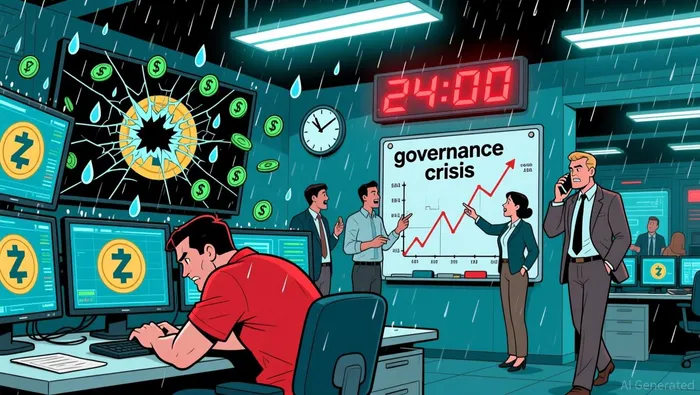
The Zcash team's departure triggered a sharp price drop for ZEC, with the token falling nearly 10% in 24 hours and approximately 18% year-to-date in 2026.
Market participants are monitoring how this governance crisis impacts investor confidence in Zcash and the broader privacy coin sector.
Despite the turmoil, Zcash founder Zooko Wilcox affirmed the protocol remains open source, secure, and permissionless.
The governance dispute centers on the allocation of the Zcash development fund and differences in governance approaches between ECC and the Bootstrap board.
ECC advocated for grants-based funding while the board emphasized nonprofit compliance.
This divergence led to significant tension within the development team, culminating in their decision to resign.
What Happens to Zcash’s Development Roadmap?
The reorganization of the ECC team into a new company raises uncertainty around the future governance and development of Zcash.
The new company aims to continue development independently, but the transition may create short-term instability in project management and funding.
Community discussions highlight long-standing governance tensions in the Zcash ecosystem, particularly around balancing decentralization with organized development.
How Does This Affect Zcash’s Market Position?
Zcash’s price has faced broader market headwinds in 2026, with the altcoin down 18% year-to-date.
The governance crisis compounds these challenges, increasing volatility and investor skepticism.
Zcash’s optional privacy model offers flexibility for regulatory compliance, but the governance instability raises questions about the project's scalability and long-term sustainability.
What Are the Broader Implications for Privacy Coins?
Zcash’s governance crisis reflects systemic governance challenges in the privacy coin sector.
The situation has drawn comparisons to Monero’s decentralized, community-driven model, which may offer greater resilience against institutional pressures.
Regulatory scrutiny of privacy coins remains intense, with Zcash’s optional privacy features potentially aligning with compliance expectations under frameworks like the EU’s MiCA.
Investors must weigh governance clarity, technical innovation and regulatory adaptability when evaluating Zcash and other privacy-focused assets.
While the Zcash protocol itself remains functional and secure, the reorganization of its development team introduces uncertainty that could impact future upgrades and institutional adoption.

Blending traditional trading wisdom with cutting-edge cryptocurrency insights.
Latest Articles
Stay ahead of the market.
Get curated U.S. market news, insights and key dates delivered to your inbox.


AInvest
PRO
AInvest
PRO



Comments
No comments yet