
Zcash Developer Team Resigns: What the Governance Dispute Means for ZEC
 Aime Summary
- The ZcashZEC-- core development team, Electric Coin Company (ECC), resigned due to governance disputes with Bootstrap, the nonprofit overseeing ECC.
- The resignation is described as a constructive discharge, implying the board's actions created intolerable working conditions for the team.
- The former team plans to form a new company focused on Zcash's privacy technology, signaling no abandonment of the network.
The Electric Coin Company (ECC), the primary development team for Zcash (ZEC), has departed from their role after alleging constructive discharge by Bootstrap, the nonprofit organization tasked with governing ECC. The situation has raised concerns within the Zcash ecosystem about governance structures and development continuity. Josh Swihart, the former CEO of ECC, stated that a majority of the Bootstrap board became misaligned with Zcash's original mission, leading to the team's departure.
The dispute does not directly impact the Zcash protocol itself, which remains open source, secure, and permissionless. Zcash founder Zooko Wilcox emphasized that the governance issue is separate from the protocol's technical integrity. The ECC team plans to form a new company to continue their work on Zcash's privacy technology, reaffirming their commitment to the project.
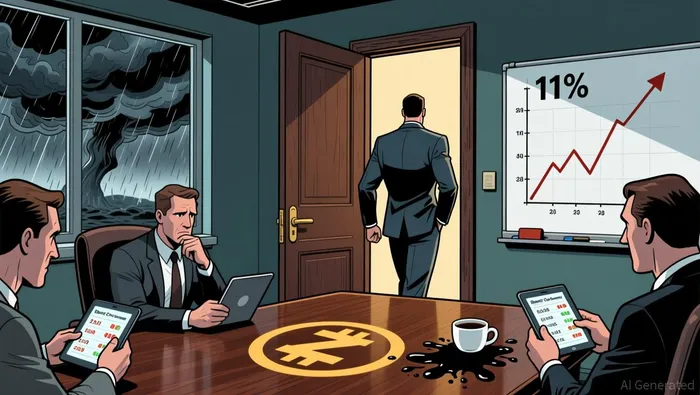
The market reaction has been mixed. ZEC dropped around 11% in a single day following the announcement, though it has since partially recovered. The token has experienced broader challenges in 2026, with a year-to-date decline of 18%. Market watchers suggest the ECC team's departure is a principled decision rather than an abandonment.
What Caused the Resignation and New Company Formation?
The resignation is described as a constructive discharge, a legal concept indicating intolerable working conditions were imposed by the board. Josh Swihart, who took over as CEO in late 2023, claimed board members altered employment terms in a way that obstructed development. The team views this as a misalignment with Zcash's original mission of providing private money.
Bootstrap, a 501(c)(3) nonprofit established in 2020, was intended to govern ECC and support the Zcash ecosystem. However, governance issues have intensified, culminating in this high-profile split. Swihart described the situation as a result of weeks of escalating conflict with the board, particularly regarding development priorities and funding.
What Does This Mean for Zcash's Future and Market Implications?
The Zcash protocol remains unaffected by the governance conflict. It continues to operate as an open-source, secure, and permissionless network. Zooko Wilcox, Zcash's founder, reiterated this point, emphasizing that the dispute is a corporate issue rather than a technical or network disruption.
Market participants are closely observing how governance clarity and development continuity will evolve in the Zcash ecosystem. If the newly formed company succeeds in regaining community trust and continuing development, the shake-up could ultimately strengthen Zcash by removing perceived governance obstacles.
The ECC team has already begun work on a new Zcash wallet, cashZ, which will allow users to migrate from the existing Zashi wallet. This move aims to scale Zcash development and address governance concerns raised by the team.
While the governance dispute is not a technical or network disruption, it has created uncertainty about future upgrades, grant management, and the project's representation to regulators and institutional partners. Some community members view the episode as a governance crisis that exposed structural weaknesses in Zcash's balance between decentralization and organized development.

Blending traditional trading wisdom with cutting-edge cryptocurrency insights.
Latest Articles
Stay ahead of the market.
Get curated U.S. market news, insights and key dates delivered to your inbox.


AInvest
PRO
AInvest
PRO



Comments
No comments yet