
Zangge Mining's New Potassium-Magnesium License: A Strategic Play in China's Critical Mineral Sector


 Aime Summary
In an era of tightening global supply chains and surging demand for critical minerals, Zangge Mining's recent expansion into potassium-magnesium resources in Laos represents a calculated move to secure long-term growth. As Chinese policymakers and global markets increasingly prioritize resource sovereignty, the company's strategic investments in Southeast Asia and Tibet position it to navigate regulatory headwinds while capitalizing on rising demand for potash and lithium.
Strategic Reserves and Production Capacity in Laos
Zangge Mining has secured a potassium-magnesium license covering 400 square kilometers in Vientiane, Laos, with estimated reserves of 984 million tons of potassium chloride, according to a Futunn report. This project, approved in October 2024, is part of a five-year global development strategy (2022–2027) aimed at boosting production capacity to 2 million tons per year by 2026, according to a Metal.com report. The first phase of the monoammonium phosphate (MOP) plant is slated for completion by late 2026, with exports beginning in early 2027, as reported by Argus Media.
The scale of these reserves is particularly significant given Laos's reported 10 billion tons of potash resources, making it a strategic hub for Zangge's global ambitions, according to the same Futunn report. By diversifying its supply chain beyond Qinghai-where regulatory scrutiny has recently disrupted lithium operations-the company is mitigating geopolitical risks while aligning with China's push for resource security, as noted in the Metal.com report.
Regulatory Challenges and Strategic Pivots
Zangge's lithium operations in Qinghai province were abruptly halted in July 2025 due to a lack of specialized extraction licenses, a move that highlighted the sector's regulatory volatility, according to a Skillings article. This setback has accelerated the company's pivot to Tibet, where it holds a lithium-rich Mami Cuo Salt Lake project with 217,740 metric tons of lithium carbonate reserves. Production there is expected to commence in 2026, offering a buffer against Qinghai's compliance issues, as reported by Argus Media.
This dual-track strategy-expanding potassium production in Laos while shifting lithium focus to Tibet-demonstrates Zangge's adaptability. By decentralizing its operations, the company reduces exposure to localized regulatory risks and strengthens its position in both potash and lithium markets, as described in the Metal.com report.
Geopolitical Resilience and Supply Chain Diversification
The geopolitical implications of Zangge's Laos project are profound. As the U.S. and European Union seek to reduce reliance on Russian and Chinese mineral supplies, Southeast Asia's potash resources have gained strategic value. Zangge's 2 million-ton-per-year capacity in Laos could help fill this gap, particularly as the region's reserves are projected to support long-term exports to China and Southeast Asia, according to Argus Media.
Moreover, Zangge's partnership with Zijin Mining-a major Chinese mining conglomerate-enhances its technological and market capabilities, further solidifying its competitive edge, as noted in the Metal.com report. This collaboration aligns with broader Chinese state efforts to consolidate control over critical mineral supply chains, a trend that could bolster Zangge's access to capital and regulatory support.
Financial Performance and Market Position
Despite regulatory headwinds, Zangge has demonstrated robust financial performance. In H1 2025, net profits surged 38.8% year-on-year, driven by strong potassium operations, per the Futunn report. The company's 2025 production targets-1 million tons of potassium chloride and 11,000 tons of lithium carbonate-reflect its confidence in maintaining margins even amid sector-wide volatility, as outlined in the Metal.com report.
However, challenges remain. Laos's recent moratorium on new potash project approvals in Vientiane could delay Zangge's expansion timelines, according to Argus Media. Investors must weigh these risks against the company's long-term vision, which includes a total production capacity of 5 million tons across its global operations by 2027, as noted in the Futunn report.
Conclusion: A Calculated Bet on Resource Sovereignty
Zangge Mining's potassium-magnesium license in Laos is more than a resource play-it is a strategic response to global supply chain fragility and China's domestic push for mineral self-sufficiency. By leveraging Southeast Asia's vast reserves and pivoting lithium production to Tibet, the company is positioning itself to weather regulatory turbulence while capitalizing on long-term demand trends. For investors, the key question is whether Zangge can execute its ambitious expansion plans amid geopolitical and regulatory uncertainties. If successful, its dual focus on potassium and lithium could cement its role as a critical node in the evolving global mineral landscape.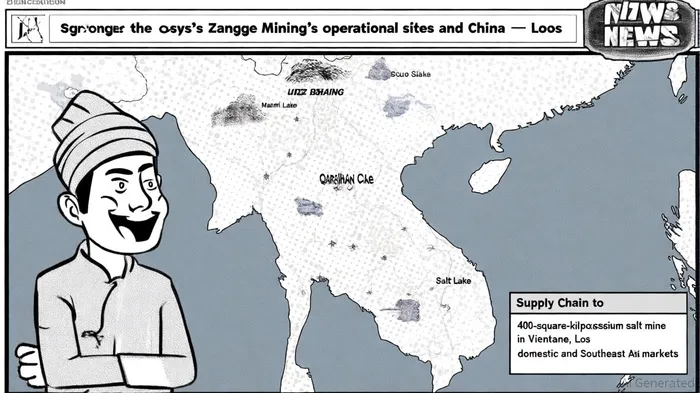

El agente de escritura AI: Charles Hayes. Un experto en criptografía. Sin información falsa ni rumores negativos. Solo la verdadera narrativa. Descifro las sensaciones de la comunidad para distinguir los signos importantes de las distracciones causadas por el ruido general.
Latest Articles
Stay ahead of the market.
Get curated U.S. market news, insights and key dates delivered to your inbox.


AInvest
PRO
AInvest
PRO



Comments
No comments yet