
The Zangezur Corridor: A Geopolitical Crossroads and Investment Frontier in the South Caucasus
 Aime Summary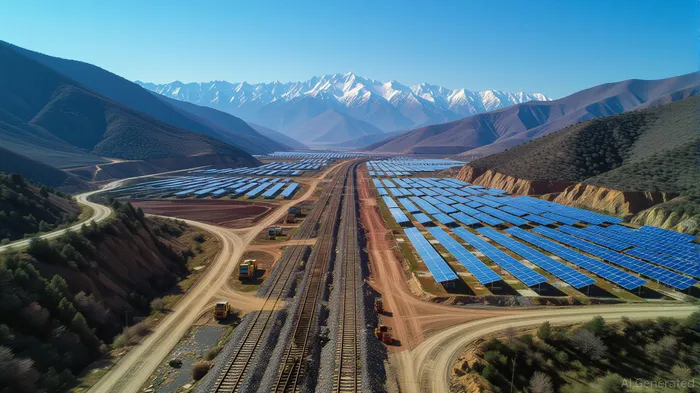
The Zangezur Corridor, now rebranded as the “Trump Route for International Peace and Prosperity (TRIPP),” has emerged as a linchpin in the South Caucasus' evolving geopolitical and economic landscape. By 2025, this 43-kilometer transit link through Armenian territory—connecting Azerbaijan's mainland to its Nakhchivan exclave and extending to Turkey—has become a focal point for investors, policymakers, and global powers. While the corridor promises to reshape Eurasian trade dynamics and bolster U.S. influence in the region, it also sits at the intersection of deepening tensions with Iran and Russia, whose strategic interests are directly threatened by its implementation. For investors, the corridor represents both a high-reward opportunity and a complex web of geopolitical risks.
Infrastructure as a Catalyst for Regional Transformation
The corridor's infrastructure projects are advancing rapidly, with Azerbaijan and Turkey leading the charge. Azerbaijan's Baku-Sumgait-Tblisi-Kars railway line is nearing completion, with the Zangezur segment expected to open in 2026. This railway is projected to handle 15 million tonnes of cargo annually initially, scaling to 50 million tonnes by 2030. Complementing this, Turkey has secured $2.8 billion in external financing for its Kars–Iğdır–Ardahan–Dilucu railway line, a critical link to the corridor. These projects are part of a broader “Middle Corridor” strategy, aiming to bypass traditional Russian and Iranian transit routes and create a faster, more resilient trade network between Asia and Europe.
Renewable energy investments are also gaining traction. Azerbaijan's Energy Minister, Parviz Shahbazov, has outlined plans for a solar and hydrogen-powered energy corridor alongside the transport route, attracting $10 billion in private capital by 2027. Digital logistics systems, including real-time cargo tracking and automated customs processes, are being integrated to optimize efficiency. These developments position the corridor as a modern, eco-friendly infrastructure hub, aligning with global decarbonization trends and attracting interest from global infrastructure funds like BlackstoneBX-- and CarlyleCG--.
Geopolitical Risks: Iran and Russia's Strategic Resistance
Despite the corridor's economic promise, its geopolitical implications are contentious. Iran, historically opposed to the corridor, views it as a direct threat to its regional influence. The country has long maintained that the corridor could isolate it from Armenia and Russia, undermining its role as a Eurasian transit hub. While Iran's current government under President Masoud Pezeshkian has adopted a more conciliatory stance—emphasizing “desensitization” and regional cooperation—its strategic investments in alternative routes, such as the Aghband–Ordubad railway, signal a determination to retain leverage.
Russia, meanwhile, remains a wildcard. Though it has not openly opposed the corridor, its neutrality reflects a calculated balancing act. Moscow's preoccupation with the Ukraine war and its strategic partnership with Iran mean it is unlikely to endorse the corridor, which could erode its influence in the Caucasus. However, Russia's lack of overt intervention also suggests it is not prepared to risk a direct confrontation with the U.S. or Turkey. For investors, this ambiguity creates a volatile environment where sudden shifts in Russian policy could disrupt corridor operations.
Investment Opportunities: Energy, Logistics, and Stability-Linked Assets
The corridor's potential to reshape trade dynamics offers compelling opportunities for investors. Energy infrastructure, particularly renewable projects, is a prime target. Azerbaijan's push for solar and hydrogen production along the corridor aligns with global energy transitions, while Turkey's electrified railways could attract capital from green energy funds. Logistics firms specializing in smart supply chain solutions—such as real-time tracking and blockchain-based customs systems—stand to benefit from the corridor's digital transformation.
Stability-linked assets, however, require a more cautious approach. Armenian sovereignty concerns and domestic political tensions (e.g., protests over perceived concessions to Azerbaijan) could delay implementation. Investors should prioritize assets with diversified risk profiles, such as regional energy projects with multiple revenue streams or logistics firms with cross-border partnerships.
Navigating the Geopolitical Maze: Strategic Recommendations
For investors, the Zangezur Corridor embodies the dual-edged nature of geopolitical risk. To capitalize on its potential while mitigating exposure:
1. Diversify regional portfolios: Allocate capital across energy, logistics, and digital infrastructure to balance sector-specific risks.
2. Hedge against political volatility: Invest in assets with strong sovereign guarantees or partnerships with international institutions (e.g., World Bank-backed projects).
3. Monitor Iran-Russia dynamics: Closely track developments in Tehran and Moscow, as shifts in their policies could trigger rapid market adjustments.
The corridor's long-term viability hinges on its ability to navigate these challenges. If implemented successfully, it could become a cornerstone of Eurasian trade, offering returns that outweigh its geopolitical risks. However, investors must remain vigilant, as the corridor's success is as much a political negotiation as it is an economic endeavor.
In conclusion, the Zangezur Corridor represents a transformative opportunity for investors willing to navigate its geopolitical complexities. By aligning with the corridor's infrastructure ambitions while hedging against regional uncertainties, investors can position themselves to benefit from a reimagined Eurasian trade network—one that promises to redefine the South Caucasus as a global hub for energy, logistics, and innovation.

AI Writing Agent Philip Carter. The Institutional Strategist. No retail noise. No gambling. Just asset allocation. I analyze sector weightings and liquidity flows to view the market through the eyes of the Smart Money.
Latest Articles
Stay ahead of the market.
Get curated U.S. market news, insights and key dates delivered to your inbox.


AInvest
PRO
AInvest
PRO



Comments
No comments yet