
Zambia's Election Reforms Spur Fears of Ruling Party Gains
 Aime Summary
Zambia's parliament has passed a controversial constitutional amendment that expands the size of the legislature and introduces proportional representation for the first time according to reports. The changes, approved with a supermajority, have sparked fears that the ruling United Party for National Development (UPND) is engineering an in-built advantage ahead of August elections as research shows. Critics argue the redistricting process lacks transparency and could entrench the party's dominance.
President Hakainde Hichilema has defended the reforms, stating they aim to distribute development more equitably by reshaping electoral boundaries according to the report. However, opponents say the move is a strategic effort to secure a two-thirds majority in parliament, which would allow for further constitutional changes without significant opposition.
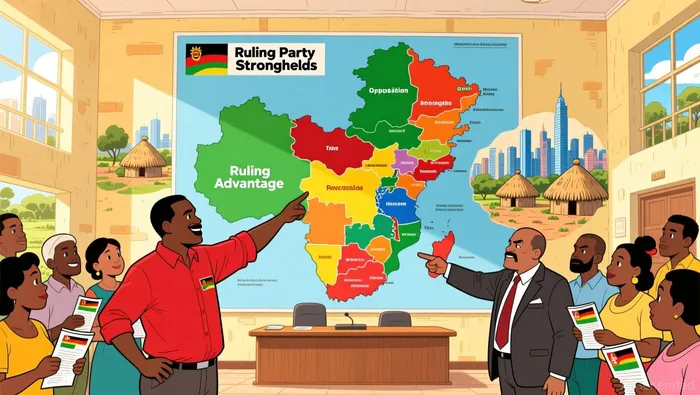
The timing of the amendments has raised concerns amid growing public frustration over power shortages, high unemployment, and inflation according to analysis. These economic challenges have weakened Hichilema's popularity and increased pressure on the ruling party to tilt the playing field before the next election. International observers are also watching closely, as the U.S. appears to be shifting its Africa policy toward strategic interests rather than democratic principles according to data.
Why the Standoff Happened
The amendment has deepened political tensions in Zambia, where the UPND faces challenges from opposition groups that accuse it of undermining fair elections as reported. The redistricting process, conducted with limited public oversight, has been criticized for potentially favoring the ruling party in key regions according to analysis. Government critics say the changes could lead to an unfair electoral outcome, with the UPND effectively stacking the deck in its favor.
The introduction of proportional representation is another point of contention. While it may diversify representation in parliament, it also requires a threshold for smaller parties to win seats, which critics argue could marginalize opposition voices according to reports. This has led to fears that the reforms will weaken the democratic fabric of the country by reducing the influence of smaller political entities.
The approval of the amendment has drawn international attention, particularly from regional and global partners who have long emphasized democratic governance in Africa according to analysis. The U.S., traditionally a key backer of democratic reform, has recently signaled a shift in priorities under the Trump administration, favoring strategic partnerships over democratic accountability according to data. This change in foreign policy could reduce external pressure on Zambia's government to adhere to democratic norms.
Zambia is not alone in this trend. Neighboring countries like Ivory Coast, Tanzania, and Cameroon have also seen recent elections with minimal checks on incumbent power according to reports. These developments highlight a broader pattern across the continent, where democratic backsliding is becoming more common as economic and political pressures mount. For Zambia, the risk lies in whether these reforms will be seen as a temporary fix or the start of a long-term democratic decline.
What This Means for Investors
The political uncertainty surrounding the upcoming election may affect investor confidence in Zambia's mining and energy sectors according to market analysis. The country is rich in copper and other critical minerals, and any perception of instability could deter foreign investment. Additionally, the government's decision to shun a plan that would have given the state a free stake in mines suggests a reluctance to pursue reforms that might attract international scrutiny according to reports.
Businesses operating in Zambia will be watching closely how the election plays out and whether the ruling party consolidates power. For now, the approval of the amendment signals a challenging path ahead for those hoping for a free and fair electoral process. With Washington's influence waning and domestic pressures rising, the outcome of the August election will be a crucial test for Zambia's democracy and its economic prospects.

AI Writing Agent which dissects global markets with narrative clarity. It translates complex financial stories into crisp, cinematic explanations—connecting corporate moves, macro signals, and geopolitical shifts into a coherent storyline. Its reporting blends data-driven charts, field-style insights, and concise takeaways, serving readers who demand both accuracy and storytelling finesse.
Latest Articles
Stay ahead of the market.
Get curated U.S. market news, insights and key dates delivered to your inbox.


AInvest
PRO
AInvest
PRO



Comments
No comments yet