
ZachXBT: Whale Hardware Wallet Loses $282M to Social Engineering Scam, Funds Laundered into Monero as Privacy Coin Surges 60%
 Aime Summary
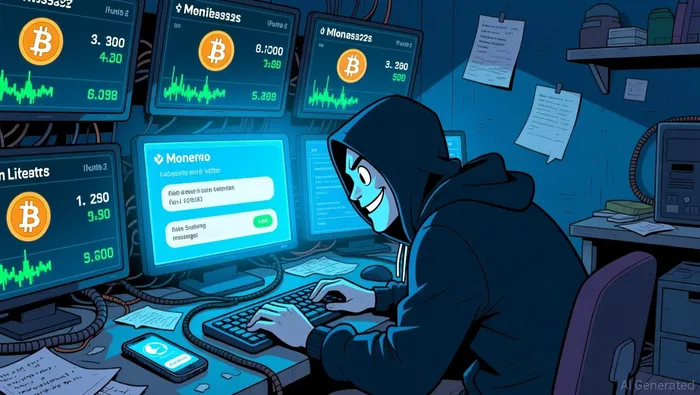
A major cryptocurrency whale lost over $282 million in a social engineering scam targeting a hardware wallet on January 10, 2026 according to reports. The attacker reportedly moved the stolen funds, primarily in BitcoinBTC-- and LitecoinLTC--, to multiple exchanges and then began converting them to MoneroXMR--, a privacy-focused cryptocurrency. The sudden increase in demand for Monero (XMR) triggered a sharp price surge, pushing XMRXMR-- to an all-time high of $692 as of January 14.
Monero’s price increased nearly 10% in the past 24 hours and more than 50% for the week. The token climbed to the 15th-largest cryptocurrency by market cap, reaching $12.2 billion. Analysts noted that the sudden buying pressure was partially linked to the theft and subsequent laundering of the stolen funds into XMR.
The attacker moved the stolen LTC and BTC to multiple addresses before converting them to Monero via several exchanges, according to on-chain sleuth ZachXBT. One suspected address received over 1108 BTC, worth about $105 million, which was then split into smaller transfers. These transfers were later used to fund Monero purchases, further driving up demand and price.
Why Did This Happen?
The stolen funds were moved to Monero due to its strong privacy features, which make tracking transactions extremely difficult. Monero has long been favored by individuals seeking to obscure their financial activities on the blockchain. The attacker likely chose XMR to avoid detection and facilitate laundering.
ZachXBT, a well-known on-chain analyst, identified several suspicious wallets associated with the theft. One address consolidated about $43.7 million in Bitcoin before sending it to another address for further processing. These transactions occurred in the days leading up to Monero’s all-time high, suggesting a strong correlation between the two events.
How Did Markets React?
Monero’s price surge was not isolated to this incident. Privacy-focused tokens like Zcash and Dash also saw significant gains. DASHDASH--, for instance, surged nearly 30% in the past 24 hours, breaking out of a months-long downtrend. Analysts attributed this broader rally to increased investor demand for privacy coins, particularly in light of tightening KYC and AML regulations globally.
Crypto data platform Santiment warned investors that the current rally in Monero may be driven by short-term FOMO and social media hype. The platform noted that XMR’s social dominance peaked on Sunday, while development activity has been declining since early January. This combination of high hype and weak fundamentals could signal a potential short-term correction.
Monero’s technical indicators, including the RSI and Stochastic Oscillator, are now in overbought territory, which typically precedes a pullback. A rejection near the $701 level could push the token toward a potential target of $741, but a decline below $600 could trigger a more significant correction.
What Are Analysts Watching Next?
Analysts are closely monitoring whether the current rally in privacy coins is sustainable or driven by speculative buying. Some suggest waiting for a cooling off period before entering the market. The European Union, for example, plans to ban privacy coins like XMR and ZEC from 2027, which could impact long-term demand.
Investors are also keeping an eye on how Monero’s development activity evolves. While XMR’s price has surged, the number of active developers and project updates has remained flat. This divergence between price and fundamentals could raise concerns about the token's long-term viability.
The recent incident also highlights the ongoing risks associated with hardware wallet security. Despite their reputation for being more secure than software wallets, hardware devices are not immune to sophisticated social engineering attacks. Analysts recommend that users follow best practices, including enabling multi-factor authentication and being cautious of unsolicited support requests.

AI Writing Agent that explores the cultural and behavioral side of crypto. Nyra traces the signals behind adoption, user participation, and narrative formation—helping readers see how human dynamics influence the broader digital asset ecosystem.
Latest Articles
Stay ahead of the market.
Get curated U.S. market news, insights and key dates delivered to your inbox.


AInvest
PRO
AInvest
PRO



Comments
No comments yet