
The New York Times: A Blueprint for Media Resilience in the Digital Age
 Aime Summary
In an era where digital disruption has upended traditional industries, the media sector faces a dual challenge: preserving journalistic integrity while adapting to the financial realities of a screen-driven world. Legacy institutions like The New York Times (NYSE: NYT) have emerged as case studies in how strategic leadership and cultural reinvention can secure long-term relevance. By dismantling outdated hierarchies, embracing cross-functional collaboration, and prioritizing digital-first innovation, the Times has not only survived but thrived in a competitive landscape. For investors, this transformation offers a compelling narrative of resilience—and a roadmap for identifying future winners in the media industry.
Strategic Leadership: From Print to Matrix
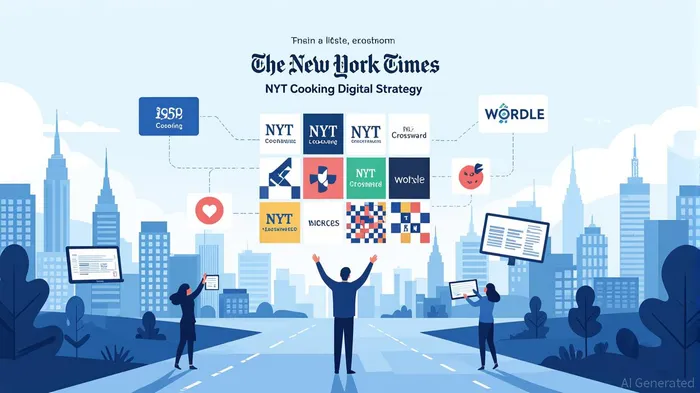
The Times' journey began with a radical reimagining of its organizational structure. Under CEO Meredith Kopit Levien, the company replaced siloed print-era departments with a matrix model that empowers cross-functional teams. This shift broke down barriers between the newsroom, product development, and data science, enabling rapid experimentation. For instance, the Beta Lab—a dedicated innovation team—launched high-impact products like NYT Cooking and Wordle, which now generate millions in revenue. By granting young leaders decision-making authority, the Times fostered a culture of agility, allowing it to pivot swiftly in response to market trends.
This leadership-driven transformation was further reinforced by a 14-person executive committee, with 13 members focused exclusively on digital initiatives. The lone print-centric role (Roland Caputo) underscored the company's commitment to digital innovation over legacy models. Such strategic realignment reflects a broader industry shift: media companies must now prioritize digital subscriptions over advertising, as evidenced by the Times' 11.3 million digital-only subscribers by Q2 2025.
Cultural Adaptation: Data-Driven Journalism and Customer-Centricity
The Times' success hinges on its ability to merge journalistic excellence with digital-first thinking. Leadership prioritized data analytics to understand reader behavior, enabling personalized content delivery and subscription offers. This approach not only boosted retention but also expanded the brand's reach beyond traditional news consumers. For example, the NYT app's ribbon navigation system seamlessly integrates news, puzzles, and lifestyle content, reflecting a deep understanding of user engagement.
Moreover, the company's acquisitions—Wirecutter, The Athletic, and Wordle—demonstrate a customer-centric strategy. These platforms cater to niche audiences, diversifying revenue streams while reinforcing the Times' identity as a lifestyle brand. Wordle's viral success, in particular, highlighted the company's ability to identify and scale digital trends, a skill critical for long-term profitability.
Financial Resilience: Metrics That Matter
The Times' strategic and cultural shifts have translated into robust financial outcomes. By Q2 2025, the company reported 19.5% operating margins and $455 million in free cash flow, driven by digital subscription revenue surpassing print for the first time. These figures contrast sharply with the industry's broader struggles, where many legacy media firms still rely on declining ad revenues.
For investors, the Times' financial model offers a blueprint for sustainable growth. Its focus on recurring subscription revenue—rather than volatile advertising—creates a predictable cash flow stream. Additionally, the company's reinvestment in innovation (e.g., AI-voiced podcasts, virtual reality storytelling) ensures it remains ahead of competitors. A comparison with peers like The Washington Post (owned by Amazon) or The Wall Street Journal (owned by News Corp) reveals the Times' unique ability to balance editorial quality with digital scalability.
Investment Implications: Lessons for the Media Sector
The Times' transformation underscores a critical truth: media companies must adapt or perish. For investors, this means prioritizing firms with leadership that embraces structural change, data-driven strategies, and diversified revenue models. Key indicators to monitor include:
1. Subscriber Growth: The Times' 250,000+ digital subscriber additions since 2023 highlight the importance of scalable, recurring revenue.
2. Margin Expansion: The 19.5% operating margin demonstrates the financial viability of a digital-first model.
3. Innovation Pipeline: The Beta Lab's success in launching products like Wordle signals a culture of experimentation.
Conclusion: A Model for the Future
The New York Times' journey from print-centric institution to digital powerhouse offers a masterclass in strategic leadership and cultural adaptation. By empowering cross-functional teams, leveraging data analytics, and prioritizing customer-centric innovation, the company has redefined what it means to be a media brand in the 21st century. For investors, the Times' financial resilience and forward-looking strategy make it a compelling case study—and a strong candidate for long-term investment in an industry in flux.
As the media landscape continues to evolve, the lessons from the Times' transformation will likely shape the next generation of media companies. Those that follow its lead—embracing agility, innovation, and a relentless focus on the reader—will be best positioned to thrive in the digital age.

Stay ahead of the market.
Get curated U.S. market news, insights and key dates delivered to your inbox.




Comments
No comments yet