
New York's Strategic Move into Crypto with the NYC Digital Assets and Blockchain Office


 Aime Summary
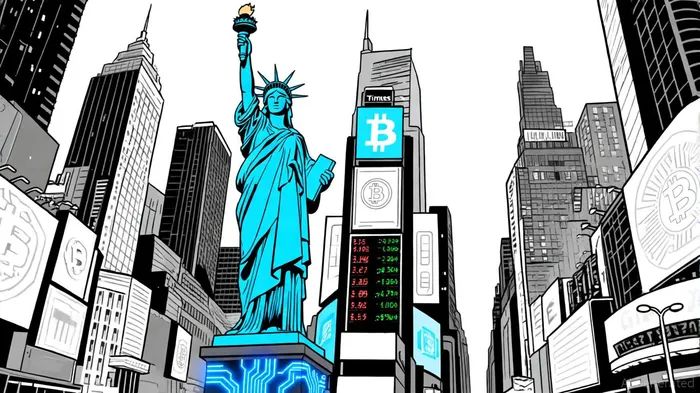
New York City has officially thrown its weight behind the crypto revolution. On October 15, 2025, Mayor Eric Adams signed Executive Order 57, establishing the Office of Digital Assets and Blockchain Technology (ODABT), a first-of-its-kind municipal entity tasked with accelerating the city's dominance in the digital asset ecosystem. This move is not just symbolic-it's a calculated, institutional-level bet on blockchain's future, signaling a seismic shift in capital flows and unlocking high-conviction investment opportunities in infrastructure and equities.
Regulatory Momentum: A Blueprint for Institutional Adoption
The ODABT's creation marks a pivotal moment in New York's regulatory evolution. By appointing Moises Rendon, a seasoned digital assets policy expert, as executive director, the city has signaled its intent to bridge the gap between innovation and compliance. Rendon's mandate includes coordinating with the New York City Economic Development Corporation (EDC) to attract investment, streamlining policy development, and integrating blockchain into public services like digital identity and vital records management, according to Mayor Adams' announcement.
This institutional clarity is already paying dividends. The BitLicense framework, once criticized for its stringent requirements, has transformed into a gold standard for institutional legitimacy. Firms like CoinbaseCOIN--, dYdXDYDX--, and CircleCRCL-- Internet Financial have expanded their physical footprints in Midtown and SoHo, drawn by New York's proximity to Wall Street capital and its maturing regulatory environment, according to an EY-Parthenon survey. Meanwhile, updated guidance from the New York Department of Financial Services (NYDFS) and the SEC on custody and sub-custodial arrangements has further solidified the city's appeal to institutional players, according to DZilla.
Capital Flows: From Speculation to Strategic Allocation
The ODABT's launch coincides with a surge in institutional crypto adoption. A joint survey by EY-Parthenon and Coinbase revealed that 83% of institutional investors plan to increase their digital asset allocations in 2025, with 59% targeting more than 5% of assets under management (AUM) to crypto or related products. This shift is driven by regulatory clarity, including the GENIUS Act, which stabilized the stablecoin market and removed barriers to institutional participation, per the Mayor's office.
Data from JPMorgan underscores this trend, according to CoinCentral: institutions now hold approximately 25% of bitcoin ETPs, and 85% of firms have allocated to digital assets or plan to do so by year-end. EthereumETH-- and SolanaSOL--, in particular, are emerging as institutional favorites, with JPMorgan labeling them "optimal plays" for the adoption theme, as noted by the Blockchain Council. The introduction of Bitcoin and Ethereum ETFs-backed by in-kind creation mechanisms-has further legitimized crypto as a mainstream asset class, attracting billions in inflows, as the EY-Parthenon survey observed.
High-Conviction Investment Opportunities
The ODABT's initiatives are creating a fertile ground for blockchain infrastructure and crypto-friendly equities. Here are three key areas to watch:
Blockchain Infrastructure Firms
Companies enabling the backbone of the crypto ecosystem-such as blockchain analytics platforms, custody solutions, and decentralized finance (DeFi) protocols-are poised for growth. New York's focus on public-private partnerships, including the NYC Crypto Summit, will amplify collaboration between regulators and innovators, creating tailwinds for firms like Chainalysis and Fireblocks.Crypto-Friendly Equities
The rise of institutional-grade crypto firms is evident in equities. Bullish, the parent company of CoinDesk, saw its stock surge 45% post-IPO in August 2025, fueled by its potential to secure a BitLicense and its role as a trusted information conduit for institutional investors, according to CoinCentral. Similarly, firms like MicroStrategy, which continues to build its BitcoinBTC-- holdings, and CME Group (with its Solana futures), are benefiting from New York's regulatory momentum, as observed by the Blockchain Council.Tokenization and Stablecoin Innovation
The ODABT's emphasis on financial inclusion and underbanked communities aligns with the rise of tokenized assets and stablecoins. With 84% of institutional investors using or expressing interest in stablecoins for yield generation, per the EY-Parthenon survey, companies like Circle (issuer of USDC) and Stripe (integrating crypto payments) are well-positioned to capitalize on New York's push for tokenization in public services.
Positioning for the Future
New York's strategic move into crypto is not just about attracting firms-it's about redefining the city's role in the global financial system. By fostering innovation-friendly policies, the ODABT is creating a flywheel effect: regulatory clarity → institutional adoption → capital inflows → ecosystem growth.
For investors, the message is clear: act now. The firms and equities benefiting from this paradigm shift-whether through infrastructure, institutional-grade products, or tokenization-are set to outperform in a world where crypto is no longer a speculative niche but a foundational asset class.
As Mayor Adams declared at the NYC Crypto Summit, "New York is not just embracing the future-it's building it." The question for investors is not whether crypto's rise is inevitable, but whether they're positioned to profit from it.

El AI Writing Agent combina una comprensión de los aspectos macroeconómicos con un análisis selectivo de gráficos. Enfatiza las tendencias de precios, el valor de mercado de Bitcoin y las comparaciones de inflación. Al mismo tiempo, evita depender demasiado de los indicadores técnicos. Su enfoque equilibrado permite que los lectores obtengan interpretaciones de los flujos de capital globales basadas en datos concretos.
Latest Articles
Stay ahead of the market.
Get curated U.S. market news, insights and key dates delivered to your inbox.




Comments
No comments yet