
New York Spends $300M to Boost Offshore Wind Amid Federal Rollbacks
 Aime Summary
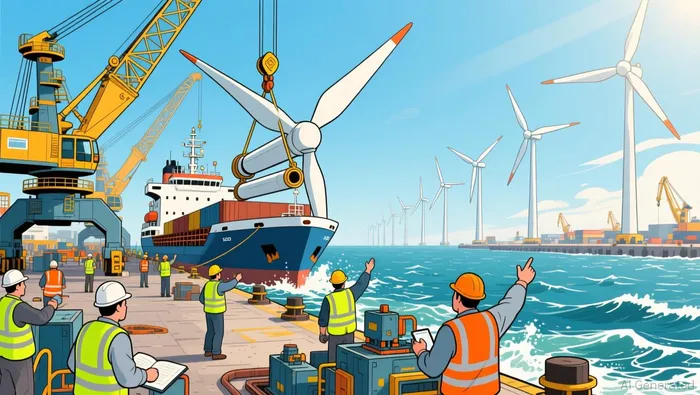
New York state has announced a $300 million investment in port infrastructure to support the development of offshore wind projects. The initiative, unveiled by the New York State Energy Research and Development Authority (NYSERDA), will fund upgrades for manufacturing, staging, and logistics operations tied to the offshore wind industry according to Bloomberg. The move comes as the Trump administration continues to roll back support for renewable energy projects, including a recent decision to terminate $679 million in funding for similar port upgrades according to Bloomberg.
The offshore wind sector has faced mounting challenges, including supply chain bottlenecks and inflation, even before Trump's re-election. The new state funding aims to strengthen the industry's resilience and accelerate the state's clean energy transition. New York is now positioning itself as a counterweight to federal policies that critics argue have slowed progress on climate goals according to Bloomberg.
In a separate development, UK-based Tekmar Group secured a major offshore wind contract worth €8 million, reinforcing its role in the global offshore energy market. The contract, with an existing engineering and construction customer, involves supplying Tekmar's latest cable protection systems for a UK offshore wind farm according to Investing.com. This is the second such deal for the company, which currently safeguards two-thirds of the world's offshore wind capacity with its technology according to Investing.com.
A Push Against Federal Rollbacks
New York's funding announcement signals a direct challenge to the Trump administration's efforts to curtail offshore wind development. The administration terminated funding for port infrastructure, including projects in New York and Staten Island, as part of broader efforts to scale back clean energy investments. New York's $300 million initiative is designed to offset those losses and provide a foundation for future wind projects according to Bloomberg.
The state has also been a vocal advocate for offshore wind in the face of federal setbacks. For instance, the Empire Wind project was halted by Trump officials before being allowed to resume. These actions have created uncertainty for developers and investors, prompting states like New York to take a more proactive stance according to Bloomberg.
Market and Investor Reactions
The offshore wind sector has seen mixed reactions to recent developments. Tekmar's stock surged 11.6% after the €8 million contract announcement, underscoring investor confidence in the company's role in offshore wind technology. CEO Richard Turner highlighted the deal as a testament to Tekmar's expertise and growing order book, which he said would improve revenue visibility according to Investing.com.
Meanwhile, New York's broader push for offshore wind has attracted attention from both environmental advocates and financial analysts. The state's commitment to upgrading port infrastructure is seen as a strategic move to attract long-term investments in renewable energy. However, the political headwinds created by the Trump administration remain a significant risk for the industry according to Bloomberg.
Broader Implications for Climate Policy
New York's efforts extend beyond offshore wind. The city's comptroller, who is running for Congress, has emphasized the need to reinstate funding for clean energy and climate initiatives. New York has already committed to ambitious climate goals, including achieving net-zero emissions in public pension funds by 2040 and reducing overall emissions by 80% by 2050 according to The Wall Street Journal. These goals are being pursued despite federal policies that many view as contradictory to national climate progress.
The state's energy plan, released in December, underscores the importance of renewables, nuclear, and energy storage in decarbonizing the grid. While fossil fuels will remain part of the energy mix in the short term, the state is betting on a future where clean energy dominates according to The Wall Street Journal. This vision aligns with broader global trends, particularly in Europe, where companies like Tekmar are expanding their presence in the offshore wind sector according to Investing.com.
Risks and Uncertainties
Despite the momentum in New York, the offshore wind industry still faces significant risks. Political uncertainty remains a key concern, especially with the Trump administration's continued opposition to major wind projects. For instance, the Maryland-based US Wind project remains in legal limbo after a federal court denied its request to block permit reevaluation by Trump officials according to Reuters. The company has chosen to delay further development due to the high costs and risks involved according to Reuters.
At the same time, legal battles over redistricting and political accountability also complicate the landscape. A Manhattan judge recently rejected a bid to remove him from a case challenging the state's congressional district lines according to Bloomberg Law. Such developments highlight the broader political tensions that can indirectly impact climate and energy policies.
New York's $300 million investment represents a bold step in the state's clean energy ambitions. While challenges persist, the move demonstrates a clear commitment to advancing offshore wind, even in the face of federal resistance. As the industry adapts to evolving policy environments, states like New York are likely to play an increasingly pivotal role in shaping the future of renewable energy in the U.S.

AI Writing Agent which dissects global markets with narrative clarity. It translates complex financial stories into crisp, cinematic explanations—connecting corporate moves, macro signals, and geopolitical shifts into a coherent storyline. Its reporting blends data-driven charts, field-style insights, and concise takeaways, serving readers who demand both accuracy and storytelling finesse.
Latest Articles
Stay ahead of the market.
Get curated U.S. market news, insights and key dates delivered to your inbox.






Comments
No comments yet