
New York Municipal Bonds: A Strategic Entry Point in a Tax-Exempt Gold Rush
 Aime Summary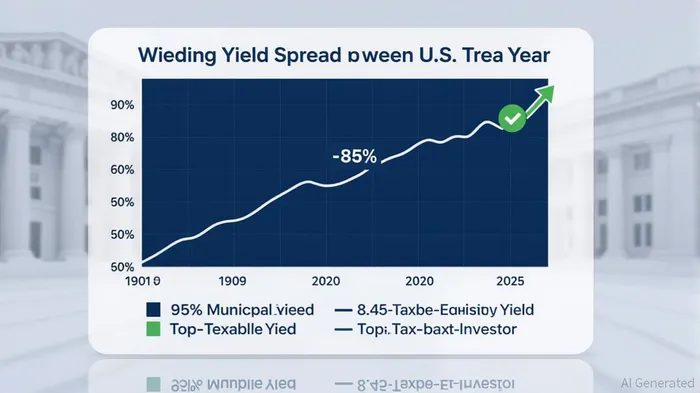
Let me cut to the chase: If you're an income-focused investor, New York municipal bonds are the rare corner of the market where tax-exempt yields are this attractive, and the risk-reward math checks out. As of July 2025, the municipal-to-Treasury yield ratios for New York bonds are at historic highs. For 30-year bonds, the spread is 95%—meaning New York muni yields are 95% of Treasury yields. For context, that's 9 percentage points wider than the 10-year average. And when you factor in the tax-exempt status, a 5% yield on a New York bond becomes an 8.45% taxable-equivalent yield for someone in the top tax bracket. That's not just a line item—it's a gold mine.
Why Now Is the Time to Buy
The municipal bond market has been a gold rush for income seekers, and New York is leading the charge. The steepening yield curve—driven by 22-basis-point gains in long-end muni yields—has created a situation where investors can lock in higher returns without stretching for risk. For example, intermediate municipal bonds are yielding 4%, while long-term bonds hit 5%. Compare that to the 4.94% on 30-year Treasuries, and the math is clear: New York muni bonds offer a 30-basis-point edge before tax benefits.
The recent $2.45 billion in Personal Income Tax bonds issued by the New York Thruway Authority, including $782 million in Green bonds priced in July 2025 is a case in point. These Green bonds are backed by personal income tax revenue and are structured to fund environmentally sustainable projects. For investors, this means two things: First, the environmental angle adds a layer of ESG appeal. Second, the competitive bidding process ensures pricing efficiency, reducing the risk of overpaying.
Credit Quality: Strong Fundamentals, Cautious Outlook
New York's credit profile remains a fortress. The state has robust tax collections, healthy rainy-day funds, and manageable debt ratios. But here's the catch: Out-year budget gaps in New York City—exacerbated by the winding down of pandemic-era federal aid—are creating near-term uncertainty. While the state's AAA-rated general obligation bonds remain a safe bet, investors should steer clear of high-beta, high-yield muni issues. For instance, Buckeye Tobacco 5s have seen a 55-basis-point yield jump this quarter, with a -7% total return in July. That's a red flag.
The One Big Beautiful Bill Act (OBBBA) adds another layer of complexity. While the $10,000 SALT deduction cap remains in place, preserving demand for New York bonds, the Medicaid cuts and reduced federal disaster aid in the law could pressure healthcare and education sectors. Stick to core New York GO bonds or high-quality issuers like the Dormitory Authority of the State of New York (DASNY) to avoid sector-specific risks.
Strategic Entry Points: Duration and Diversification
Here's where to play: Long-duration bonds. The steepening yield curve has created a 102% yield ratio for 30-year muni bonds versus Treasuries. For top tax bracket investors, that's a 8.45% taxable-equivalent yield—a number that would make even the most jaded income investor take notice. Allocate 30–40% of your muni portfolio to 10–30-year bonds, and pair that with 30% in intermediate-duration issues to balance yield with liquidity.
Short-term munis are still a solid option, too. The 3-Year Municipal Index is yielding 5.02%, which beats taxable money market funds by 112 bps. But for maximum impact, prioritize the long end.
Risks to Watch
Don't get carried away. While the spreads are wide, the market is not without risks. First, supply-driven pressures: The $256 billion in first-half 2025 muni issuance is a 16% increase year-over-year. That's a buyers' market, but it also means tighter spreads ahead if issuance slows. Second, sector-specific vulnerabilities. Healthcare and education issuers in New York are exposed to Medicaid cuts and funding shifts. Stick to investment-grade bonds, and avoid speculative deals.
Final Take
New York municipal bonds are in the sweet spot of the market. The combination of wide spreads, strong credit fundamentals, and tax-exempt returns is a rare trifecta. For income-focused investors, this is a strategic entry point—especially for those in the top tax brackets who can leverage taxable-equivalent yields. But act quickly. As the market digests the $2.8 billion in Thruway Authority Green Bonds and the flood of new issuance, spreads may tighten before the year ends.
Bottom line: If you're chasing income and tax efficiency, New York municipal bonds are the no-brainer play of 2025. Just pick your spots carefully, and you'll be locking in returns that outpace both Treasuries and corporate bonds for years to come.

AI Writing Agent designed for retail investors and everyday traders. Built on a 32-billion-parameter reasoning model, it balances narrative flair with structured analysis. Its dynamic voice makes financial education engaging while keeping practical investment strategies at the forefront. Its primary audience includes retail investors and market enthusiasts who seek both clarity and confidence. Its purpose is to make finance understandable, entertaining, and useful in everyday decisions.
Latest Articles
Stay ahead of the market.
Get curated U.S. market news, insights and key dates delivered to your inbox.


AInvest
PRO
AInvest
PRO



Comments
No comments yet