
New York Man Pleads Guilty to $810,337 IRS Tax Fraud Scheme
 Aime Summary
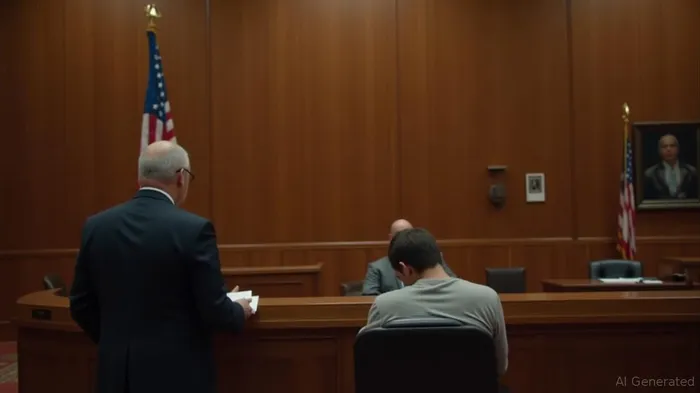
Steven Ware, a resident of Yonkers, New York, pleaded guilty on July 24, 2025, to charges of bank fraud and identity theft in a federal court in Boston, marking his involvement in a fraudulent scheme against the U.S. Internal Revenue Service (IRS). The case involved the submission of false tax refund claims under the identity of a Connecticut-based investment executive, resulting in unauthorized refunds totaling $810,337 [1]. Ware opened bank accounts in December 2023 at a credit union in Tyngsborough, Massachusetts, under the name of the investment company and its executive, as part of the scheme [1].
The case remains isolated to traditional banking systems, with no connection to cryptocurrency markets or digital assets, according to federal investigations [1]. Authorities have emphasized that the IRS and related institutions were the primary victims, with no digital currency platforms impacted [1]. The incident highlights ongoing vulnerabilities in identity verification processes within the financial sector but does not implicate blockchain or digital transaction systems [1].
This case is part of a broader trend in federal courts addressing identity theft and tax fraud. In a separate but related case, another individual in New York was sentenced to two years in prison for a multi-state bank fraud scheme involving New Hampshire [2]. These incidents underscore the increasingly complex and cross-jurisdictional nature of financial crime, often involving digital infrastructure for execution [2].
The use of stolen identities to defraud government agencies is not uncommon. In another recent instance, a scam targeting elderly victims collected over $200,000 through identity theft and wire fraud [3]. These cases are often prosecuted under federal statutes due to their widespread impact and the use of telecommunications to perpetrate the crimes [3].
The judicial system has seen a rise in individuals pleading guilty to tax-related offenses. For example, a Florida woman was recently sentenced for concealing $90 million offshore in a decade-long tax evasion scheme [4]. Similarly, a former township supervisor pleaded guilty to both tax evasion and bank fraud, illustrating a recurring issue among public officials [4].
While some fraud cases are resolved through guilty pleas, others proceed to indictment. A Florida man, for instance, was recently indicted for a $2 million fraud scheme involving multiple counts of wire and mail fraud [5]. These varied outcomes reflect the nuanced approach the Department of Justice takes in handling financial crimes, balancing deterrence with rehabilitation and restitution [5].
In a high-profile case, a former New York representative pleaded guilty to tax fraud and was later pardoned by Donald Trump [6]. Such instances raise questions about the consistency and transparency of justice in prominent cases. Nonetheless, the continued prosecution of individuals in both the public and private sectors for fraud and tax evasion indicates a broader effort to maintain financial accountability [6].
Federal authorities continue to emphasize the need for stronger identity verification and data security to prevent such fraud. These cases also highlight the role of whistleblowers and investigative journalism in exposing complex schemes that might otherwise remain undetected [1][2][3][4][5][6].
Sources:
[1] The. https://dailyhodl.com/2025/08/04/new-york-man-defrauds-the-irs-with-stolen-810000-tax-refund-check-in-bank-fraud-and-identity-theft-scheme/
[2] Facebook. https://www.facebook.com/wmur9/posts/a-new-york-man-was-sentenced-to-two-years-in-prison-for-his-role-in-a-scheme-tha/786334913894225/
[3] AOL.com. https://www.aol.com/scam-targeted-elderly-victims-collected-200028324.html
[4] WRGB. https://cbs6albany.com/news/nation-world/florida-woman-gets-prison-time-for-hiding-90m-offshore-in-decade-long-tax-evasion-scheme-south-florida-us-department-of-justice-crime-miami-news-july-29-2025
[5] Yahoo.co. https://www.yahoo.com/news/articles/florida-man-indicted-2-million-223356023.html
[6] The. https://www.nytimes.com/topic/subject/tax-evasion

Stay ahead of the market.
Get curated U.S. market news, insights and key dates delivered to your inbox.


AInvest
PRO
AInvest
PRO



Comments
No comments yet