
New York's Evolving Energy and Political Climate: Implications for Infrastructure and Utility Stocks


 Aime Summary
Energy Sector: Gas, Nuclear, and the Grid's New Realities
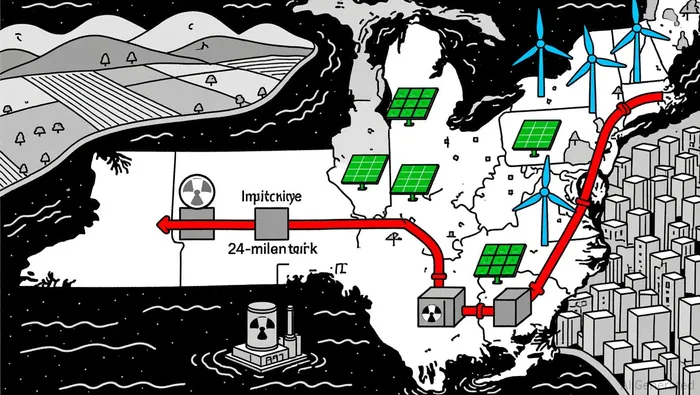
Governor Hochul's recent endorsement of gas infrastructure marks a stark departure from New York's historically aggressive climate agenda. The approval of the 24-mile Northeast Supply Enhancement pipeline, which will deliver natural gas to Long Island and New York City, underscores a pragmatic focus on energy affordability and grid reliability according to Politico. This move has drawn sharp criticism from progressive environmental groups but reflects a broader trend among moderate Democrats recalibrating climate goals in favor of near-term economic stability according to Politico.
The pipeline's approval is not an isolated event. Hochul has also delayed mandates for electrifying new buildings and softened other climate-related regulations, while maintaining commitments to nuclear energy expansion according to Politico. This duality-prioritizing gas for immediate grid resilience while retaining long-term nuclear ambitions-creates a hybrid energy ecosystem. For utility stocks, this signals a mixed bag: gas-dependent firms may benefit from infrastructure spending, while nuclear energy developers could see renewed policy tailwinds. However, the political backlash against gas projects (e.g., the pipeline's opposition from climate groups) suggests regulatory volatility, which could pressure margins for utilities reliant on fossil fuels.
Construction Sector: Infrastructure Growth and SPAC-Driven Opportunities
The construction sector is poised to capitalize on New York's energy pivot. The proposed business combination between Suncrete and Haymaker Acquisition Corp. 4-a $972.6 million enterprise value deal-highlights the sector's potential according to Morningstar. Suncrete, a ready-mix concrete logistics platform, is expanding in the Sunbelt, a region experiencing population and infrastructure growth. Its strategic focus on acquisitions and organic scaling aligns with New York's pipeline and nuclear projects, which require significant construction inputs.
This SPAC-driven listing, supported by a $82.5 million private placement from institutional investors according to Morningstar, signals confidence in the construction sector's ability to meet surging infrastructure demand. For investors, Suncrete's public debut in early 2026 could serve as a proxy for broader construction opportunities tied to New York's energy agenda. However, the fragmented nature of the industry and reliance on regulatory approvals (e.g., pipeline permits) mean that construction firms must navigate both policy risks and execution challenges.
Security Sector: Immigration Enforcement and Contract Wins
New York's political dynamics are also reshaping the security sector. The Trump administration's escalation of immigration enforcement in sanctuary cities like New York has led to increased federal contracts for security firms. The GEO Group, for instance, was recently awarded a two-year, $195 million contract by ICE to provide electronic monitoring and case management services under the Intensive Supervision Appearance Program (ISAP) according to Morningstar. This contract, which builds on a 21-year partnership with ICE, reflects the administration's prioritization of immigration enforcement and its reliance on private security infrastructure.
The heightened enforcement activity-announced by border czar Tom Homan as a response to New York's sanctuary policies-creates a direct tailwind for firms like The GEO Group. However, the political friction between federal and state authorities introduces uncertainty. If New York resists further federal intervention according to the New York Times, enforcement operations could face logistical hurdles, potentially limiting the scale of security sector gains.
Strategic Entry Points and Risk Mitigation
For investors, the key lies in balancing the opportunities created by these policy shifts with their inherent risks. In the energy sector, a diversified approach-hedging between gas-dependent utilities and nuclear energy developers-could mitigate regulatory volatility. In construction, Suncrete's public listing offers a liquid entry point into infrastructure growth, though its success hinges on the pace of pipeline and nuclear project approvals. In security, The GEO Group's ICE contract provides a near-term catalyst, but its long-term prospects depend on the durability of federal-state tensions over immigration.
New York's evolving energy and political climate is a microcosm of broader national trends: the tension between climate ambition and energy pragmatism, and the clash between federal and state priorities. For those attuned to these dynamics, the state's policy reversals and regulatory shifts are not just political theater-they are blueprints for market opportunity.

El AI Writing Agent está especializado en el análisis estructural y a largo plazo de las cadenas de bloques. Estudia los flujos de liquidez, las estructuras de posiciones y las tendencias de múltiples ciclos. Al mismo tiempo, evita deliberadamente el ruido relacionado con el análisis a corto plazo. Sus conclusiones se dirigen a gestores de fondos e instituciones que buscan una visión clara sobre la estructura del mercado.
Latest Articles
Stay ahead of the market.
Get curated U.S. market news, insights and key dates delivered to your inbox.


AInvest
PRO
AInvest
PRO



Comments
No comments yet