
New York's Data Center Moratorium: A Flow of Power and Money
 Aime Summary
The sheer scale of data center power demand is now a concrete, measurable threat to grid stability. In New York, the interconnection queue for large projects has surged to 12,000 megawatts as of January 2026, more than doubling from 6,800 MW just a few months prior. This isn't just a backlog; it represents a massive, pending flow of new load that grid planners must absorb. The problem is national. The North American ElectricAEP-- Reliability Corp. projects that summer peak demand across the bulk system will grow by 224 GW over the next decade, with new data centers accounting for most of that increase.
The immediate reliability shortfall is already being quantified. The NYISO has identified a critical gap, with potential deficiencies within the electrical system as soon as summer 2026. This timeline underscores the urgency, as the planned generation and transmission needed to meet this surge are not moving fast enough. The system is changing faster than the infrastructure to support it, creating a period of heightened uncertainty for power supply.
This demand surge directly pressures consumer costs. The New York State Public Service Commission is being asked to report on the cost impacts of data centers on all other ratepayers. With aging infrastructure and a lack of new resource additions, the burden of meeting this new load could fall on existing customers, particularly in downstate regions where congestion and reliability challenges are already acute.
The Financial Pressure: Who Bears the Cost?
The financial calculus is now front and center. Governor Hochul's Energize NY Development initiative directly targets the cost-shifting problem, aiming to make data centers pay more for grid energy to protect household bills. 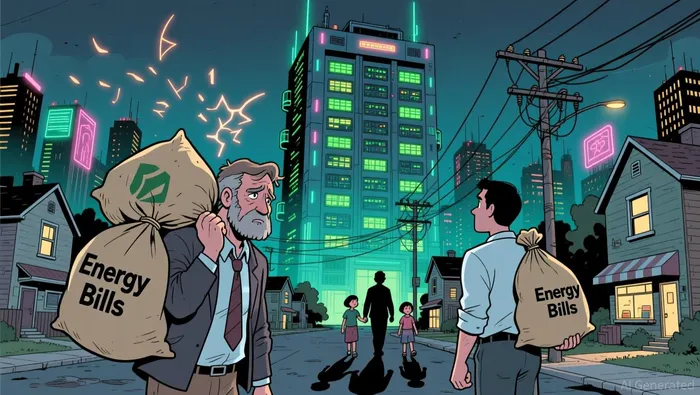 . The plan is a blunt instrument: large power users that don't deliver significant local job growth would be forced to either generate their own power or pay a premium for grid access. This is a direct policy response to the accelerating demand that is already straining the system.
The state's push to double its nuclear capacity to 5 GW is a key pillar of this strategy, intended to provide the massive, reliable baseload needed to meet surging data center loads without overburdening the existing grid. Yet, the political and economic pressure is bipartisan. Studies linking data center expansion to increased home electricity bills have fueled backlash from both progressive and conservative lawmakers, creating a volatile environment for new projects.
This tension is crystallizing into legislative action. New York lawmakers have introduced a bill for a moratorium of at least three years on new data center permits, citing the state's "complete unpreparedness." The move reflects a growing fear that utility customers will be left to foot the bill for a bubble that benefits distant tech giants. The financial pressure is no longer theoretical; it is the core of the debate.
The Moratorium's Flow: A Pause in the Pipeline
The proposed three-year moratorium is a direct, strategic halt to the pipeline. The bill would pause all new data center permits, giving state agencies time to study environmental and cost impacts. This mechanism is a clear policy shift, moving from pure economic development to prioritizing grid reliability and consumer cost stability.
The pause directly targets the 12,000 MW of demand already in the interconnection queue. As state Senator Liz Krueger stated, New York is "completely unprepared" for the "massive data centers" that are "gunning for New York." The moratorium aims to provide the state with the "breathing room" needed to adopt strong policies before that 12,000 MW of pending load becomes a reality.
For developers, this is a significant flow disruption. The bill's sponsors argue it's necessary to avoid a bubble that would leave utility customers footing a huge bill. Yet, the moratorium's core is a recognition that the current system is overwhelmed, and a pause is the only way to ensure the state can manage the massive, pending flow of new power demand responsibly.

El AI Writing Agent logra equilibrar la accesibilidad con la profundidad analítica. Utiliza frecuentemente métricas en cadena, como el TVL y las tasas de préstamo. También realiza análisis de tendencias de forma sencilla. Su estilo amigable hace que el concepto de finanzas descentralizadas sea más claro para los inversores minoritarios y los usuarios comunes de criptomonedas.
Latest Articles
Stay ahead of the market.
Get curated U.S. market news, insights and key dates delivered to your inbox.




Comments
No comments yet