
Yield-Bearing Stablecoins and the Reshaping of Institutional Liquidity Strategies


 Aime Summary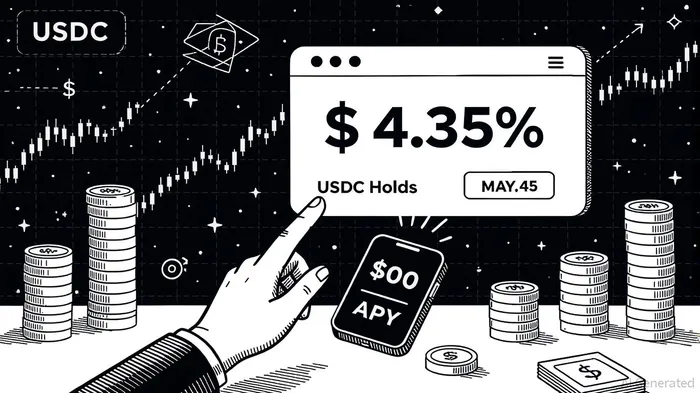
In the evolving landscape of global finance, short-term liquidity strategies are undergoing a seismic shift. Traditional instruments—once the bedrock of institutional cash management—now face stiff competition from yield-bearing stablecoins like USDCUSDC--, particularly as platforms such as CoinbaseCOIN-- offer attractive returns in a low-interest-rate environment. This transformation is not merely a technological innovation but a recalibration of how institutions and investors approach liquidity, risk, and regulatory compliance.
The Rise of Yield-Bearing Stablecoins
Stablecoins, by design, aim to bridge the gap between fiat currencies and digital assets. However, the introduction of yield-bearing stablecoins has elevated their role from mere transactional tools to strategic assets. Coinbase's USDC staking program, offering an Annual Percentage Yield (APY) of 4.35% as of August 2025, exemplifies this shift. This rate outpaces traditional savings accounts (which hover below 1%) and even outcompetes 6-month CDs (4.50%) and Treasuries (4.31%). For institutions seeking to optimize short-term liquidity, the allure of such returns is undeniable.
The mechanics behind this yield are rooted in Coinbase's deployment of USDC reserves into high-quality liquid assets (HQLA), such as U.S. Treasuries. This approach ensures that the stablecoin's 1:1 peg to the dollar remains intact while generating competitive returns. The result is a product that combines the safety of traditional fixed-income with the flexibility of digital assets.
Regulatory Clarity and Institutional Trust
A critical enabler of this shift is the U.S. GENIUS Act of 2025, which mandates 1:1 reserve backing for stablecoins and enforces monthly third-party audits. These measures have transformed USDC into a cash-equivalent asset, attracting institutional adoption. By Q1 2025, USDC balances on Coinbase surged 39% to $41.9 billion, with entities like Goldman SachsGS-- and JPMorganJPM-- allocating billions to the stablecoin. This institutional validation underscores a broader trend: stablecoins are no longer viewed as speculative tools but as legitimate components of diversified portfolios.
Comparative Analysis with Traditional Instruments
The appeal of yield-bearing stablecoins lies in their ability to outperform traditional alternatives while mitigating risks. For instance, corporate bonds, though offering higher yields, come with credit risk and liquidity constraints. In contrast, USDC's APY is generated through HQLA, which is both liquid and backed by regulatory safeguards. Additionally, the absence of lock-up periods or fees on Coinbase's platform makes it accessible for dynamic liquidity management.
Consider the Federal Reserve's target federal funds rate of 5.25%-5.50% in 2025. While this rate is favorable, it is primarily accessible to large institutions and corporations. Retail and mid-sized investors, meanwhile, are left with suboptimal returns on savings accounts. Yield-bearing stablecoins democratize access to high-yield opportunities, enabling a broader range of participants to compete in the liquidity market.
Implications for Investors
For institutional investors, the integration of yield-bearing stablecoins into short-term liquidity strategies offers several advantages:
1. Enhanced Returns: Capturing 4.35% APY in a low-rate environment provides a significant edge over traditional alternatives.
2. Liquidity Flexibility: The ability to access funds instantly without penalties aligns with the dynamic needs of institutional portfolios.
3. Regulatory Compliance: The GENIUS Act and similar frameworks ensure that stablecoins meet stringent reserve and audit requirements, reducing counterparty risk.
However, investors must remain cognizantCTSH-- of potential risks. APYs are subject to market conditions and platform discretion, as seen in Coinbase's historical adjustments (e.g., a 6% APY in November 2023, followed by reductions to 4.7%). Diversification across stablecoins and traditional instruments remains prudent.
Strategic Recommendations
- Allocate a Portion of Short-Term Liquidity to USDC: Institutions should consider allocating 10-20% of their cash reserves to yield-bearing stablecoins to capitalize on competitive APYs while maintaining liquidity.
- Monitor Regulatory Developments: The evolving regulatory landscape, including the EU's MiCA framework, will shape the future of stablecoin yields. Staying informed ensures compliance and risk mitigation.
- Diversify Yield Sources: Pair USDC APY with other strategies, such as DeFi protocols (e.g., AaveAAVE-- or LIDO), to stack returns while managing smart contract risks.
Conclusion
The rise of yield-bearing stablecoins marks a pivotal moment in the convergence of traditional and decentralized finance. Platforms like Coinbase are redefining liquidity management by offering high-yield, low-risk alternatives that align with institutional needs. As regulatory clarity and technological innovation continue to evolve, investors who embrace these tools will be better positioned to navigate the challenges of a low-interest-rate environment. The future of liquidity is not just digital—it is programmable, transparent, and increasingly competitive.

Blending traditional trading wisdom with cutting-edge cryptocurrency insights.
Latest Articles
Stay ahead of the market.
Get curated U.S. market news, insights and key dates delivered to your inbox.
AInvest
PRO
AInvest
PRO



Comments
No comments yet