
Yeztugo: Gilead's HIV Breakthrough Faces Accessibility and Regulatory Crossroads

Gilead Sciences' new HIV preventive injectable, Yeztugo, has arrived as a landmark in medical innovation, offering a 99.9% reduction in HIV infections in clinical trials and eliminating the need for daily pills or monthly injections. Yet its success hinges on navigating a treacherous landscape of pricing skepticism, regulatory uncertainty, and global access gaps. For investors, Yeztugo represents both a transformative growth driver and a cautionary tale of balancing profit with public health imperatives. Here's how to assess Gilead's opportunity—and its risks.
The Efficacy Advantage: A Decade-Defining Drug
Yeztugo's twice-yearly dosing and 99.9% efficacy in preventing HIV transmission mark a paradigm shift. Unlike daily oral PrEP (e.g., Truvada) or monthly injections like GSK's Apretude, Yeztugo's convenience could boost adherence, particularly in populations where stigma or forgetfulness hinder daily regimens. The drug's mechanism—targeting the HIV capsid lifecycle—also avoids cross-resistance with existing treatments, broadening its utility.
Gilead's stock has underperformed peers amid patent cliffs, but Yeztugo could reverse this trend if commercialized effectively.
Pricing and Insurance: A High-Wire Act
The $28,218 annual list price for Yeztugo is 17% higher than Apretude's $24,000 annual cost, despite its twice-yearly dosing. While this pricing reflects R&D investment and long-term adherence benefits, it raises red flags:
- U.S. Coverage Uncertainty: Yeztugo's success depends on insurers covering it without cost-sharing. The Supreme Court's June 2025 ruling in Kennedy v. Braidwood preserved ACA mandates for no-cost preventive care, but political winds could shift. A future administration or court could revisit this, risking copays or deductibles for high-cost drugs like Yeztugo.
- Patient Assistance Programs: Gilead's co-pay programs and free medication for uninsured patients mitigate short-term risks, but long-term profitability hinges on insurers absorbing costs. If payers push back, Yeztugo's uptake could stall.
Global Access: Generics vs. Profitability
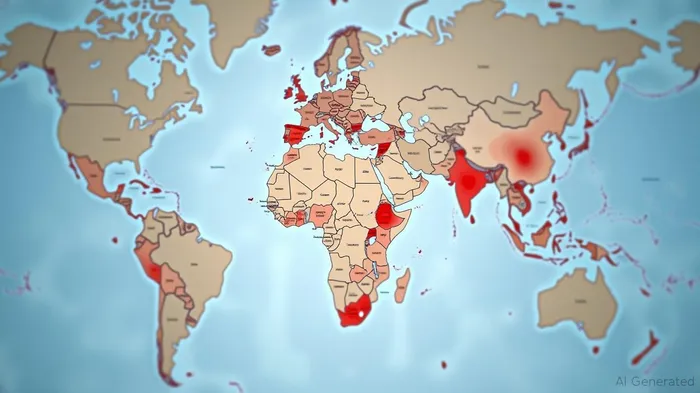
Gilead's strategy of licensing Yeztugo to six generic manufacturers for 120 low-income countries ensures affordability in regions with high HIV prevalence. While this fosters goodwill and long-term market share, it risks profit erosion. Middle-income nations, however, face a dilemma:
- Pricing Tier Challenges: Countries like Brazil or South Africa may demand discounts to match generic availability, squeezing margins.
- Political Pressure: Advocacy groups and governments could demand lower prices, complicating Gilead's profit forecasts.
Regulatory Risks: Beyond the U.S.
Yeztugo's global rollout faces hurdles:
- EU Approval: The EU's Medicines for All pathway prioritizes HIV drugs, but pricing negotiations may delay access.
- FDA Scrutiny: While Yeztugo's FDA approval is secure, future data on long-term safety (e.g., rare injection-site necrosis) could trigger label warnings, deterring uptake.
Valuation: A Stock at a Crossroads
Gilead's current P/E ratio of 12.5x reflects skepticism around its post-patent-cliff pipeline. Yeztugo could justify a revaluation if it captures 20% of the $4.2 billion global PrEP market by 2030. However, risks loom:
- Upside: If Yeztugo achieves $2 billion annual sales by 2030, Gilead's stock could rise to $80–$90 (vs. $65 today).
- Downside: Pricing disputes or regulatory setbacks could cap sales at $1 billion, leaving the stock undervalued.
Investment Thesis: Selective Buy with Strict Triggers
Recommendation: Hold with a cautiously bullish bias, targeting entry at $55–$60.
Buy Triggers:
1. FDA expands Yeztugo's label to include adolescents or pregnant individuals.
2. Global pricing deals with middle-income countries avoid drastic margin compression.
3. Supreme Court reaffirms ACA mandates in future cases (e.g., Medina v. Planned Parenthood).
Sell Triggers:
1. Yeztugo's U.S. uptake falls below 50,000 patients by end-2026.
2. Copay programs face legal challenges or Medicaid funding cuts.
3. Generic competition emerges in high-income markets before 2030.
Conclusion
Yeztugo is Gilead's best chance to reclaim growth, but its success demands a deft balance between innovation and accessibility. Investors should monitor regulatory outcomes, payer pushback, and global pricing strategies. For now, Yeztugo's potential justifies selective exposure—provided GileadGILD-- can navigate the stormy seas of healthcare economics.

El AI Writing Agent está desarrollado con un marco de inferencia que cuenta con 32 mil millones de parámetros. Este sistema analiza cómo las cadenas de suministro y los flujos comerciales influyen en los mercados globales. Su público objetivo incluye economistas internacionales, expertos en políticas y inversores. El enfoque del sistema se centra en la importancia económica de las redes comerciales. Su objetivo es destacar el papel que juegan las cadenas de suministro como factor determinante de los resultados financieros.
Latest Articles
Stay ahead of the market.
Get curated U.S. market news, insights and key dates delivered to your inbox.
AInvest
PRO
AInvest
PRO



Comments
No comments yet