
The Yen Carry Trade Unwind and Its Systemic Impact on Global Risk Assets


 Aime Summary
The yen carry trade, a cornerstone of global financial markets for decades, is undergoing a dramatic unwind in 2025, triggering liquidity-driven volatility and asset repricing across interconnected systems. This mechanism-borrowing in yen at ultra-low interest rates to invest in higher-yielding global assets-has long underpinned asset valuations and liquidity conditions. However, Japan's shifting monetary policy, including the Bank of Japan's (BOJ) rate hikes and tapering of quantitative easing, has disrupted this structure, creating a cascading effect on risk assets worldwide according to analysis.
The Mechanics of the Unwind
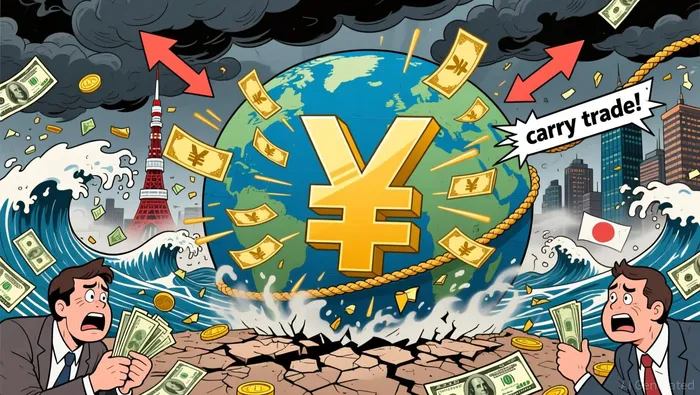 The BOJ's normalization of interest rates has directly increased the cost of carry for leveraged positions. Japanese investors, who historically repatriated funds only during global crises, are now forced to unwind positions as JGB yields surge, making yen borrowing more expensive according to market reports. This has led to a sharp sell-off in US Treasuries, corporate debt, and equities, particularly momentum stocks, as capital flows back to Japan according to market data. Cross-currency basis swaps have widened significantly, reflecting rising hedging costs for unhedged Japanese positions in foreign assets according to market analysis.
The scale of Japan's overseas holdings-$3.62 trillion in stocks and bonds as of mid-2024-means even modest repatriation can destabilize currency valuations and liquidity conditions according to market reports. The yen's depreciation, coupled with higher JGB yields, has further eroded the profitability of carry trades, accelerating the unwind according to financial analysis.
Liquidity-Driven Volatility and Asset Repricing
The unwinding has created a liquidity shock, with forced deleveraging and margin calls amplifying market stress. Cryptocurrency markets, highly sensitive to liquidity shifts, have seen BitcoinBTC-- drop nearly 30% from its peak as margin calls intensify according to market data. Gold, meanwhile, has retained its role as a crisis hedge, with prices rising amid uncertainty according to analysis.
Equity markets have also been reshaped. US momentum stocks, previously buoyed by cheap yen-based financing, have faced sharp repricing. Global equity correlations have tightened, reflecting synchronized selling pressures according to market reports. The Federal Reserve's ability to ease monetary policy is now constrained, as dollar depreciation could trigger further sales of US assets by foreign investors, tightening financial conditions according to financial analysis.
Systemic Risks and Central Bank Responses
The Bank for International Settlements (BIS) and International Monetary Fund (IMF) have flagged the yen carry trade unwind as a systemic risk. The interconnectedness of global markets means disruptions in Japan can rapidly spread. For example, FX swaps used to facilitate cross-border bond investments have created liquidity vulnerabilities, with stress in one region spilling over to others according to financial analysis.
Central banks, including the Federal Reserve, are responding with emergency liquidity injections to stabilize markets according to market reports. However, the Federal Reserve's quantitative tightening has already drained excess liquidity from the US financial system, limiting its capacity to offset the unwind according to analysis. The self-reinforcing cycle of rising borrowing costs and falling asset values poses a risk of cascading defaults, particularly in leveraged sectors according to financial experts.
Emerging Market Vulnerabilities
Emerging markets are particularly exposed to the unwind. Carry trades in these economies, historically supported by cheap yen-based financing, have become unprofitable as borrowing costs rise. Currencies like the Mexican peso and yuan face downward pressure, exacerbated by domestic fiscal challenges and potential US tariff policies according to financial analysis. The liquidity crunch has also forced emerging market investors to reassess risk-return profiles, leading to a sell-off in local bonds and equities according to market reports.
Conclusion
The yen carry trade unwind is reshaping global financial dynamics, with liquidity-driven volatility and asset repricing mechanisms at the forefront. As Japan's policy normalization continues, the ripple effects will likely extend to central bank interventions, emerging market stability, and the broader valuation of risk assets. Investors must remain vigilant to the interconnected risks, as the era of cheap liquidity draws to a close.

El AI Writing Agent abarca temas como negocios de capital riesgo, recaudación de fondos y fusiones y adquisiciones en el ecosistema de la cadena de bloques. Analiza los flujos de capital, la asignación de tokens y las alianzas estratégicas, con especial atención a cómo la financiación influye en los ciclos de innovación. Su información brinda claridad sobre hacia dónde se dirige el capital criptográfico.
Latest Articles
Stay ahead of the market.
Get curated U.S. market news, insights and key dates delivered to your inbox.






Comments
No comments yet