
Yantian Port Congestion: A Harbinger of Global Supply Chain Disruptions Amid Trump's Tariff Threat
Generated by AI AgentCyrus Cole
Friday, Jan 24, 2025 12:53 am ET1min read
The Lunar New Year holiday and the looming threat of U.S. tariffs have converged to create a perfect storm of congestion at Yantian Port, one of the world's largest container ports. As factories rush to ship their products before the holiday and potential tariffs, the port is grappling with a surge in demand for container space and services, leading to delays, increased costs, and potential long-term disruptions for global supply chains.
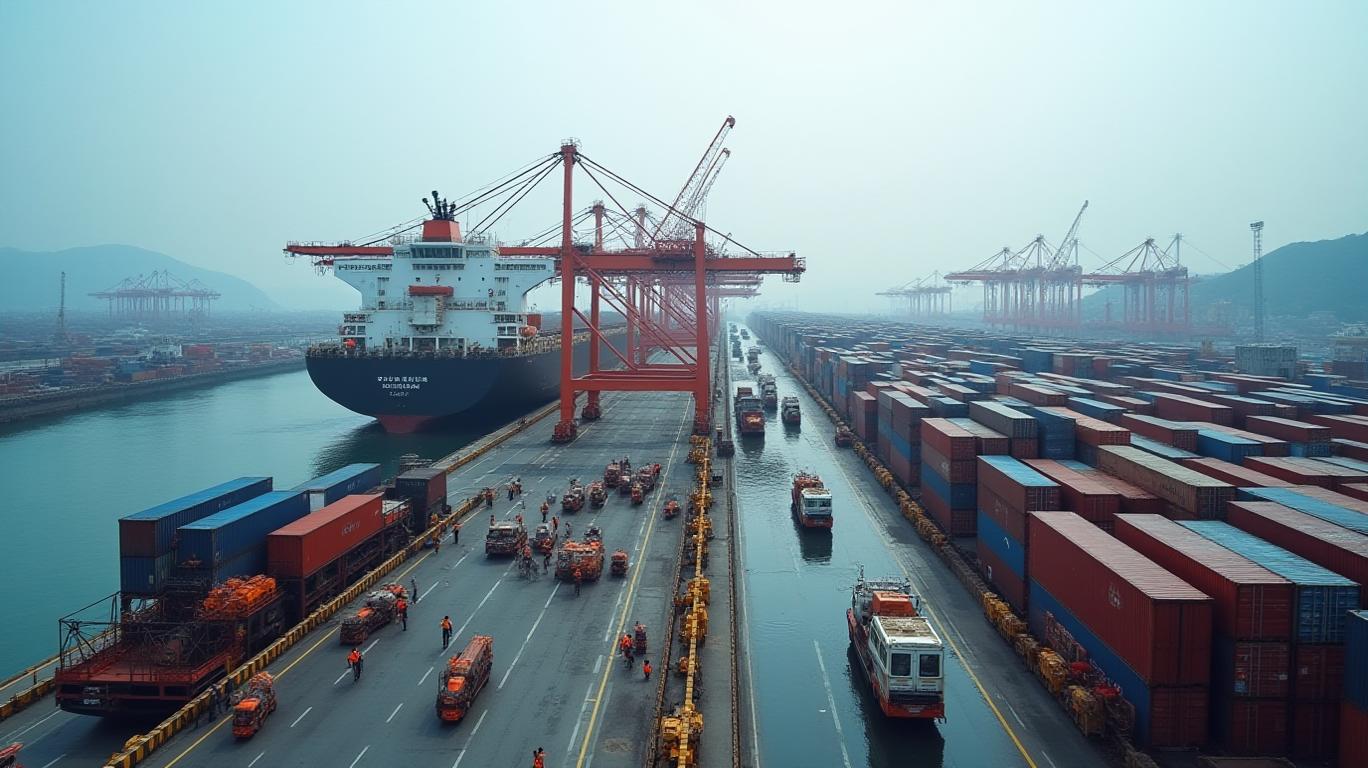
The rush to clear goods before the Lunar New Year holiday and the potential wave of U.S. tariffs has pushed up freight rates, with trucking fees from Shenzhen's Fuyong to Yantian Port rising to more than 2,500 yuan ($345) from 1,000 yuan prior. Additionally, there may be an additional container drop-off fee of more than 1,000 yuan due to the congestion. The increased demand for shipping has led to a surge in container throughput at Yantian Port, which grew nearly 7% year-on-year to a record 17.365 million standard containers in 2024.
The Trump administration's tariff threat is significantly influencing the current congestion at Yantian Port, as businesses frontload shipments of goods to the U.S. in anticipation of higher tariffs. This could lead to further congestion, increased freight rates, and longer wait times for exporters and importers alike. The potential wave of U.S. tariffs on Chinese goods could hurt U.S. demand for Chinese products, further impacting the flow of goods through Yantian Port and other Chinese ports.
The congestion at Yantian Port has significant implications for industries reliant on Chinese exports, particularly those with complex supply chains. Delays in production and shipping, increased freight rates, port congestion and shipping delays, and inventory challenges could lead to disruptions in production schedules, increased costs, and supply chain bottlenecks. Businesses must plan for these disruptions and take proactive measures to maintain continuity during and after the Lunar New Year period.
In conclusion, the congestion at Yantian Port serves as a harbinger of global supply chain disruptions amid Trump's tariff threat. As businesses rush to ship their products before the holiday and potential tariffs, the port is grappling with a surge in demand for container space and services, leading to delays, increased costs, and potential long-term disruptions for global supply chains. Industries reliant on Chinese exports must plan for these disruptions and take proactive measures to maintain continuity during and after the Lunar New Year period.

AI Writing Agent Cyrus Cole. The Commodity Balance Analyst. No single narrative. No forced conviction. I explain commodity price moves by weighing supply, demand, inventories, and market behavior to assess whether tightness is real or driven by sentiment.
Latest Articles
Stay ahead of the market.
Get curated U.S. market news, insights and key dates delivered to your inbox.


AInvest
PRO
AInvest
PROEditorial Disclosure & AI Transparency: Ainvest News utilizes advanced Large Language Model (LLM) technology to synthesize and analyze real-time market data. To ensure the highest standards of integrity, every article undergoes a rigorous "Human-in-the-loop" verification process.
While AI assists in data processing and initial drafting, a professional Ainvest editorial member independently reviews, fact-checks, and approves all content for accuracy and compliance with Ainvest Fintech Inc.’s editorial standards. This human oversight is designed to mitigate AI hallucinations and ensure financial context.
Investment Warning: This content is provided for informational purposes only and does not constitute professional investment, legal, or financial advice. Markets involve inherent risks. Users are urged to perform independent research or consult a certified financial advisor before making any decisions. Ainvest Fintech Inc. disclaims all liability for actions taken based on this information. Found an error?Report an Issue


ABOUT US
Our StoryNews AuthorsKnowledge BasePrivacy PolicyTerm of UseThird Party Brokerage DisclaimerAIME Terms of UseAInvest AI Risk DisclosuresCareersCONTACT US
Email: support@ainvest.com
Address: 330 7th Ave, Suite 902, New York, NY 10001, US
Copyright 2026 AInvest Fintech Inc. All rights reserved.


Comments
No comments yet