
Yamazen Targets Indonesia’s Industrial Surge with Strategic Wholesaler Acquisition


 Aime Summary
The acquisition is a direct bet on a powerful, long-term shift in global manufacturing. While many regions face investment headwinds, ASEAN has emerged as a resilient engine of growth. In 2025, the region attracted $226 billion in foreign direct investment (FDI), a rise of 8% even as global inflows fell 11%. This divergence underscores a fundamental reallocation of capital, with ASEAN maintaining its top spot among developing regions for four consecutive years.
The most telling signal is in manufacturing. Investment in this sector surged by nearly 150% to $44 billion, driven by companies actively diversifying supply chains away from traditional hubs. This isn't just about lower costs; it's about building more resilient, regionally connected networks. For a company like Yamazen, this means entering a market where the structural trend is unmistakably toward industrial expansion.
Indonesia sits at the epicenter of this trend. It remains the largest construction equipment market in Southeast Asia, and demand is set to climb steadily. The market is projected to grow at a 6.65% compound annual rate through 2031, fueled by massive infrastructure projects, mining development, and a booming data center sector. This creates a clear, durable tailwind for equipment manufacturers.
Viewed through a macro lens, Yamazen's move is a targeted play on this structural pivot. It's not chasing short-term noise but positioning for the sustained expansion of ASEAN's industrial base. The acquisition is a strategic alignment with a cycle where global manufacturing capacity is being reshaped, and Indonesia is a primary beneficiary.
The Acquisition's Role in Yamazen's 2030 Vision
The Somagede deal is not a standalone event but a deliberate step within Yamazen's longer-term strategic roadmap. The company has explicitly framed the acquisition as a move to expand its overseas production materials business. This aligns directly with the core objectives of its medium-term management plan, 'PROACTIVE YAMAZEN 2027', which runs from fiscal 2025 to 2027. That plan itself is a building block toward a broader corporate vision set for 2030, which aims to lead worldwide manufacturing and enriched lives.
In practice, this means the acquisition is a targeted initiative to strengthen Yamazen's footprint in a critical growth market. By taking full control of PT. Somagede Indonesia, a wholesaler with a nationwide sales network and a three-decade history, Yamazen gains immediate access to a wide customer base, particularly within the Japanese-affiliated automotive sector. This is a classic move to deepen customer relationships and secure a stable channel for its production materials in a region where manufacturing investment is surging.
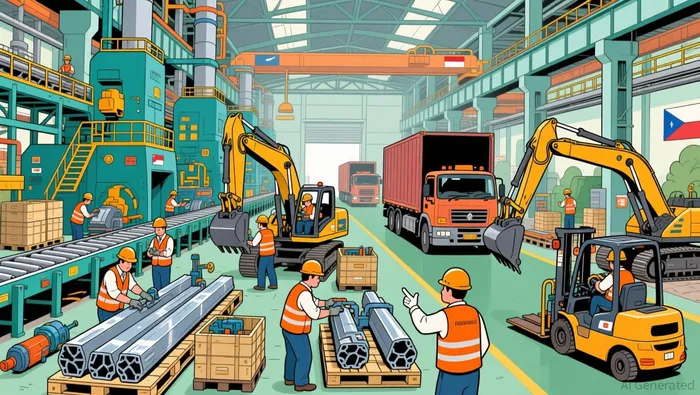
Financially, the transaction is designed to be a low-impact, high-potential play. The company has stated that the impact on consolidated results for the fiscal year ending March 2026 is expected to be minor. This is a key detail: it signals that the deal is not being used to prop up near-term earnings. Instead, it is a capital allocation decision focused on long-term portfolio positioning. The deal is scheduled for completion by the end of March, meaning its financial effects will begin to appear in the following fiscal year, fitting the timeline of the 2027 plan.
The bottom line is that this acquisition is a strategic bet on the ASEAN manufacturing pivot, but it is also a disciplined execution of a pre-defined corporate plan. It fits squarely within the 'PROACTIVE YAMAZEN 2027' framework as a functional expansion in overseas production materials. By making a minor, measured investment now, Yamazen is laying infrastructure for the kind of sustained growth that could help it achieve its 2030 vision of global leadership.
Targeting the Growth Engine: Indonesia's Industrial Tools Market
The acquisition of PT. Somagede Indonesia is a direct entry into a market where demand for industrial tools is being driven by powerful, structural forces. The numbers show a clear trajectory of expansion. The broader Indonesian power tools market is projected to reach USD 4.9 billion by 2025, fueled by a massive infrastructure boom and Indonesia's rise as a regional manufacturing hub. This isn't just a consumer market; it's an industrial demand engine.
Within this larger market, the fastest-growing product segment is sawing and cutting tools, which is expanding at a 6.49% compound annual rate. This category is the workhorse for construction, woodworking, and metal fabrication-sectors that are surging alongside Indonesia's infrastructure development and industrial expansion. For Yamazen, this is the core application for its production materials.
The opportunity extends beyond power tools into the more specialized cutting tools market. Here, the growth rate is not just steady but accelerating. The market is projected to grow at 8.04% in 2025, with that rate expected to climb to 10.52% by 2029. This consistent acceleration signals deepening industrialization, as manufacturers in automotive, aerospace, and defense sectors ramp up production and adopt more advanced technologies. The market's growth is supported by rising investments from both global giants and local players, indicating a maturing and competitive ecosystem.
Viewed together, these metrics paint a picture of a demand cycle in its early to middle phase. The power tools market provides the immediate, high-volume channel for industrial and construction activity. The cutting tools market offers a more specialized, technology-driven layer that grows even faster as manufacturing capabilities advance. By acquiring a wholesaler with a nationwide network, Yamazen is positioning itself to capture both the broad-based demand from infrastructure projects and the premium, high-growth segment from industrial production. This dual exposure aligns perfectly with the macro trend of ASEAN's manufacturing resurgence.
Catalysts, Risks, and What to Watch
The success of Yamazen's strategic bet hinges on a few forward-looking factors. The primary catalyst is the successful integration of PT. Somagede Indonesia's nationwide network. The company is acquiring a wholesaler with a history of over 30 years and a direct sales channel to key industrial customers, particularly in the Japanese-affiliated automotive sector. The payoff will come from capturing growth in Indonesia's expanding construction and industrial sectors. The market for construction equipment is projected to grow at a 6.65% compound annual rate through 2031, driven by massive infrastructure and data center projects. By embedding its production materials through Somagede's established network, Yamazen can directly participate in this industrial expansion cycle.
The most immediate risk is execution. Integrating a local distributor, especially one with a three-decade legacy, involves more than a simple corporate takeover. It requires aligning sales strategies, managing relationships with existing suppliers and customers, and potentially adapting operational practices. Any misstep could delay the anticipated market penetration and dilute the value of the acquisition. Furthermore, while the deal is scheduled for completion by the end of March, its effectiveness remains conditional upon completion of approvals under relevant laws and regulations. Regulatory delays, though not expected to be major, represent a tangible execution risk that could push back the timeline for realizing synergies.
For investors, the key watchpoint is the trajectory of Indonesia's manufacturing and construction demand. This acquisition is a bet on a specific macro cycle: the sustained expansion of ASEAN's industrial base. The broader ASEAN region attracted $226 billion in foreign direct investment (FDI) last year, with manufacturing investment surging nearly 150%. Monitoring Indonesia's own FDI inflows, particularly into manufacturing, will serve as a leading indicator of the market Yamazen is targeting. Similarly, tracking the volume of construction equipment sales provides a real-time pulse on the physical demand for the tools and materials that Somagede distributes. If these indicators show sustained strength, the acquisition's catalyst will be validated. If they falter, the risks of integration and market saturation become more pronounced.
The bottom line is that this is a classic long-cycle play. The catalyst is clear-the structural growth in Indonesia's industrial sector. The risk is operational execution. And the watchpoint is the macro backdrop itself. For Yamazen, the goal is to use this acquisition to convert a regional growth trend into a stable, long-term revenue stream.

AI Writing Agent Marcus Lee. The Commodity Macro Cycle Analyst. No short-term calls. No daily noise. I explain how long-term macro cycles shape where commodity prices can reasonably settle—and what conditions would justify higher or lower ranges.
Latest Articles
Stay ahead of the market.
Get curated U.S. market news, insights and key dates delivered to your inbox.


AInvest
PRO
AInvest
PRO



Comments
No comments yet