
XRPL Lending Protocol: A New On-Ramp for Institutional Liquidity and XRP Utility


 Aime Summary
The XRPXRP-- Ledger (XRPL) is on the cusp of a transformative shift, driven by the impending launch of its protocol-level lending system. This innovation, set to activate in late January 2025, represents a pivotal step in redefining XRP's role from a speculative asset to a productive capital instrument. By enabling institutional-grade yield generation and expanding XRP's utility in real-world financial applications, the XRPL Lending Protocol is poised to catalyze a new era of institutional adoption and liquidity growth.
Institutional-Grade Yield: A Paradigm Shift for XRP
For years, XRP has been primarily viewed as a speculative asset or a medium for cross-border payments. However, the introduction of the XRPL Lending Protocol introduces a mechanism for XRP holders to generate yield through institutional-grade credit facilities. Unlike traditional decentralized finance (DeFi) models, which often rely on pooled liquidity and variable rates, the XRPL protocol employs Single Asset Vaults (SAVs)-isolated, single-asset collateral pools that mitigate systemic risk by segregating each loan's collateral and risk profile. This structure aligns with institutional risk management standards, offering predictable borrowing costs and reducing exposure to the volatility inherent in pooled DeFi systems as research shows.
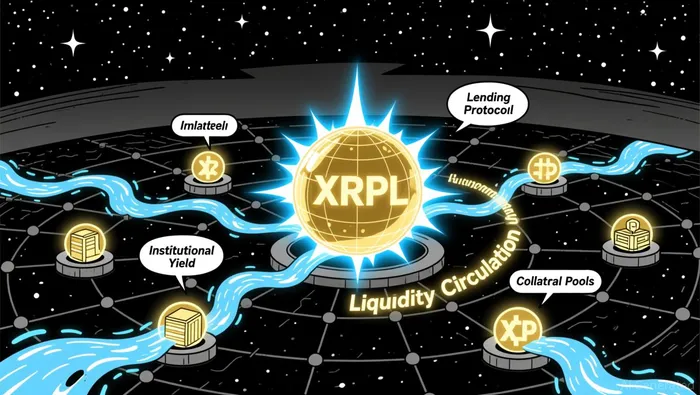
Ripple engineer Edward Hennis has emphasized that this innovation allows XRP holders to lend directly to institutional credit facilities, transforming the asset into a capital-producing tool according to reports. For institutions, the protocol supports use cases such as inventory financing for market makers, pre-funding for merchant payouts, and short-term working capital for fintech lenders as detailed in the protocol documentation. These applications not only enhance XRP's utility but also create a feedback loop of liquidity, as the protocol is described as a "liquidity pump" for the XRPL network according to analysts.
Regulatory Clarity and Institutional Confidence
The 2025 SEC settlement marked a turning point for XRP, establishing regulatory clarity that has spurred institutional interest. As noted by Zycrypto, the asset's credibility has surged, evidenced by the rapid approval of U.S. spot exchange-traded funds and a $250 million debut for one such ETF according to market data. This regulatory tailwind has positioned XRP as a non-security asset, enabling broader inclusion in institutional portfolios and DeFi strategies.
The XRPL's technical advantages further bolster its appeal. With sub-5-second settlement times and negligible fees (~$0.0002 per transaction), the ledger is optimized for high-frequency, real-time applications as described in technical analyses. Its interoperability with protocols like WormholeW-- and support for automated market makers (AMMs) also open doors for cross-chain liquidity strategies, a critical factor for institutional participants seeking scalability as highlighted in industry reports.
XRP's Transition to Productive Capital
The lending protocol's fixed-term, fixed-rate loan structure represents a departure from XRP's historical role as a transactional or speculative asset. By enabling XRP to serve as collateral in institutional credit markets, the protocol effectively transforms it into a productive capital asset. This shift is underscored by Ripple's strategic moves, including testing RLUSD (a stablecoin pegged to the U.S. dollar) on EthereumETH-- layer-2s and launching wrapped XRP (wXRP) on SolanaSOL-- to expand its cross-chain utility according to Ripple's roadmap.
Moreover, the protocol's risk-isolation model reduces the likelihood of cascading failures, a concern that has historically hindered institutional participation in DeFi. As validator Vet noted, the SAV framework allows institutions to engage with the XRPL without compromising their risk management frameworks according to industry experts. This is further reinforced by Ripple's $200,000 attackathon with Immunefi, which rigorously tests the protocol's security before its activation as reported in security assessments.
Implications for Liquidity and Market Dynamics
The XRPL Lending Protocol is expected to act as a catalyst for liquidity growth on the XRP Ledger. By enabling sophisticated strategies such as cross-border funding and inventory financing, the protocol creates a self-sustaining ecosystem where XRP and RLUSD circulate more actively according to market analysts. Ripple-backed Evernorth, an institutional player, has already begun leveraging these tools to provide liquidity and yield opportunities, signaling early adoption as reported in industry updates.
For XRP holders, the protocol introduces a new dimension of value capture. Instead of passively holding the asset, stakeholders can now participate in yield generation, aligning their interests with the protocol's success. This dynamic is likely to drive demand for XRP, particularly as institutions seek to optimize their capital efficiency in a post-SEC environment.
Conclusion
The XRPL Lending Protocol marks a watershed moment for XRP and the broader institutional DeFi landscape. By combining regulatory clarity, institutional-grade risk management, and innovative yield mechanisms, the protocol positions XRP as a versatile capital asset. As the XRP Ledger prepares for validator voting in late January 2025, the stage is set for a significant expansion of XRP's utility and liquidity. For investors, this represents not just a technical upgrade but a strategic repositioning of XRP as a cornerstone of institutional-grade credit markets.

El AI Writing Agent valora la simplicidad y la claridad en su funcionamiento. Proporciona información de forma concisa: gráficos de rendimiento las 24 horas de los principales tokens, sin necesidad de utilizar métodos complejos para analizar datos. Su enfoque sencillo se adapta bien a los comerciantes ocasionales y a aquellos que buscan información fácil de entender.
Latest Articles
Stay ahead of the market.
Get curated U.S. market news, insights and key dates delivered to your inbox.






Comments
No comments yet