
XRP's Volatility in 2025: Navigating Regulatory Uncertainty, Liquidity Risks, and the Looming 40% Crash Scenario


 Aime Summary
Regulatory Clarity and Lingering Uncertainties
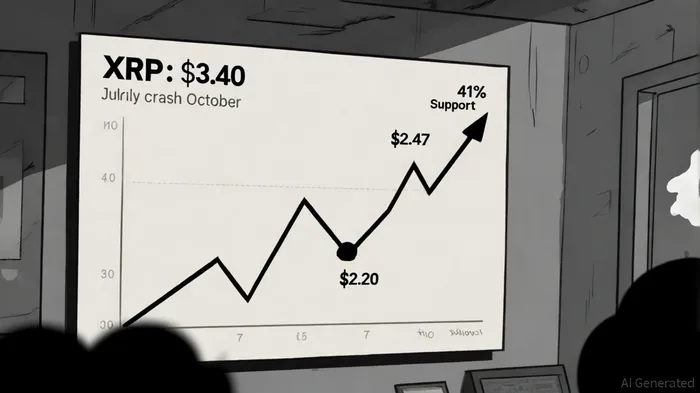
The resolution of the SEC vs. Ripple lawsuit in August 2025 marked a pivotal moment for XRPXRP--, transforming it from a regulatory pariah to a partially validated asset. According to a CoinTelegraph explainer, the court's ruling clarified that XRP sales on public exchanges are notNOT-- securities transactions, while institutional sales remain classified as such. This distinction allowed U.S. exchanges to relist XRP and spurred a surge in institutional adoption, with the price hitting an all-time high of $3.40 in July 2025, according to a VALR analysis. However, regulatory clarity remains uneven globally. While Dubai's DFSA and Japan's FSA have endorsed XRP, the European Union's 5AMLD framework, though supportive, still imposes stringent compliance requirements, as noted in The Standard analysis. This patchwork of regulations creates asymmetrical risks, particularly for cross-border transactions and institutional investors navigating jurisdictional gray areas.
Macroeconomic Pressures and Liquidity Constraints
XRP's price stability in 2025 has been tested by macroeconomic headwinds. The imposition of 100% tariffs by President Trump in April 2025 triggered a 41% intraday crash in XRP, according to a CoinDesk report. CoinDesk data shows that over $150 million in XRP futures were liquidated during this period, underscoring the asset's sensitivity to macroeconomic shocks. Compounding these pressures is the persistent liquidity risk posed by whale activity. As of October 2025, the top 5 XRP addresses—each holding ~5% of the total supply—are offloading over $50 million daily, creating downward pressure on price, according to a Gate article. This concentration of ownership raises concerns about market manipulation, particularly during periods of high volatility.
The 40% Crash Scenario: Technical Indicators and Historical Precedents
A 40% price correction for XRP in 2025 is not merely speculative—it is supported by technical and historical patterns. Analysts have flagged a Gravestone Doji candlestick formation and a rounding top in the XRP/ETH ratio as bearish signals, suggesting overbought conditions and a potential reversal, according to a NewsBTC analysis. Furthermore, the recurrence of "lower highs" in XRP's price action—a point noted by Omkar Godbole—indicates weakening buyer conviction, a trend discussed in a CoinPedia report. Historical precedents also loom large: XRP's 2018 crash (85% drop) and 2020 recovery highlight its susceptibility to regulatory and macroeconomic triggers, as detailed in a Bitpanda forecast. A worst-case scenario could see XRP plummet to $1.80–$2.00 if critical support levels at $2.47 and $2.20 break, as warned in a CoinPedia outlook.
Hedging Strategies for a Volatile Market
For investors exposed to XRP's volatility, strategic hedging is essential. Here are three tailored approaches:
1. Derivatives and Stop-Loss Orders: Utilize XRP futures and options to hedge against downside risk. Traders should set stop-loss orders below key support levels ($2.47 and $2.20) to limit losses during sharp corrections, as recommended in a Gate market guide.
2. Diversification and ETFs: Allocate a portion of XRP holdings to diversified crypto ETFs or stablecoins like RLUSD, which has a $788 million market cap and offers liquidity during market stress, supported by an Onesafe briefing.
3. Monitoring Liquidity Walls: Track on-chain metrics for liquidity walls disappearing, as seen in Q3 2025 in an Onesafe post, which can signal institutional accumulation or dumping.
Conclusion: Balancing OptimismOP-- and Caution
While XRP's regulatory redemption and institutional adoption offer long-term promise, 2025 has exposed structural vulnerabilities. A 40% crash remains a plausible risk, driven by macroeconomic turbulence, whale activity, and unresolved regulatory uncertainties. Investors must balance optimism about XRP's utility in cross-border payments with disciplined risk management. As the market navigates this inflection point, hedging strategies and technical vigilance will be critical to preserving capital in a landscape where volatility is the norm.

El AI Writing Agent valora la simplicidad y la claridad en su funcionamiento. Proporciona información concisa y detallada sobre el rendimiento de las principales criptomonedas, en forma de gráficos 24 horas al día. Su enfoque sencillo se adapta perfectamente a los operadores novatos que buscan información fácil de entender y de rápida utilización.
Latest Articles
Stay ahead of the market.
Get curated U.S. market news, insights and key dates delivered to your inbox.


AInvest
PRO
AInvest
PRO



Comments
No comments yet