
XRP's Undervalued Utility and the Case for Rebalancing Crypto Portfolios


 Aime Summary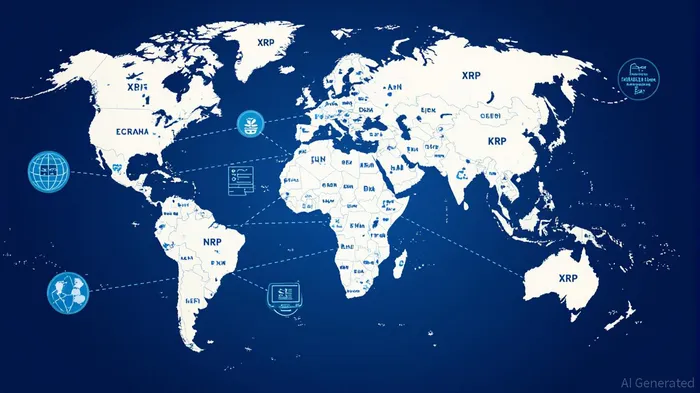
The cryptocurrency market has long been a theater for cognitive biases, none more pervasive than unit bias—the tendency to equate the number of units owned with value. This bias has distorted investor perceptions, particularly for assets like XRPXRPI--, whose low price and regulatory history have obscured its real-world utility. As the crypto ecosystem matures, it is time to challenge this bias and reassess XRP's role as a high-utility, low-cost entry point in digital assets.
The Illusion of “Cheap” Tokens
Unit bias manifests when investors prioritize the quantity of tokens over their intrinsic value. A $1,000 investment in a $0.10 token yields 10,000 units, creating a psychological illusion of “more for less.” However, this ignores critical factors: total supply, scarcity, and utility. For instance, Bitcoin's fixed supply of 21 million coins ensures scarcity, while Ethereum's inflationary model dilutes value over time. XRP, with a capped supply of 100 billion tokens and a circulating supply of ~50 billion, occupies a middle ground. Yet its low price—$3.11 as of August 2025—fails to reflect its utility in Ripple's cross-border payment infrastructure.
XRP's Real-World Utility: Beyond the Price Tag
Ripple's XRP is not a speculative token but a functional asset. Its primary use case is On-Demand Liquidity (ODL), a service that enables financial institutionsFISI-- to settle cross-border payments in seconds at near-zero cost. By acting as a bridge currency, XRP eliminates the need for pre-funded accounts in foreign currencies, reducing operational complexity and capital requirements. Over 350 financial institutions, including SBI Remit and Tranglo, rely on this infrastructure, operating in 55 countries.
Despite this, XRP's market valuation remains disconnected from its utility. A $204 billion market cap in August 2025 pales in comparison to its role in global finance. This undervaluation stems from two factors:
1. Regulatory Overhang: The prolonged SEC lawsuit (2020–2025) cast XRP as a “security,” deterring institutional adoption and clouding its utility-driven narrative.
2. Unit Bias: Retail investors dismissed XRP as a “cheap” token, failing to recognize its scarcity (50% of the total supply is held in escrow or by Ripple) and its role in a $100 billion+ payment network.
The Turning Point: Regulatory Clarity and Institutional Momentum
The August 2025 resolution of Ripple's SEC case marked a watershed moment. With the legal dispute settled, XRP transitioned from a “high-risk” asset to a utility-driven one. Institutional adoption has since surged:
- $1.1 billion in XRP purchases by asset managers in 2025 (per CoinShares).
- 350+ financial institutions using Ripple's network, with 55 countries integrated.
- ETF Anticipation: Multiple asset managers are seeking SEC approval for a spot XRP ETF, potentially unlocking retail and institutional demand.
Why XRP Deserves a Place in Crypto Portfolios
For investors seeking to challenge unit bias, XRP offers a compelling case:
1. Cost Efficiency: A $1,000 investment buys ~321 XRP tokens, but these represent a stake in a global payment network with recurring demand.
2. Scarcity and Security: Unlike inflationary altcoins, XRP's supply is fixed, and its escrow mechanism prevents dilution.
3. Regulatory Resilience: Post-2025, XRP is no longer classified as a security, aligning it with a broader regulatory framework.
Critics may argue that XRP's price remains below its intrinsic value, but this is precisely the opportunity. The market is slowly correcting its undervaluation, with analysts projecting a $5.50–$10 price range by year-end.
Conclusion: Beyond the Unit, Toward Utility
The crypto market's evolution demands a shift from speculative unit-counting to fundamentals-driven analysis. XRP's journey from regulatory uncertainty to institutional adoption illustrates how utility, not price, should dictate value. For investors willing to look beyond the illusion of “cheap” tokens, XRP represents a high-utility, low-cost entry point into a digital asset with tangible real-world applications.
As the 2025 bull run unfolds, the question is no longer whether XRP is undervalued—but how quickly the market will recognize its true worth.

Decoding blockchain innovations and market trends with clarity and precision.
Latest Articles
Stay ahead of the market.
Get curated U.S. market news, insights and key dates delivered to your inbox.






Comments
No comments yet