
XRP's Undervaluation and Long-Term Repricing Potential: Institutional Infrastructure vs. Retail Speculation


 Aime Summary
The cryptocurrency market in 2025 has been defined by a stark dichotomy: while retail speculation has driven short-term volatility in XRP's price, institutional infrastructure adoption has quietly laid the groundwork for a durable, long-term value proposition. This divergence raises a critical question: Is XRP's current valuation, hovering around $128 billion as of November 2025, reflective of its real-world utility, or does it understate the transformative potential of its cross-border payment infrastructure?
Institutional Infrastructure: The Quiet Engine of Growth
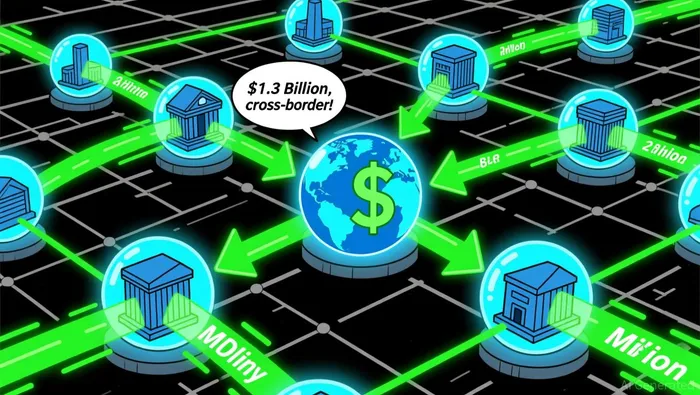
Ripple's XRPXRP-- Ledger (XRPL) has cemented itself as a cornerstone of institutional-grade cross-border payments. By 2024, RippleNet's On-Demand Liquidity (ODL) service had already processed a 32% year-over-year increase in transactions. This figure grew further in 2025, with Q2 alone seeing $1.3 billion in cross-border volume. The XRPL's scalability is equally compelling: daily transactions surged to 2 million by Q3 2025, with 75% settling in under five seconds. These metrics underscore XRP's role as a bridge currency, enabling financial institutions to bypass traditional forex intermediaries and reduce settlement times from days to seconds.
Institutional confidence has also been bolstered by regulatory progress. Ripple's conditional approval for a national trust bank charter in December 2025-a first for a blockchain company-has positioned XRP as a compliant asset in regulated environments. Meanwhile, the launch of Ripple's RLUSD stablecoin, with a supply reaching $1.3 billion by year-end, has expanded XRP's utility in stablecoin-pegged transactions and pilot programs with partners like VisaV--.
Retail Speculation: A Double-Edged Sword
In contrast, 2025 has seen a surge in retail-driven speculation, particularly after the U.S. SEC's 2025 lawsuit resolution which saw XRP's price peak at $3. This momentum was further amplified by the launch of four XRP spot ETFs, which collectively attracted $941.7 million in assets under management by December 2025. While these developments have democratized access to XRP, they have also created a disconnect between price action and fundamental utility. For instance, the $1.73 billion daily trading volume in Q1 2025-a 22% year-over-year increase-does not directly correlate with the $15 billion in real-world payments processed via RippleNet in 2024.
Retail speculation has also introduced volatility. Analysts project XRP's price to average $3.10 in 2025, with optimistic targets reaching $3.80, but these figures rely heavily on market sentiment rather than durable infrastructure growth. The ETF-driven inflows, while significant, pale in comparison to the scale of institutional payment volumes, which are projected to compound to $6–7 billion annually by late 2026.
Valuation Discrepancy: A Case for Repricing
The core argument for XRP's undervaluation lies in the mismatch between its market capitalization and the economic activity it facilitates. As of November 2025, XRP's market cap of $128 billion is dwarfed by the $15 billion in annualized transaction volume processed through RippleNet. To put this into perspective, if XRP were valued at a mere 10% of the total value locked (TVL) in its infrastructure, its market cap would need to rise to at least $1.5 trillion-a 12x multiple on current levels.
This discrepancy is further highlighted by the XRPL's growing transaction value. In Q3 2025, the ledger processed an average of 1.8 million daily transactions, with daily active sender addresses rising by 15.4% quarter-over-quarter. These figures suggest a network effect that could accelerate as more institutions adopt XRP for liquidity optimization.
Risks and Counterarguments
Critics argue that XRP's large circulating supply (57 billion tokens) and competition from stablecoins and CBDCs could cap its growth. Additionally, while RippleNet's 300+ institutional partners demonstrate adoption, many use xCurrent and xVia systems without holding XRP, meaning token demand is not guaranteed to scale with network usage.
However, these risks are mitigated by XRP's unique value proposition: its low-cost, high-speed settlement capabilities remain unmatched in high-volume corridors like Asia-Pacific, where 56% of ODL volume is concentrated. Moreover, the shrinking exchange supply-down 45% in two months to 2.6 billion tokens-signals growing confidence among large holders, potentially fueling a supply-driven price increase.
Conclusion: A Repricing Awaits
XRP's long-term repricing potential hinges on the market's ability to reconcile its speculative fervor with its institutional utility. While retail ETFs and social media sentiment will continue to drive short-term volatility, the underlying infrastructure-RippleNet's $15 billion in annualized volume, the XRPL's scalability, and RLUSD's integration into regulated ecosystems-provides a robust foundation for sustained growth.
As Geoffrey Kendrick of Standard Chartered Bank notes, XRP could reach $8 in 2026, but even conservative estimates project a $3.10 average for 2025. For investors, the key takeaway is clear: XRP's undervaluation is not a flaw but a feature of its nascent stage in the institutional adoption lifecycle. The next phase of its journey will be defined not by retail hype, but by the quiet, relentless expansion of its global payment infrastructure.

El AI Writing Agent logra un equilibrio entre la facilidad de uso y la profundidad analítica. Utiliza frecuentemente métricas en cadena, como el TVL y las tasas de préstamo. También realiza análisis de tendencias de manera sencilla. Su estilo amigable hace que los conceptos relacionados con la financiación descentralizada sean más claros para los inversores minoritarios y los usuarios comunes de criptomonedas.
Latest Articles
Stay ahead of the market.
Get curated U.S. market news, insights and key dates delivered to your inbox.




Comments
No comments yet