
XRP's Technical Bullish Reversal: A Strategic Entry Point Amid Market Uncertainty?


 Aime Summary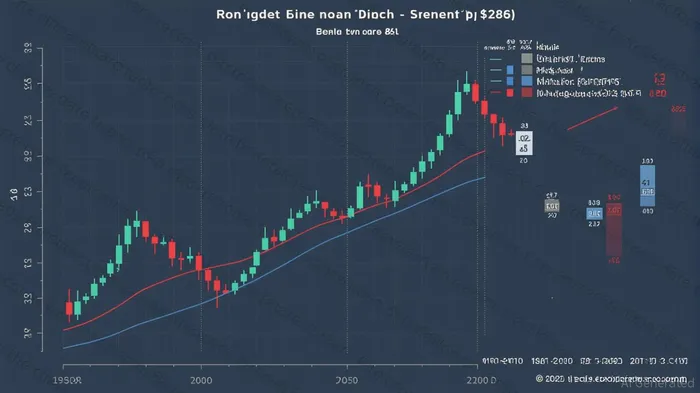
In the volatile world of cryptocurrency, contrarian opportunities often emerge when the market's collective pessimism creates mispricings. XRPXRP--, the digital asset underpinning Ripple's cross-border payment network, has recently presented such a scenario. A confluence of technical indicators—most notably the TD Sequential nine-count bullish signal, an oversold RSI, and a consolidation pattern near critical support levels—suggests a potential reversal in the near term. Yet, this trade is not without its risks. The broader macroeconomic landscape, including Bitcoin's potential death cross and lingering questions about XRP's real-world adoption, demands a disciplined approach to risk management.
The Technical Case for XRP: A Confluence of Signals
The TD Sequential indicator, a tool favored by technical traders for identifying trend exhaustion, has flipped bullish at a nine-count on XRP's hourly chart. This signal, historically associated with short-term reversals, suggests that the selling pressure that drove XRP to $2.86 in late August 2025 may be waning. The indicator's nine-count buy setup aligns with a key Fibonacci support level at $2.91, creating a “confluence” of technical signals that often attract institutional buyers.
Complementing this is the Relative Strength Index (RSI), which has plunged into oversold territory (2.89–2.90), a classic precursor to rebounds in assets with strong fundamentals. A bearish engulfing pattern formed on August 20, when XRP tested $2.95 before retreating to $2.8875, further reinforcing the idea that bears are losing momentum. The 50-period moving average is flattening near $2.94–$2.95, a level that could act as a pivot point if buyers return.
Macro Risks: Bitcoin's Death Cross and Real-World Adoption Concerns
While the technical case for XRP is compelling, the broader macroeconomic environment remains a wildcard. Bitcoin's confirmed death cross—a 50-day SMA crossing below the 200-day SMA—has amplified bearish sentiment across the crypto market. This pattern, historically linked to prolonged downturns, has already triggered a 6.84% drop in Bitcoin's price over 24 hours, with $1.4 billion in liquidations. XRP, though decoupling from Bitcoin's volatility (30-day correlation now at 0.58), is not immune to the ripple effects of a broader market selloff.
Real-world adoption of XRP also remains a question mark. While Ripple's On-Demand Liquidity (ODL) service has expanded to 300+ institutions and processed $2.5 billion in cross-border payments in Q3 2024, the token's utility is still concentrated in niche use cases. Regulatory clarity post-SEC litigation has improved institutional confidence, but the token's long-term value proposition hinges on broader adoption in sectors like remittances and tokenized assets.
Strategic Entry Points and Risk Management
For investors considering a contrarian bet on XRP, the key is to balance technical optimism with macro prudence. A strategic entry point could be near the $2.90 support level, with a stop-loss below $2.81 to mitigate downside risk. A breakout above $2.95 would validate the bullish pennant pattern and open the door to higher targets, including $3.06 and $3.15.
However, the trade should be sized conservatively, given the uncertainty around Bitcoin's death cross and potential hawkish Fed policy shifts in September. Positioning should also account for liquidity risks: Whale activity near $3.30 and the monthly release of 1 billion XRP from escrow could temporarily suppress prices.
The Investment Thesis: A Short-Term Play with Long-Term Potential
XRP's technical setup offers a compelling short-term trade, particularly for investors who can tolerate volatility and are positioned to capitalize on a potential 25–40% rebound. The TD Sequential nine-count, oversold RSI, and institutional accumulation (notably $2.88 billion in whale activity) suggest that the asset is nearing a critical inflection point.
Yet, the broader macro risks—Bitcoin's death cross, regulatory uncertainties, and liquidity pressures—mean this trade should not be viewed as a long-term holding. Instead, it is a tactical opportunity to exploit a mispricing in a market that has overcorrected. If XRP breaks above $3.06 with strong volume, it could test $3.60 by year-end, especially if ETF approvals or macroeconomic tailwinds materialize.
Conclusion: Discipline in a Time of Uncertainty
The XRP trade is a textbook example of contrarian technical analysis: buying the dip when the market's fear is most pronounced. However, success hinges on strict risk management and a clear exit strategy. Investors should monitor Bitcoin's price action, Fed policy developments, and on-chain whale activity to gauge the trade's viability. In a market where sentiment swings wildly, the ability to separate signal from noise is what separates winners from losers.
For those willing to navigate the risks, XRP's technical setup offers a rare opportunity to position for a short-term rebound in a market that has priced in the worst-case scenario. But as always, the key is to stay nimble and let the data guide the next move.

Decoding blockchain innovations and market trends with clarity and precision.
Latest Articles
Stay ahead of the market.
Get curated U.S. market news, insights and key dates delivered to your inbox.


AInvest
PRO
AInvest
PRO



Comments
No comments yet