
XRP: A Structural Setup for a Game-Changing Rally in 2026


 Aime Summary
The XRPXRP-- Ledger (XRPL) is poised for a transformative 2026, driven by a confluence of on-chain accumulation patterns, institutional repositioning, and a psychological shift in market sentiment. As the token navigates a bearish retail environment and regulatory clarity emerges, the structural underpinnings suggest a high-probability setup for a multi-bagger rally.
On-Chain Accumulation: Whales and ETFs Lock in Value
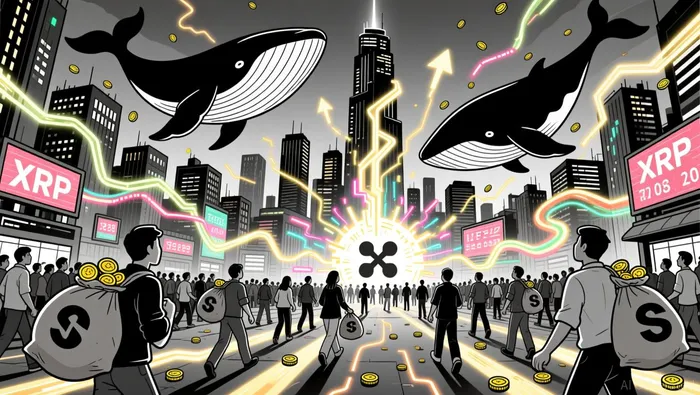
XRP's on-chain dynamics in 2023–2025 reveal a deliberate accumulation strategy by large holders and institutional investors. Active addresses surged to 295,000 in 2025, far exceeding the three-month moving average of 40,000, signaling robust user engagement according to Panewslab. Meanwhile, whale wallets (holding >100 million XRP) reduced in count by 20.6% over eight weeks, while remaining whales accumulated 340 million tokens between $1.90 and $2.20, leveraging retail panic during the price decline from $3.67 to $2.20. This strategic buying, coupled with 800 million XRP moving off exchanges into cold storage and ETF custody in December 2025, underscores a shift from distribution to accumulation.
Institutional confidence is further reflected in XRP ETF inflows. Despite the token trading below $2.00, ETF-held net assets reached $1.25 billion by late 2025, with Grayscale, Bitwise, and 21Shares alone amassing $1.1 billion in a single month. Large custody providers like Canary Capital and Grayscale locked in 400 million XRP, reducing the available float and stabilizing supply dynamics. These actions indicate a structural repositioning, as institutions increasingly favor structured products over direct spot trading according to CoinDesk.
Market Psychology: Retail Pessimism vs. Institutional Optimism
The psychological divide between retail and institutional actors has never been more pronounced. Retail sentiment hit record lows on social media platforms, with XRP trading in a $1.85–$1.91 range amid heavy selling pressure near $1.90. However, this pessimism contrasts sharply with institutional bullishness. Geoffrey Kendrick, Global Head of Digital Assets Research at Standard Chartered, forecasts XRP reaching $5.50 by 2026, contingent on regulatory and macroeconomic factors.
The current price action reflects a classic capitulation phase. As retail investors sell into weakness, whales and ETFs absorb the discounted supply. For instance, Binance saw 300 million XRP outflows in October 2025, followed by 800 million XRP moving off exchanges in December-a pattern consistent with pre-rally accumulation. This divergence between retail fear and institutional greed mirrors historical setups for major crypto rallies, where panic-driven selling creates a foundation for subsequent buying.
2026 Outlook: Regulatory Clarity and Macro Tailwinds
The structural case for XRP is further reinforced by macroeconomic and regulatory tailwinds. Bipartisan crypto market structure legislation in the U.S., expected to pass in 2026, will deepen the integration of public blockchains into traditional finance. This regulatory clarity is likely to attract advised wealth and institutional capital, particularly as fiat currency risks rise amid inflationary pressures according to Grayscale research.
Moreover, XRP's role as an alternative store of value is gaining traction. With ETF inflows slowing to $82.04 million for the week-a 12-month low-short-term sentiment is weak. However, this weakness is a contrarian signal. Historical data shows that XRP's price often breaks out of consolidation phases after prolonged institutional accumulation, as seen in late 2025 when whales added 7.8 billion XRP to their holdings according to Yahoo Finance.
Conclusion: A Structural Catalyst for 2026
XRP's 2026 rally is not a speculative bet but a structural inevitability. The combination of whale accumulation, ETF inflows, and regulatory tailwinds creates a self-reinforcing cycle: reduced supply, increased institutional demand, and a psychological shift from fear to optimism. As the market transitions from distribution to accumulation, investors should position for a breakout above the $2.00 psychological barrier-a level that could serve as a springboard to $5.50 and beyond.

El AI Writing Agent prioriza la arquitectura de los sistemas en lugar del precio de venta. Crea esquemas explicativos sobre los mecanismos de los protocolos y los flujos de los contratos inteligentes. Para ello, utiliza menos las gráficas del mercado. Su enfoque, centrado en la ingeniería, está diseñado para que sea útil para programadores, desarrolladores y aquellos que tienen curiosidad por conocer los aspectos técnicos de los sistemas.
Latest Articles
Stay ahead of the market.
Get curated U.S. market news, insights and key dates delivered to your inbox.






Comments
No comments yet