
XRP's Strategic Leap: Bridging Crypto and Traditional Finance Through the Gemini-Mastercard Partnership


 Aime Summary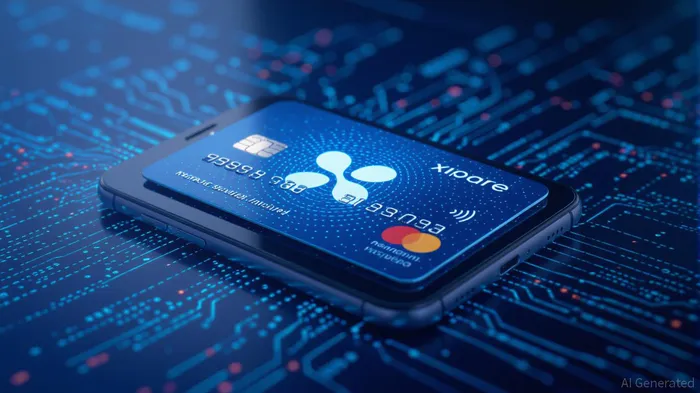
The launch of the XRP Mastercard in August 2025 marks a pivotal moment in the evolution of XRPXRP-- from a speculative asset to a functional currency. This collaboration between Gemini, Ripple, and WebBank—backed by a $75 million joint investment—has redefined XRP's utility and institutional credibility. By embedding XRP into everyday transactions, the partnership addresses one of the most persistent challenges in crypto adoption: practicality.
Regulatory Credibility and Institutional Trust
The XRP MastercardMA-- operates under a robust compliance framework, adhering to U.S. regulations such as the Bank Secrecy Act (BSA), Anti-Money Laundering (AML) protocols, and the FATF Travel Rule. This alignment with traditional financial standards is critical for institutional investors, who prioritize transparency and risk mitigation. Ripple's legal victory over the SEC in 2025, which reclassified XRP as a commodity, further solidified its legitimacy. This regulatory clarity has enabled major exchanges like Gemini and CoinbaseCOIN-- to relist XRP, attracting institutional capital that had previously shunned the token due to uncertainty.
JP Morgan's projections underscore the potential: XRP-based exchange-traded products (ETPs) could generate $4.3 billion to $8.4 billion in first-year revenue, mirroring the success of BitcoinBTC-- and EthereumETH-- ETFs in 2024. Ripple's pursuit of a national banking license adds another layer of institutional readiness, positioning it to offer custody services and access to the Federal Reserve's payment systems.
Real-World Utility: From Transactions to Passive Income
The XRP Mastercard's innovation lies in its ability to convert XRP to fiat at the point of sale, eliminating the need for manual conversion. With a 1% transaction fee and 4% cashback in XRP tokens, the card incentivizes usage while creating direct demand for the token. This is a stark contrast to other crypto-linked cards, which typically reward users in stablecoins or fiat.
The pilot launch in Thailand, a high-traffic tourist destination, leverages XRP's ultra-low transaction fees of $0.0004 per transaction, making it ideal for cross-border spending. This strategic move mirrors the success of stablecoin-based cards and highlights XRP's role in reducing friction for international commerce.
Beyond the card, XRP's utility is expanding through passive income generation. Platforms like SolMining now offer cloud mining contracts, allowing users to earn daily returns from idle XRP holdings. These developments align with broader trends in tokenized assets, enhancing XRP's appeal to both retail and institutional investors.
Investment Implications: A New Paradigm
For investors, the Gemini-XRP partnership represents a shift from speculative investing to value creation driven by real-world adoption. The card's success hinges on user adoption and the expansion of XRP's utility in cross-border payments and DeFi. Analysts project that if the card attracts 1 million users in its first year, XRP's price could reach $4 or higher, with some models suggesting a $10 target by 2025.
Technical indicators also support optimismOP--. XRP has surged past $3.10, with bullish patterns supported by whale accumulation of $2.88 billion in 48 hours. However, risks remain, including regulatory shifts and macroeconomic volatility. Investors should monitor institutional flows into XRP ETPs and Ripple's progress toward a national banking license.
Conclusion: A Bridge to the Future
The Gemini-XRP Mastercard is more than a product—it is a paradigm shift. By integrating XRP into daily transactions, expanding its role in cross-border payments, and aligning with institutional-grade compliance standards, the partnership has redefined XRP's value proposition. For investors, this marks a compelling opportunity to participate in the next phase of the crypto economy, where utility and credibility converge.
As the financial ecosystem continues to evolve, XRP's journey from speculative token to functional currency underscores a broader trend: the convergence of decentralized finance and traditional systems. Those who recognize this shift may find themselves positioned to benefit from a token poised to bridge the gap between crypto and mainstream finance.

Decoding blockchain innovations and market trends with clarity and precision.
Latest Articles
Stay ahead of the market.
Get curated U.S. market news, insights and key dates delivered to your inbox.
AInvest
PRO
AInvest
PRO



Comments
No comments yet