
XRP Stabilizes at $2 Support Amid ETF-Led Institutional Accumulation
 Aime Summary
- XRP ETF inflows reached $1 billion in four weeks, the fastest milestone since Ethereum ETFs launched.
- Exchange balances dropped 45% in 60 days as institutions moved 1.35 billion XRPXRP-- into custody according to the report.
- The critical $2 support has held due to institutional accumulation replacing retail panic-selling as research shows.
- Long-term holders are not distributing tokens, and Coin Days Destroyed remains muted according to market data.
- Regulatory risk was reduced by the Ripple SEC settlement in August 2025 based on official statements.
XRP (XRP) is consolidating near the $2 support level as institutional accumulation counters retail selling pressure. The token's market structure has shifted with exchange-traded funds attracting $1 billion in inflows within four weeks. Regulatory headwinds have eased after Ripple's settlement with the SEC in August 2025. This combination creates a stable foundation for the asset.
How Are ETF Inflows Reshaping XRP Market Structure?
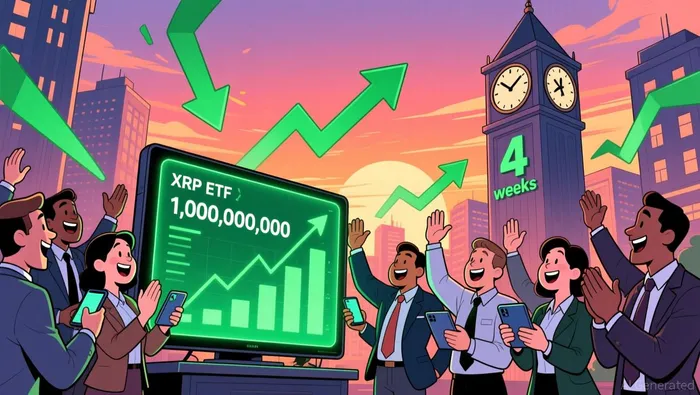
Institutional demand is transforming XRP's supply dynamics. Exchange balances plunged 45% over 60 days as institutions moved 1.35 billion tokens into custody. This represents a significant reduction in readily tradable supply.
XRP ETF adoption has reached record speed, hitting $1 billion faster than previous crypto ETF launches. Long-term holders show conviction through muted Coin Days Destroyed metrics. Without forced selling, the $2 level forms a reliable accumulation zone.
Why Has Regulatory Risk Decreased for XRP?
Regulatory pressure has substantially eased following key developments. The Ripple settlement with the SEC in August 2025 resolved a prolonged legal overhang. This agreement provided clarity on XRP's status and operational framework.
Leadership changes at the regulatory agency further improved the environment according to industry analysis. The combination reduces potential enforcement actions against the token. Investors now face fewer regulatory hurdles than in previous cycles.
What Does the Institutional Shift Mean for XRP Investors?
The market structure shift brings enhanced stability. Institutional accumulation replaces retail-driven volatility at the $2 floor. This creates a technical support level with strong volume validation.
Investors should monitor ETF flow continuity and custody patterns. Sustained institutional participation remains critical for maintaining the current base. That said, the setup reduces downside volatility compared to historical norms.

Blending traditional trading wisdom with cutting-edge cryptocurrency insights.
Latest Articles
Stay ahead of the market.
Get curated U.S. market news, insights and key dates delivered to your inbox.






Comments
No comments yet