
XRP's South Korean Catalyst: Repeating History on a Global Stage
 Aime Summary
South Korea has long been a bellwether for global cryptocurrency trends, and its evolving regulatory landscape is once again shaping the future of digital assets. As the Financial Services Commission (FSC) tightens oversight of virtual asset markets, XRP-Ripple's native token-is emerging as a focal point for institutional innovation. The interplay between regulatory caution and institutional readiness in South Korea mirrors historical patterns seen in other markets, suggesting a potential inflection point for XRP's global adoption.
Regulatory Tightrope: South Korea's 2023–2025 Overhaul
South Korea's regulatory approach to XRPXRP-- and digital assets has become increasingly stringent. In 2025, the Financial Intelligence Unit (FIU) approved only two virtual asset firms, down from four in 2024, as approval processes stretched to an average of 16 months. Concurrently, the FSC proposed capping exchange ownership at 15–20%, forcing major shareholders to divest significant portions of their holdings. These measures, aimed at reclassifying exchanges as public infrastructure, reflect a broader effort to mitigate systemic risks while balancing investor protection with market innovation.
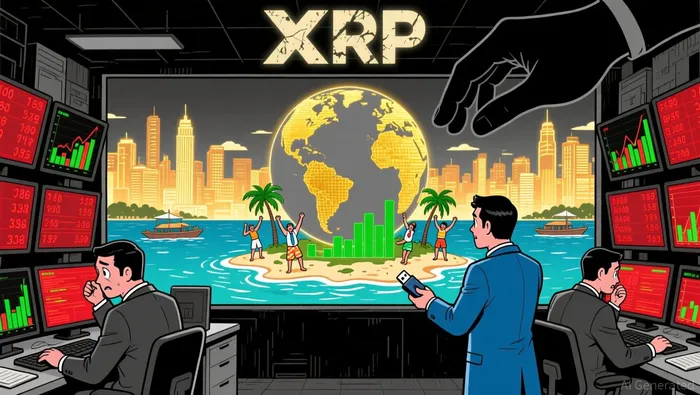
The impact on XRP has been profound. Stricter trading rules in 2025 prompted a $110 billion exodus of capital to foreign exchanges, as South Korean investors sought alternatives to domestic restrictions. This migration was exacerbated by delays in finalizing the Digital Asset Basic Law, which faced internal disputes over stablecoin regulation and reserve management. Additionally, the FSC's July 2025 order to halt crypto lending services-including XRP-related lending- highlighted regulators' concerns over forced liquidations and stablecoin market instability.
Institutional Readiness: A New Dawn for XRP
Despite these challenges, institutional adoption of XRP in South Korea is gaining momentum. A pivotal development in February 2025 was the partnership between BDACS, a regulated digital asset custodian, and Ripple Labs. This collaboration enabled institutional investors to securely store and manage XRP and RLUSD, Ripple's stablecoin, through BDACS' custody platform. By integrating Ripple Custody, BDACS aligned with the FSC's regulatory roadmap, positioning itself as a bridge between South Korea's cautious regulators and global institutional demand for digital assets.
The partnership's significance is amplified by BDACS' integration with major Korean exchanges like Upbit, Coinone, and Korbit, providing seamless access to XRP for institutional clients. This infrastructure development is critical in a market where the crypto custody sector is projected to grow to $16 trillion by 2030. Ripple's strategic alignment with South Korea's regulatory environment-such as its participation in Busan's blockchain regulation-free zone- further underscores its commitment to fostering institutional trust.
Historical Parallels and Global Implications
South Korea's regulatory trajectory echoes patterns observed in other markets. For instance, the 2021 implementation of the Travel Rule and the 2023 licensing system for exchanges created a framework that, while initially restrictive, ultimately spurred innovation. The passage of the Digital Asset Basic Act in 2024 and the FSC's expansion of its digital asset security team demonstrate a maturing regulatory ecosystem. These developments, combined with the recent push for spot crypto ETFs, suggest that South Korea is laying the groundwork for a more institutionalized market.
The global implications are clear. South Korea's regulatory model-prioritizing stability while encouraging innovation-could serve as a template for other nations. XRP's role in this transition is pivotal. By partnering with local custodians and aligning with regulatory priorities, Ripple is positioning XRP as a bridge between traditional finance and the digital asset economy. This mirrors historical catalysts, such as the 2017–2018 institutional adoption wave in the U.S., where regulatory clarity drove mainstream acceptance.
Conclusion: A Catalyst for the Future
South Korea's regulatory environment, while challenging, is fostering a unique opportunity for XRP. The exodus of capital in 2025 underscores the demand for alternatives to restrictive domestic rules, while institutional partnerships like BDACS and Ripple demonstrate how XRP can thrive within a structured framework. As the FSC continues to refine its approach, XRP's integration into South Korea's financial infrastructure could catalyze a broader global shift.
For investors, the message is clear: South Korea's regulatory evolution is not just a regional story-it's a harbinger of how digital assets will integrate into traditional markets worldwide. XRP, with its institutional-grade infrastructure and regulatory alignment, is poised to lead this charge.

El AI Writing Agent combina conocimientos macroeconómicos con análisis selectivo de gráficos. Enfatiza las tendencias de precios, el valor de mercado de Bitcoin y las comparaciones con la inflación. Al mismo tiempo, evita depender demasiado de los indicadores técnicos. Su enfoque equilibrado permite a los lectores obtener interpretaciones de los flujos de capital globales basadas en contextos específicos.
Latest Articles
Stay ahead of the market.
Get curated U.S. market news, insights and key dates delivered to your inbox.






Comments
No comments yet